The last weekend of October, the Kumaon hills do something the summer brochures never photograph. The rhododendron buses stop running, the dhabas on the Mukteshwar ridge close their plastic chairs, and the lakes at Sattal go glassy in a way they simply cannot manage in May. What remains is the actual place.
Mukteshwar in November: Cold Air and an Unobstructed Himalaya
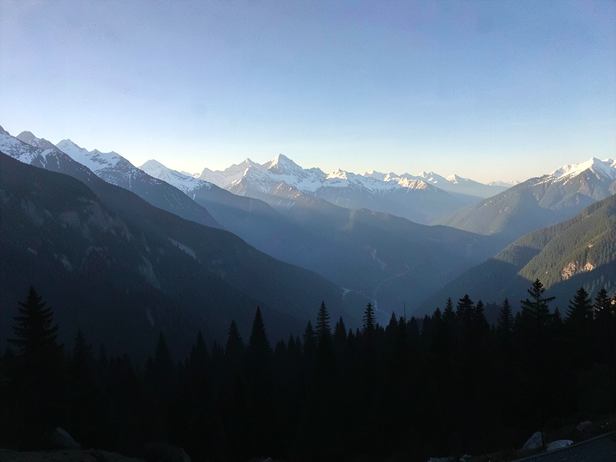
At 2,286 metres, Mukteshwar sits high enough that November mornings carry a genuine bite. The Himalayan panorama from the ridge, Nanda Devi, Trishul, Panchachuli, is clearest after the monsoon has scrubbed the air and before the winter haze settles in. In peak season that same view competes with selfie sticks and idling SUVs. By early November the ridge path is quiet enough that you can hear the wind moving through the deodar canopy below.
Accommodation drops sharply in price once the season turns. The handful of orchard homestays that charge a premium in May will negotiate in November, and the experience is better: breakfast on a terrace with the Himalayas in full light, no queue, no noise. The Mukteshwar Mahadev temple, the eleventh-century Shiva shrine that gives the town its name, is accessible without the October Navratri crowd, and the Chauli ki Jali rock formation on the ridge edge feels genuinely remote when you are the only person standing on it.
The road from Kathgodam takes roughly four hours by shared jeep, longer by bus. The last stretch climbs steeply. Come prepared for temperatures that drop below 5°C after dark by late November.
![Himalayan Ridge at Dawn]()
Himalayan Ridge at Dawn
Image credit : AI
I witness the vastness of the Himalayas at dawn, a deodar forest below and snow-capped peaks ahead. A perfect Kumaon lakes off season view.
Sattal: Seven Lakes and Almost Nobody on the Trails
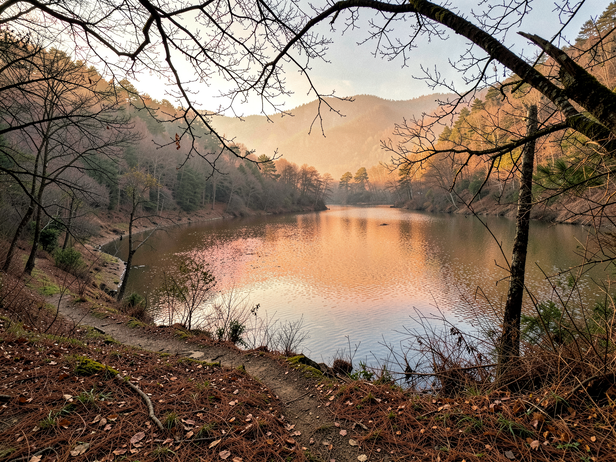
Sattal, literally seven lakes, sits at around 1,370 metres in a forested bowl near Bhimtal, roughly an hour from Nainital. The interconnected lakes are fed by the Gaula river catchment and surrounded by mixed oak and pine that turns amber through October and into November. In the busy season, pedalboats and picnic groups dominate the main lake. After the season, the water is to yourself.
The birdlife is the real reason to come in the off-season. Sattal has recorded over 500 bird species across its forest and lake ecosystem, and the winter migrants begin arriving in October, Eurasian wrynecks, various warblers, and waterfowl that find the quieter lakes far easier to land on when the boats are gone. The Himalayan Bird Conservation Centre near the lake edge runs nature walks that are genuinely informative rather than hurried.
The trail between the lakes, Nal Damayanti Tal, Purna Tal, Sita Tal, takes two to three hours at a slow pace and rewards it. November light through the oaks hits the water at a low angle in the afternoon that is difficult to describe and easy to photograph. Accommodation at Sattal is limited even in season; book ahead regardless of when you go.
Naukuchiatal, Bhimtal and the Lakes Worth Stopping Between
The Kumaon lake district clusters its water bodies close enough together that a slow two-day loop makes sense. Bhimtal, the largest of the Kumaon lakes at roughly 1.5 kilometres long, has a small island in its centre that holds an aquarium, odd, worth visiting once, easy to skip. The lake itself is prettier than Nainital and receives a fraction of the attention.
Naukuchiatal, nine kilometres from Bhimtal, is named for its nine corners, the irregular shoreline that makes it the most interesting of the group to walk around. At 1,220 metres it sits lower and warmer than Mukteshwar, which makes it a reasonable base for anyone who finds the ridge cold. The village around the lake is small. A guesthouse room in November runs between ₹800 and ₹1,800 a night depending on whether you want hot water reliably.
Sarhatal and Khurpatal are smaller still, connected by forest tracks and best reached by hiring a local driver for a day rather than relying on public transport. Neither has a tourist infrastructure to speak of. That is the point.
![Kumaon Lake's Golden Hour]()
Kumaon Lake's Golden Hour
Image credit : AI
I find the quiet charm of Kumaon lakes off season, a perfect November escape.
Getting There, Getting Around, Getting the Timing Right
Kathgodam is the railhead for the Kumaon hills, overnight trains from Delhi reach it in seven to eight hours, and the Ranikhet Express and Shatabdi variants run regularly. From Kathgodam, shared jeeps run to Bhimtal, Nainital, and up to Mukteshwar. A hired car for the lake loop costs roughly ₹2,500 to ₹3,500 a day from Bhimtal, which is the most practical base if you want to cover multiple lakes without backtracking.
November is the window. December brings cold that can close the higher roads in a bad year, and January through March is genuinely winter at Mukteshwar's elevation. The first two weeks of November give clear skies, the amber forest, lake surfaces at their most still, and accommodation at off-season rates. By the third week, nights at the ridge are cold enough to require a proper down jacket.
The Kumaon hills in the off-season are not undiscovered, Uttarakhand locals know them well, and the homestay owners who stay open through November do so because they have a returning clientele. What they are is unhurried. The difference between Sattal in May and Sattal in November is the difference between seeing a place and being in it.