The hotel lobby looks straightforward until it isn't. A couple arrives after a long train journey, booking confirmed on the app, and the front desk asks for an Aadhaar that one of them left at home. Another traveller, local to the city, finds the property simply will not let them check in. These are not edge cases, they happen at properties across every price bracket, and they almost always come as a surprise to the person on the wrong side of the counter. The rules behind them are worth understanding before you travel, not after.
What ID You Are Actually Required to Show
Under the Foreigners Act, 1946, and the Hotel and Lodging House Keepers Act as adopted across states, every hotel in India is required to collect and record identity documents from guests at check-in. For Indian nationals, the accepted documents are a government-issued photo ID: Aadhaar card, voter ID, passport, driving licence, or PAN card. A hotel cannot demand Aadhaar specifically, any one valid government ID satisfies the requirement. The hotel fills a Form C (or its state equivalent) for foreign nationals, which must be submitted to the local police within 24 hours of check-in; this is a statutory obligation on the property, not optional paperwork.
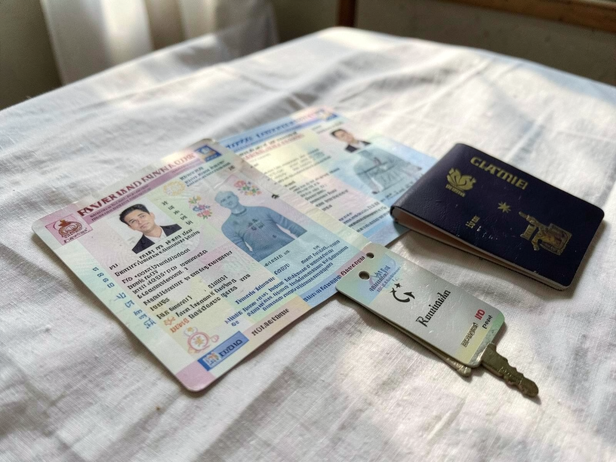
The practical implication: carry at least one original government ID, not a photograph of it on your phone. Many properties, particularly in the budget and mid-market segment, will not accept a phone screen as a substitute, and they are within their rights to decline it. If you are travelling with a partner and only one of you has ID on hand, some properties will register both guests under the one document; others will not. Ask before you assume.
![Indian IDs and Hotel Key]()
Indian IDs and Hotel Key
Image credit : AI
I arrange my Indian government IDs and hotel key card, essential for check-in.
The Local Guest Question
This is the part that surprises people most, and it is also the part with the least clean legal answer. Many hotels in India, particularly in cities, have internal policies that decline check-in to guests whose permanent address matches the city the hotel is in. These are not illegal in any uniform national sense, but they are not uniformly legal either. No central statute prohibits a hotel from serving local residents. What drives the policy is a combination of factors: concerns about short-stay bookings used for purposes a property does not want to facilitate, pressure from local police or municipal authorities in some cities, and a liability calculation the management has made about their operating licence.
If you are a local guest and a hotel declines to check you in, you have limited recourse at the counter in the moment. The Consumer Forum is an avenue after the fact, and several cases have gone against hotels that applied the policy arbitrarily or without disclosure. The more immediate protection is to read the property's policy before booking, some list it in the fine print, most do not, and to call ahead if you have any doubt. Online travel agencies are beginning to display local-guest restrictions on listing pages in some cities, though coverage is patchy.
Unmarried Couples: What Properties Can and Cannot Do
No Indian law prohibits an unmarried couple from sharing a hotel room. The Supreme Court has been explicit on this point across several rulings. A hotel that refuses check-in to an unmarried couple on grounds of morality is acting outside its legal authority, and the refusal has been successfully challenged in consumer courts. That said, the gap between what the law says and what a front desk does at eleven at night in a smaller city is real. Certain states and certain localities see more of this than others; Tier 2 and Tier 3 cities, and properties that cater primarily to a family clientele, are where it surfaces most often.
Practically: if you anticipate this being a problem, choose properties with an explicit couples-welcome policy, which several booking platforms now filter for. Carrying a copy of a Supreme Court order does not help you at a front desk at midnight. A confirmed booking at a property that has stated its policy clearly is the only reliable protection.
![Indian Hotel Corridor Night]()
Indian Hotel Corridor Night
Image credit : AI
A silent, golden-lit Indian hotel corridor at night. Remember, ID is required for hotel check-in in India.
What a Front Desk Can Legally Refuse
A hotel is a private establishment and carries some discretion over who it admits, within limits. Refusal is lawful when a guest cannot produce valid government ID, when the property is genuinely full, when a guest is visibly intoxicated and disruptive, or when the booking was made fraudulently. Refusal is not lawful when it is based on religion, caste, or ethnicity, the Civil Rights provisions under Article 15 of the Constitution and the Protection of Civil Rights Act, 1955, apply. A hotel that refuses entry on a discriminatory basis is exposed to both criminal and civil liability.
The grey zone is the local-guest and unmarried-couple scenario, where the legal position is clearer than enforcement. If you are refused and believe the refusal is discriminatory or unlawful, document everything: the name of the staff member, the time, and the stated reason. A complaint to the state tourism department and the District Consumer Disputes Redressal Commission is the correct route. The National Consumer Helpline (1800-11-4000) takes complaints and can escalate to the relevant forum.
Before You Book: The Questions Worth Asking
Most of the friction at Indian hotel front desks is avoidable with two or three calls or messages before arrival. Ask whether the property accepts local guests if your address is in the same city. Ask what ID formats they accept, and whether a digital copy on DigiLocker counts, some properties now accept DigiLocker-verified documents, others do not. If you are travelling as an unmarried couple, ask directly; a property that hedges on the phone is telling you something useful. And carry original documents. The booking confirmation on your phone is not a substitute for the ID the law requires the hotel to record.