The Vaishno Devi shrine sits at 5,200 feet, and by late November the temperature at the bhawan drops to near freezing after dark. The track from Katra to the bhawan covers roughly 14 kilometres one way via the Tarakote Marg route, and the cold months change almost every practical calculation you make for it, what to wear, when to start, whether the battery cars are worth the wait, and how far in advance the yatra parchi needs to be booked.
The Katra Base: What to Sort Before the Climb Starts
The yatra parchi, the registration slip that is mandatory for every pilgrim, is issued from the Shrine Board counters at the Katra bus stand and at the Bhairon Ghati counter, or online through the official SVBSB portal. In winter the daily cap on pilgrims is lower than the summer ceiling of around 50,000, which sounds like it should mean easier registration. It does not. The cap tightens the window. Book online at least two to three days ahead if you are travelling on a weekend or around any regional holiday. The parchi carries a time slot, and that slot determines which batch you join at the Darshani Darwaza gate. Miss your batch, and the counter will reassign you to the next available one, which in peak winter evenings can be two hours later.
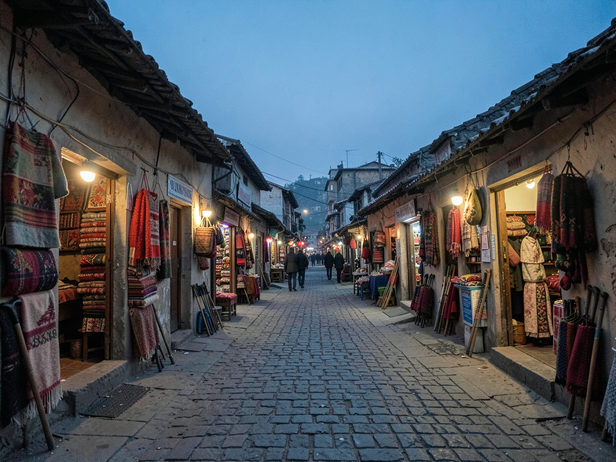
Katra town itself is compact. The main market lane runs parallel to the highway, and every second shop sells thermal wear, walking poles, and the rubber-soled waterproof shoes that become non-negotiable once the track carries any ice. Prices here are higher than what you would pay in Jammu city, so if you are travelling light and need cold-weather gear, buy it in Jammu before the bus or taxi. The taxi from Jammu to Katra takes roughly one and a half hours on a clear day. Shared cabs leave from the Jammu bus stand and cost significantly less than a private hire.
![Winter Hill Town Market Dusk]()
Winter Hill Town Market Dusk
Image credit : AI
I see the warm glow of shopfronts on a cold winter evening, with woollen goods ready for the Vaishno Devi yatra.
Battery Cars: The Slot Logic Most Pilgrims Misread
The battery-operated vehicle service runs on the lower section of the route, from Katra to Banganga, covering about three kilometres. It is not a cable car and it does not go to the bhawan. Many first-time pilgrims arrive expecting a mechanised lift to the top and are surprised to find the battery cars handle only the first stretch of a 14-kilometre climb. The booking counter for battery cars is at the Katra starting point, and in winter the early morning slots, typically the 4 a.m. to 7 a.m. window, fill first because pilgrims who want to reach the bhawan by midday need to start early to avoid the return traffic on the track.
The honest calculation: a fit adult walking at a moderate pace covers the Katra-to-bhawan distance in five to six hours going up, less coming down. The battery car saves perhaps forty minutes on the ascent and removes the steepest part of the lower section, which is where ice accumulates first after overnight temperatures drop. In that specific condition, ice on the lower track, cold wind, pre-dawn start, the battery car slot is worth booking the evening before. In dry daylight conditions it is a comfort choice, not a necessity. The Shrine Board occasionally suspends the service after heavy snowfall while the track is cleared, so check the official SVBSB website or the helpline the night before if there has been any precipitation.
The Track in Cold Weather: What Changes and What Does Not
The Tarakote Marg route replaced the older Sanjichat route as the primary path and is wider and better maintained. In winter, the Shrine Board deploys extra staff at the checkpoints and the medical posts remain staffed around the clock, which matters because altitude-related breathlessness and cold-induced fatigue are both real possibilities for pilgrims who are not accustomed to sustained climbing in low temperatures. The track is lit throughout, so a pre-dawn start is manageable.
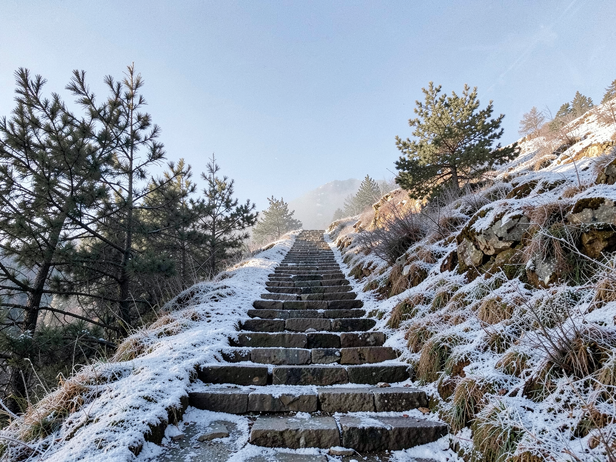
What changes in the cold months: the wind between Adhkuwari and the bhawan can be sharp enough to require a face covering, not just a jacket. The queues at the Adhkuwari cave, the midpoint shrine, run shorter in winter than in July or August, and this is where many pilgrims rest, eat at the langar, and decide whether to continue or turn back. Continuing from Adhkuwari to the bhawan takes another two to three hours depending on pace and queue. The darshan queue at the main shrine can run anywhere from one hour on a quiet Tuesday morning to four hours on a winter weekend when a regional holiday has pushed pilgrim numbers up. The Shrine Board posts live queue estimates on its website, and checking that figure the morning of your climb is the single most useful piece of planning you can do.
![Winter Mountain Pilgrimage Path]()
Winter Mountain Pilgrimage Path
Image credit : AI
I ascend the frost-covered steps on my winter yatra, a serene mountain pilgrimage unfolds.
What to Carry and What the Track Provides
The track has dhabas and tea stalls at regular intervals, and the langar at Adhkuwari serves food free of charge at most hours. Carrying your own water is still sensible for the first few kilometres before the stalls begin. The mandatory items in winter: a thermal base layer, a windproof outer layer, gloves, a woollen cap that covers the ears, and footwear with grip. The Shrine Board provides cloak rooms at Katra and at the bhawan for storing luggage you do not want to carry up. Ponies and palkis are available for pilgrims who cannot manage the climb on foot; pony rates are fixed by the Shrine Board and posted at the Katra starting point, so agree the rate at the official counter rather than with an individual operator on the track.
The bhawan complex at the top has accommodation run by the Shrine Board, rooms and dormitories at different price points, but winter availability is tighter than it looks online because the room count is lower than at the base. Book through the SVBSB portal rather than through third-party sites, and book before you leave home rather than hoping to find a room on arrival.
The Hours That Actually Decide the Queue
The pilgrims who reach the bhawan darshan queue in under two hours of waiting share one pattern: they start the climb between 2 a.m. and 4 a.m. and reach the bhawan between 8 a.m. and 10 a.m., ahead of the mid-morning surge that builds as day pilgrims who slept in Katra begin arriving. The queue at the sanctum sanctorum is managed through a token system at the bhawan entrance, and tokens for the shorter-wait lane are issued on a first-come basis. By 11 a.m. on any weekend, those tokens are gone.
The cold months make a 3 a.m. start feel severe. The track is cold, the wind is up, and the darkness is complete outside the lit path. But this is also when the mountain is quietest, the air is clearest, and the climb feels like something other than crowd management. The pilgrims who describe the yatra as genuinely moving rather than merely completed are almost always the ones who were on the track before the sun came up.