The Deo Surya Mandir sits in a small town in Aurangabad district, roughly 45 kilometres from Aurangabad city, and it is one of the few sun temples in India still in active daily worship. The structure is built in the Nagara style, its shikhara rising in stacked tiers without the use of mortar, a construction technique that has puzzled archaeologists for decades. Local tradition dates it to the Treta Yuga, though the stonework is generally placed between the 8th and 10th centuries CE. For most of the year it is quiet. Then Chhath comes.
What the Temple Actually Is
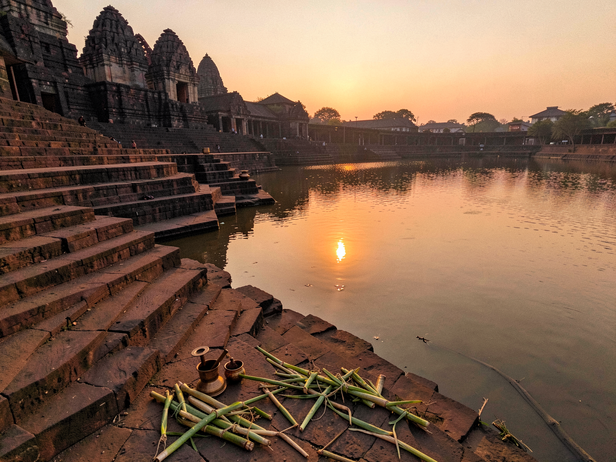
The presiding deity is Surya, worshipped here in three forms across three separate shrines within the same complex: the morning sun, the midday sun, and the setting sun. Unlike most temples where the main idol faces east, one of the Deo shrines faces west, which is architecturally unusual and directly connected to the Chhath ritual of offering arghya to the setting sun. The temple pond, the Surya Kund, is where the central act of Chhath, standing in water at dusk and dawn, takes place. The pond is large enough to hold thousands of devotees simultaneously, and during the festival it does.
![Temple Pond at Dusk]()
Temple Pond at Dusk
Image credit : AI
I observe the tranquil beauty of Deo Surya Mandir Aurangabad Bihar at dusk, with ritual offerings on the ghats.
When to Go and What the Fair Means
Chhath Puja falls on the sixth day of the bright fortnight of Kartik, which places it four days after Diwali. In 2026, the main Chhath sunset arghya falls on 27 October and the sunrise arghya on 28 October. The Deo fair runs for several days around these dates, drawing pilgrims from across Bihar, Jharkhand, eastern Uttar Pradesh, and the Bihari diaspora returning from Delhi, Mumbai, and the Gulf. Estimates for peak attendance at Deo during Chhath run between three and five lakh people over the two core days. Every guesthouse within 20 kilometres is full by the time the Nahay Khay ritual begins, two days before the main arghya.
If you are travelling as an observer rather than a devotee, the day before the sunset arghya is the most manageable. The fair is fully alive, stalls selling thekua, sugarcane, and brass ritual vessels line every approach road, but the roads have not yet locked. The sunrise arghya on the final morning is the most visually striking moment, with devotees standing in the kund as the light comes up, but reaching the temple by road after midnight on that day requires either a pre-positioned stay or a long walk from a parking point several kilometres out.
Getting There
The nearest railway station is Deo Road, on the Grand Chord line between Gaya and Sasaram. Trains from Patna to Gaya stop here; the journey from Patna is roughly three to four hours depending on the service. From Gaya Junction, Deo is about 55 kilometres by road, an hour and a half in ordinary conditions. During the fair, that stretch can take four hours or more as the NH 2 and the state highways feeding Deo back up completely. Shared autos and tempos run from Deo Road station to the temple in normal times; during Chhath, the walk from the station is often faster than waiting for a vehicle.
From Aurangabad city, the road distance to Deo is around 45 kilometres via the Aurangabad-Deo road. Private vehicles are the standard approach from the city, but the district administration typically imposes a vehicle restriction within several kilometres of the temple on the main arghya days. Check the Aurangabad district administration notices in the week before travel; the cordon distance and permitted vehicle categories change year to year. State buses from Aurangabad bus stand run additional services to Deo during Chhath, and these are often the most reliable option precisely because they use designated routes that private vehicles cannot.
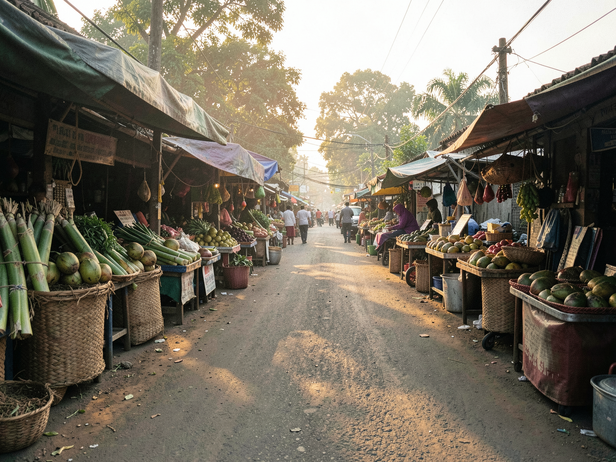
![Bihar Market Road]()
Bihar Market Road
Image credit : AI
Golden light bathes a rural Bihar road market, showcasing local produce and crafts. A glimpse of daily life near Deo Surya Mandir Aurangabad Bihar.
Where to Stay and What It Costs
Deo town has a handful of dharamshalas and small guesthouses. Rooms book out weeks in advance for the Chhath period; if you have not arranged accommodation by mid-October, assume you will not find a room in Deo itself. Aurangabad city is the practical base, with a wider range of hotels at rates that range from around ₹600 for a basic room to ₹2,500 for something air-conditioned. Gaya is another option if you are combining the trip with Bodh Gaya or Vishnupad Temple, and it has better transport links, though the drive to Deo on fair days from Gaya adds significant time.
Food at the fair is almost entirely the Chhath prasad economy: thekua, fruits, coconut, and sugarcane are sold everywhere, and small dhabas around the temple serve simple meals. The ritual food is satvik and the atmosphere around the kund is dry; do not expect the usual fair food variety.
Going Outside the Fair
The Deo Surya Mandir is open year-round, and the experience outside Chhath is entirely different. The temple is quieter, the architecture is easier to read without crowds, and the priests have time to explain the three-shrine configuration and the facing of the western shrine. Makar Sankranti in January draws a smaller gathering. Sundays see local pilgrims from across the district. The road from Aurangabad is straightforward, the drive takes under an hour, and accommodation is never a problem. If the temple is the point rather than the fair, any Sunday between February and September gives you the structure without the logistics.
The fair and the temple are two different experiences sharing one location. Chhath at Deo is one of Bihar's largest public gatherings, a logistical challenge, and something genuinely worth seeing once. The temple itself, the mortar-free shikhara, the westward shrine, the kund, is worth the drive any month it is not peak season. Knowing which one you are going for determines everything about how you plan the trip.