The first thing you notice is the luggage. At Patna Junction, at Hajipur, at every district bus stand in the Gangetic plain in the days before Chhath, the platforms are stacked three bags high with suitcases wrapped in bedsheets and tied with jute rope. The people carrying them have come from Delhi, from Surat, from Dubai, and they are not tourists. They are coming home, and a traveller who arrives in a Bihar village the week before Chhath Puja is arriving into the middle of that homecoming, not a performance of it.
The Village Before the Ghat
The road from the highway to the village changes character around four days out. Tempo loads of sugarcane arrive from the fields. Women begin soaking rice in clay pots left outside doorways. The smell of wood-smoke thickens because the vrat demands that nothing touched during the preparation go near a gas flame. A traveller who asks what she is smelling will be told: thekua. The wheat-flour and jaggery sweet is pressed into moulds and fried in ghee over a wood fire, and the smell carries three lanes in every direction. You do not need a guide to find where the cooking is happening.
The village pond, the pokhara, gets cleaned. This is not a metaphor. Men and boys wade in with straw brooms and drag out years of silt and plastic. The water that remains is dark and cold and the cleaning is considered part of the puja itself, not preparation for it. If you want to understand Chhath, watch the pond cleaning. The festival's logic is in it: the sun is worshipped at the water's edge because water is what the sun gives back to the earth, and the earth must be made ready.
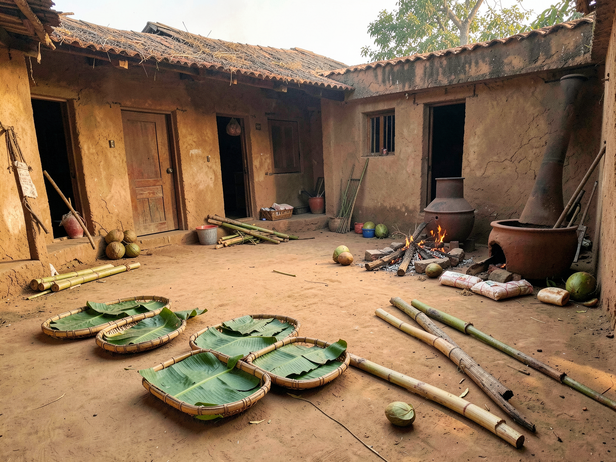
![Chhath Preparations in Bihar Courtyard]()
Chhath Preparations in Bihar Courtyard
Image credit : AI
Preparing for Chhath Puja in a Bihar village courtyard, with traditional offerings laid out. A glimpse into the vibrant Chhath week.
The Surpa and What It Carries
The bamboo surpa, the flat winnowing basket that becomes the offering tray, appears in every courtyard by the third day before the main arghya. Women line them with banana leaves and begin arranging: sugarcane stalks still jointed, coconut, seasonal fruit, the thekua wrapped in cloth. Each surpa is specific to one household's tradition and one woman's memory of how her mother arranged it. A traveller watching this is watching an archive being opened and repacked.
The prasad is not distributed until after the second arghya, the one at sunrise. Until then it belongs to the sun. This is worth knowing before you reach for anything.
The Ghat at Sunset
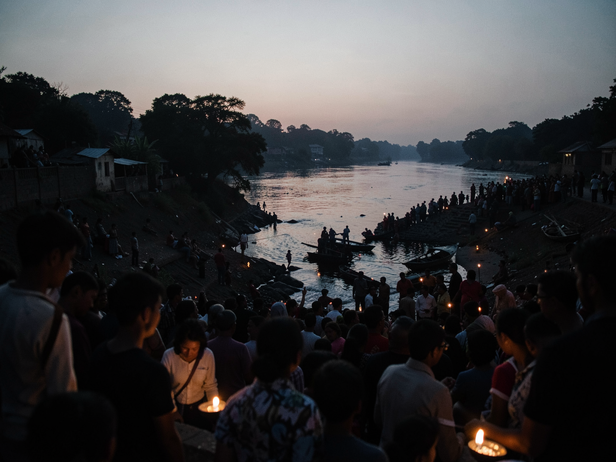
The first arghya happens at sunset. The word means offering, and what is offered is water cupped in the hands and poured toward the setting sun while standing in the river or pond up to the waist. The vratins, the women who have kept the fast, some for thirty-six hours without water, stand in the cold water in new sarees, surpa held above the head, facing west. The crowd on the bank is enormous. The sound is not the sound of a festival in the usual sense. There is singing, the Chhath songs are their own genre, Bhojpuri and Maithili both, and the older women know every word, but the overall register is not festive. It is concentrated. Something is being asked for, and the asking is serious.
A traveller who positions herself on the bank rather than in the water sees the light correctly. The ghats of the Ganga near Patna, or the smaller ponds of interior villages like those around Sitamarhi or Muzaffarpur, catch the last horizontal light in a way that makes the surpa baskets held aloft look like they are already on fire. This is not a photograph that needs filtering.
![Pre-dawn Bihar Ghat Gathering]()
Pre-dawn Bihar Ghat Gathering
Image credit : AI
Witnessing the quiet anticipation at a Bihar village Chhath week ghat, as dawn approaches.
The Night Between
The night between the two arghyas is the part no travel piece mentions. The vratins do not sleep. Devotional songs continue through the night at the ghat and in courtyards. The rest of the village does not sleep either, not entirely. Men keep the fires going. Children fall asleep on charpoys dragged outside. The traveller who stays through the night rather than returning to a guesthouse in the nearest town is the one who understands by morning what the sunrise arghya means: the sun is being welcomed back after a night during which its absence was felt as a real thing.
The sunrise arghya is colder and quieter than the sunset one. The crowd is the same size but the mood is different, there is relief in it. When the sun clears the horizon and the offerings are made and the fast breaks, the prasad moves through the crowd fast. You will be offered thekua before you have found a place to stand. Take it.
Getting There and What It Costs
Patna is the entry point. Trains from Delhi on the Rajdhani and Sampoorna Kranti lines run full in the week before Chhath; book two weeks out at minimum, or travel two days before the rush peaks. From Patna, shared autos and tempos reach most district towns for under a hundred rupees. Village homestays exist informally, a family with a spare room, arranged through a local contact, and cost nothing or close to it, but you need the contact first. There is no Chhath tourism infrastructure in the way there is for Pushkar or Hampi, and this is precisely the point. You are not attending an event. You are arriving into someone's house during the most important week of their year, and the only way that works is if you are there as a guest, not a visitor.
The week after Chhath, the village empties again. The suitcases go back to the bus stand. The pokhara returns to its usual colour. The surpa baskets are stored until next year. What a traveller carries out is not a photograph of the ghat at golden hour, though she will have that too. It is the specific weight of having been somewhere that was not performing itself for her, a place that would have been exactly this whether she had come or not.