A valid US, UK, Canadian, or Schengen visa removes the biggest bureaucratic hurdle between an Indian passport and Mexico. You still need to show the visa is valid or was used within the last ten years for the US visa category, and the entry is through a tourist card, the Forma Migratoria Múltiple, issued on arrival or online for roughly 500 Mexican pesos. That single fact changes the planning calculus entirely for Indian travellers who already hold one of those visas for work or study.
The Visa Route: What Actually Qualifies
A current, valid US B1/B2 visa works. So does a valid UK Standard Visitor visa, a valid Canadian visitor visa, and any valid Schengen short-stay visa. The US visa exemption also covers cases where the visa has expired but was used to enter the United States within the previous ten years, carry documentary proof of that US entry. Japan and the UK have separate bilateral arrangements. Check the Instituto Nacional de Migración's official website before travel, because these arrangements have changed before and could change again. The tourist card allows a stay of up to 180 days, though immigration officers routinely stamp shorter durations; ask for the full period if you need it. Entry is most commonly through Mexico City's Benito Juárez International Airport or Cancún International Airport, both of which have direct connections from major hubs including Dubai, London, and Madrid.
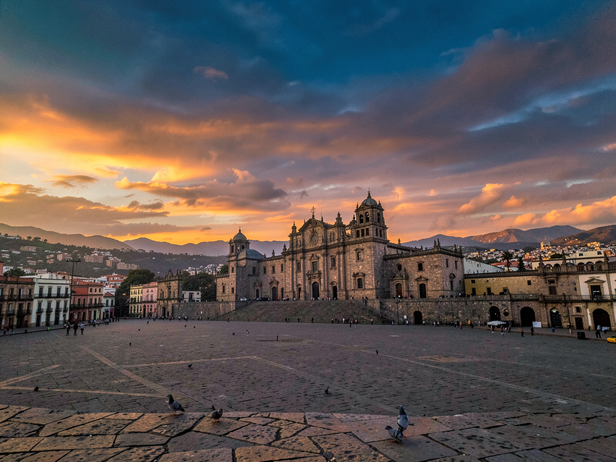
![Colonial Cathedral at Golden Hour]()
Colonial Cathedral at Golden Hour
Image credit : AI
Witnessing the grandeur of a colonial cathedral in Mexico, a dream for India travellers.
Mexico City: Altitude, Archaeology and the Best Meal You Will Eat This Year
Mexico City sits at 2,240 metres above sea level. Spend the first day doing very little, the altitude produces genuine fatigue and mild headaches in people arriving from sea-level cities, and that includes most Indian travellers flying in from Mumbai or Delhi via a Gulf hub. The city rewards patience. The historic centre, the Centro Histórico, holds the Zócalo, one of the largest city squares in the world, and the Templo Mayor, the excavated Aztec ceremonial complex that sits directly beneath a colonial cathedral, the layers of civilisation visible in cross-section. The Museo Nacional de Antropología in Chapultepec Park houses the Aztec Sun Stone and pre-Columbian collections that take a full day to see properly. Coyoacán, the southern neighbourhood where Frida Kahlo was born and died, is walkable and unhurried, the Casa Azul now a museum with original rooms intact. Food is the other argument for the city. Mexico City has more street-food variety per square kilometre than almost any comparable capital, tacos de canasta, tlayudas, tamales, and an entire world of regional moles. The Mercado de San Juan in the centre and the Mercado de Medellín in Colonia Roma are both worth a morning. A mid-range hotel in Roma Norte or Condesa costs between 4,000 and 8,000 pesos per night, roughly ₹1,700 to ₹3,400 at current exchange rates, and those neighbourhoods put you within walking distance of the city's best restaurants and parks.
Getting to the Yucatan: Flight or the Long Way
Cancún is a two-hour domestic flight from Mexico City. Aeromexico, Volaris, and VivaAerobus all operate the route; a one-way fare booked two to three weeks ahead typically runs between 1,500 and 4,500 pesos. The ADO bus, a first-class coach service, covers the same route in roughly 24 hours through Veracruz and Villahermosa, it is a genuine overnight journey, not a short hop, but the Gulf coast scenery through Veracruz state is worth knowing about for a second trip. Most travellers fly. Cancún itself is a hotel strip on a lagoon and not the reason to come. The reason is what surrounds it.
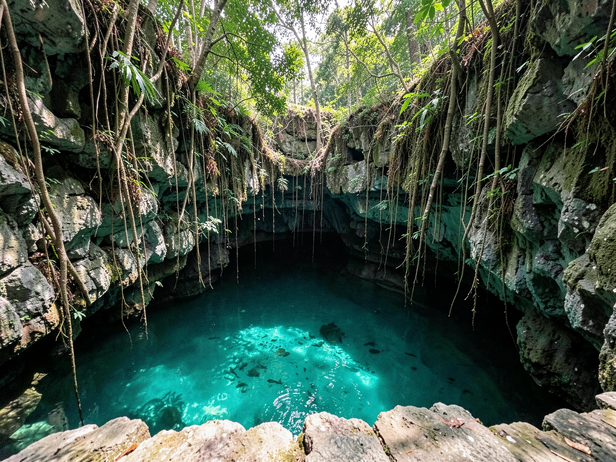
![Turquoise Cenote's Depths]()
Turquoise Cenote's Depths
Image credit : AI
Discovering the breathtaking beauty of a Mexican cenote, a must-see on any Mexico trip cost from India.
The Yucatan Coast: Cenotes, Ruins and the Riviera Maya
The Yucatan Peninsula sits on a vast limestone shelf with almost no surface rivers. Rainwater dissolves the rock over millennia and creates cenotes, sinkholes that drop into underground freshwater pools connected by cave systems. There are an estimated 6,000 to 10,000 cenotes across the peninsula. Gran Cenote near Tulum is accessible, clear, and genuinely beautiful; Ik Kil near Chichén Itzá is a vertical shaft with hanging roots and turquoise water at the bottom. Both are swimmable. Chichén Itzá is the most visited Maya archaeological site in Mexico and deserves the reputation, El Castillo, the stepped pyramid, is precisely aligned so that twice a year at the equinoxes a shadow of a serpent descends its northern staircase. Entry costs around 571 pesos for the federal zone. Arrive before 10 am; by noon the heat and the crowds make it difficult. Tulum's ruins sit on a cliff above the Caribbean, a compact site that takes two hours and delivers one of the more dramatic archaeological backdrops anywhere. The town of Tulum itself has shifted from backpacker to design-hotel territory over the past decade; accommodation ranges from 3,000 pesos a night in the town to 15,000 pesos and beyond in the jungle and beach hotel zones. Bacalar, four hours south of Cancún by ADO bus, is a lake of seven colours, the variation in water depth and sediment creates distinct bands of blue, turquoise, and green visible from the town's 17th-century fort. It has not yet been absorbed into the Riviera Maya resort circuit and is quieter for it.
When to Go and What It Costs
October through April is dry season across most of Mexico. The Yucatan's hurricane season runs June through November, with peak risk in September and October, the schedule date of this piece falls at the edge of that window, so travellers planning an October departure should watch the forecast and ensure travel insurance covers weather disruption. Mexico City is temperate year-round, cooler and wetter June through September. December and January are the most crowded months in the Yucatan; February and March offer good weather with slightly thinner crowds. A ten-day trip, three nights in Mexico City, seven nights split between the Yucatan sites, costs a working estimate of ₹1.5 to ₹2.5 lakh per person, including international flights from India via a hub, domestic flight, accommodation at mid-range properties, food, and entry fees. International flights are the largest variable; routing through Dubai, Madrid, or London affects both price and total travel time significantly. Travel insurance covering medical evacuation is worth the premium, public hospitals in tourist zones vary considerably in quality, and the nearest facility equipped for serious care may not be the nearest facility.