Greece sells itself on one image: a blue dome against a white wall above a caldera. That image is real, and it costs accordingly. A bed in Oia in July runs north of ₹25,000 a night, the lanes are shoulder-to-shoulder by ten in the morning, and the sunset viewpoint requires arriving an hour early to claim a spot. None of that is a reason to skip Greece. It is a reason to read the ferry timetable before booking the flight.
The Peloponnese: Four UNESCO Sites and No Cruise Ships
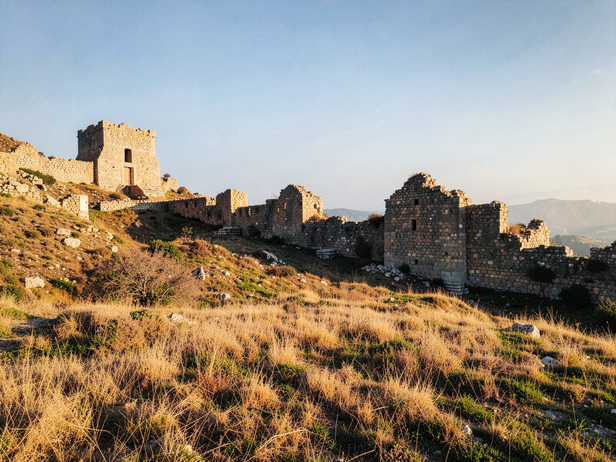
The Peloponnese hangs off the southern mainland like a hand reaching into the Mediterranean, connected to the rest of Greece by the Corinth Canal and a pair of bridges. It holds Mycenae, Epidaurus, Mystras, and the medieval port of Monemvasia, four UNESCO World Heritage Sites, and on most days at most of them, you will be nearly alone. Mycenae, where the Lion Gate has stood since roughly 1250 BCE, charges around €12 entry. The guesthouse town of Nafplio, the first capital of modern Greece, has hotels in Ottoman-era buildings for ₹5,000 to ₹9,000 a night in shoulder season. The drive from Nafplio to Monemvasia along the eastern coast takes three hours and passes through villages where the taverna still writes the daily catch on a chalkboard. There are no cruise-ship tenders. There is no queue for the view.
![Ancient Lion Gate Ruins]()
Ancient Lion Gate Ruins
Image credit : AI
Exploring ancient ruins, I discover the impressive Lion Gate. This view reminds me of the rich history found when traveling Greece beyond Santorini.
The Ferry Grid: How Greece Actually Moves
The Greek ferry network is one of the most extensive domestic maritime systems in Europe, run primarily by operators including Hellenic Seaways, Blue Star Ferries, and Seajets, with routes radiating from Piraeus, Rafina, and Patras. A slow overnight ferry from Piraeus to Heraklion in Crete, a journey of roughly 340 kilometres, costs around €35 in a reclining seat. A fast catamaran from Athens to Hydra takes 90 minutes and around €28. Hydra has no cars, no motorbikes, and no airport. Luggage moves on donkeys. The island runs on foot and on silence, and a room there in October costs a third of what it costs in August. The ferry grid rewards flexibility. Book the destination; buy the ticket two or three days before sailing rather than months ahead, and you can reroute as the weather or the mood shifts. The one exception is the high-speed catamarans in July and August, which do fill. Slow ferries rarely do.
The Months That Change the Price
Greek tourism runs on a sharp seasonal curve. July and August are the peak: every island is full, every price is at its ceiling, and the meltemi wind turns the Aegean choppy enough that ferry services to smaller islands are occasionally suspended. The months that cost far less are May, June, and September through mid-October. In May, the wildflowers are still on the hillsides in the Peloponnese, the sea temperature at Nafplio reaches around 19°C, swimmable for most, and accommodation rates are roughly 40 to 60 percent below their August peak. September is arguably the best month in Greece: the water is at its warmest after a full summer of heating, the crowds have thinned, and the light in the late afternoon turns the stone of Mystras the colour of old honey. October is the edge of the season. Some island tavernas close after the first week. Ferry frequency drops. But the mainland, Athens, the Peloponnese, Thessaloniki, runs fully through October, and the price gap widens further. A four-star hotel in the centre of Athens that charges ₹18,000 in August charges ₹8,000 in October for the same room.
![Aegean Ferry at Dusk]()
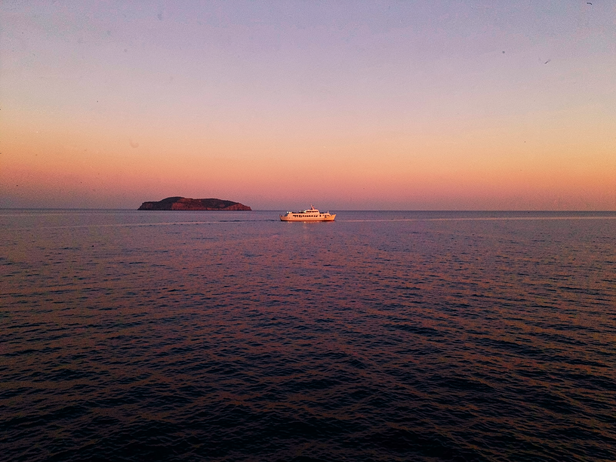
Aegean Ferry at Dusk
Image credit : AI
I'm experiencing Greece ferry travel tips on this serene Aegean crossing at dusk.
What Santorini Actually Costs, and What to Do With That Budget Elsewhere
A realistic four-night stay in Santorini in July, mid-range hotel, meals out, the cable car, a boat tour of the caldera, runs to roughly ₹1,20,000 to ₹1,50,000 for two people, excluding flights. The same budget, applied to ten days across the Peloponnese and two Aegean islands in September, covers a rental car for five days, ferry tickets for four crossings, guesthouses in Nafplio, Hydra, and Paros, and enough taverna meals that you stop tracking them. The trade is not between a good trip and a lesser one. It is between one postcard and a country. Santorini will still be there, and it will always be worth a night or two if the budget allows. But Greece without Santorini is not a compromise. It is a different argument entirely, one the Peloponnese wins before you have even crossed the Corinth Canal.