India now hosts more than a dozen destination marathons worth travelling for, spread across terrain that swings from coastal flatlands to Himalayan passes above 3,500 metres. The races are not interchangeable. The training window for a sea-level event in January looks nothing like the preparation for a high-altitude run in September, and the gap between the two is where most runners make their biggest mistakes.
The Sea-Level Races: Mumbai, Delhi and Hyderabad
![Indian Coastal City Dawn Run]()
Indian Coastal City Dawn Run
Image credit : AI
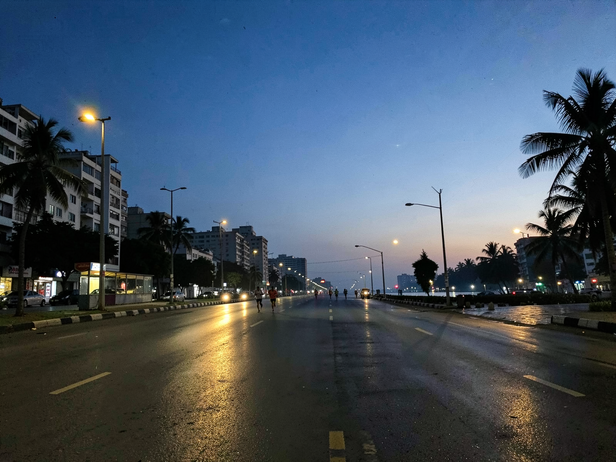
Early morning runners grace the waterfront promenade of a large Indian coastal city, a serene start to the day. #destinationmarathonIndia
The Tata Mumbai Marathon, held every January, is the anchor of the Indian race calendar. The course runs from Chhatrapati Shivaji Maharaj Terminus down Marine Drive and back, flat enough that most runners set personal bests here. The entry window opens in July, and the race sells out within weeks. A standard 18-week training block puts the long-run build starting in September, when Mumbai's humidity has just begun to ease. The Vedanta Delhi Half Marathon in October and the Hyderabad Marathon in August are the other major sea-level events. Delhi's course threads through the diplomatic enclave and Lodi Garden, with autumn air that is cool enough for fast running if the AQI cooperates. Hyderabad in August is the outlier: monsoon-season heat and humidity make it a character test rather than a time trial, and most runners treat it as a long training run for something later in the year.
Mid-Altitude Races: Pune, Bengaluru and the Nilgiris
Pune sits at roughly 560 metres and the Bajaj Allianz Pune Marathon, held in September, is one of the better-organised mid-sized races in the country. The course rolls through Koregaon Park and along the Mula-Mutha riverfront. At this elevation the altitude effect is negligible, but September in Pune can still be warm and damp. Bengaluru's Tata Consultancy Services World 10K is not a marathon but deserves mention because it draws the largest field of any road race in India and the city's 920-metre elevation makes it a useful altitude primer for anyone planning a Himalayan race later. The Ooty Ultra, run through the Nilgiri hills at around 2,200 metres, is where the conversation shifts. The course gains and drops elevation continuously, and runners who have only trained on flat roads find the quad-loading on the descents more punishing than the climbs. A 16-week block that includes at least four long runs with 600 metres or more of cumulative gain is the minimum sensible preparation.
The Altitude Races: Ladakh, Manali and Spiti
![Ladakh Runner, Himalayan Dawn]()
Ladakh Runner, Himalayan Dawn
Image credit : AI
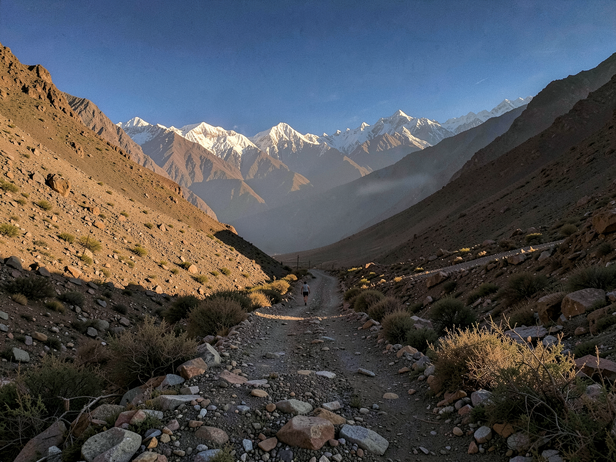
Early morning runner on a Ladakh Marathon route. High altitude training in the Himalayas.
The Ladakh Marathon, held in Leh every September, is the most demanding destination race in India by almost any measure. Leh sits at 3,524 metres. The full marathon course climbs further, touching sections above 3,800 metres. At that elevation, oxygen availability drops to roughly 65 percent of what a runner breathes at sea level. The physiological consequence is not just slower times: without adequate acclimatisation, the risk of acute mountain sickness is real. The standard advice from high-altitude medicine is to spend at least five to seven days at Leh's elevation before racing, arriving no later than the Wednesday before a Sunday start. Flying directly from sea level to Leh and racing four days later is a decision that ends a significant number of runners' races before the halfway mark. The Manali to Leh Ultra, a multi-stage event that covers sections of the Leh-Manali highway, adds distance to the altitude challenge. The Spiti Marathon, newer and smaller, runs through Pin Valley at elevations between 3,800 and 4,200 metres and is genuinely one of the highest road races in the world. Entry numbers are capped, logistics are self-managed to a degree that Mumbai runners find startling, and the course is not certified, so times are unofficial. None of that diminishes what it demands.
Building the Training Window
The single most common error among destination marathon runners is treating the travel as an add-on to a standard training plan. For a sea-level race like Mumbai, a standard plan works fine: 18 weeks, one long run per week building to 32 to 35 kilometres, two quality sessions, the rest easy. For Leh or Spiti, the training plan is only part of the preparation. Altitude acclimatisation cannot be simulated at home in Bengaluru or Chennai. Some runners use altitude tents, which do produce measurable increases in red blood cell production over four to six weeks of nightly use, but the research on whether this translates to race-day performance at 3,500-plus metres is not settled. The more reliable approach is to build the trip itself into the schedule: arrive in Manali or Keylong a week before Leh, spend two nights there at around 2,050 metres, drive to Leh, and use the remaining days for short easy runs rather than rest. Running at altitude while acclimatising accelerates the adaptation faster than sitting still, as long as the effort stays genuinely easy. For the Ooty Ultra or any race in the 2,000-to-2,500-metre band, two to three days of acclimatisation is usually sufficient for runners who have a solid aerobic base.
What to Carry, What to Expect on the Ground
Destination marathons in India vary enormously in organisation. Mumbai and Delhi are world-class productions: chip timing, medical tents every three kilometres, gel stations, finisher medals that arrive within a week. Spiti and the Ladakh Marathon are different propositions. Mandatory gear lists at Leh include a thermal layer, an emergency foil blanket, and a charged phone with the race director's number saved. Medical support exists but is stretched across a long course at altitude. Runners carry their own nutrition for most of the distance. The Nilgiri races have their own logistics: the roads are shared with traffic, the weather can shift from clear to cold fog in twenty minutes, and the course markings in the pre-dawn sections are less generous than a runner used to Mumbai's illuminated route might expect. These are not complaints. They are the actual conditions, and knowing them in advance is the difference between a race that goes wrong for a fixable reason and one that goes wrong for a preventable one. The destination is part of the race. The preparation should treat it that way.