The berth you pick on a long-distance Indian train is one of the few travel decisions that pays off or punishes you for eight hours straight. Most passengers choose by availability, then wonder why they couldn't sleep. The variables are knowable in advance.
Where Your Coach Sits in the Rake Matters
Coaches at the very front of a rake sit closest to the engine. On diesel-hauled trains, that means engine noise and vibration that travel through the floor and walls all night. On electric locomotives the hum is lower but the shunting jolt when the train slows is felt hardest at the front. Coaches at the far rear carry a different problem: they amplify the whip effect on curves, a side-to-side sway that is mild in the middle of the rake and noticeable at the tail. The coaches numbered in the middle third of the rake, typically S4 through S7 on a standard Sleeper configuration, or B3 through B5 in 3AC, ride the smoothest. When you book on IRCTC, the coach number appears on your ticket. If you are choosing between two available berths in different coaches, pick the one closer to the centre of the train.
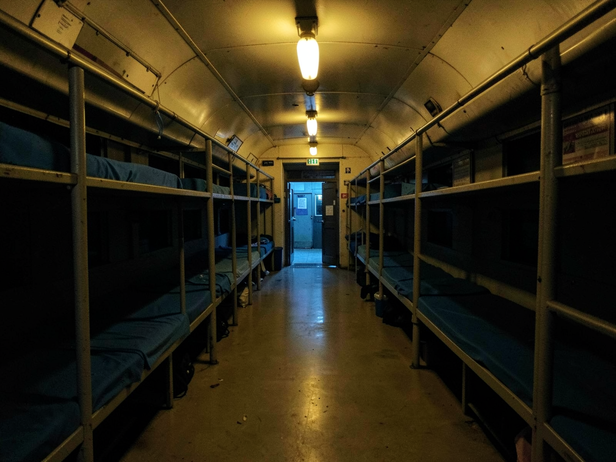
![Indian Sleeper Coach Corridor]()
Indian Sleeper Coach Corridor
Image credit : AI
Exploring the quiet Indian Railways sleeper coach corridor, I consider the best berth for sleeping on this journey.
The Berth Types and What Each Actually Means for Sleep
A standard Sleeper or 3AC bay has six berths: lower, middle, upper on each side, and side lower and side upper facing the aisle. Each has a different sleep profile.
Lower berths are wide and easy to access, but they are social furniture until 10 p.m. Passengers without a berth, co-passengers who want to sit, and anyone passing through will use your berth as a seat for hours. If you board at a busy junction mid-evening, you may not lie down until well past midnight. Lower berths suit people who board early and can hold the berth, or who travel in groups that can manage the bay together.
Middle berths are the practical compromise. They fold up during the day, which means you cannot lie down before 9 or 10 p.m. by unspoken convention, but once up they are quiet and largely left alone. The berth is narrower than the lower and the ceiling is closer, but the sleep is usually uninterrupted.
Upper berths are the best option for light sleepers. Nobody needs to climb past you, nobody needs your berth as a seat, and the gentle rocking of the carriage is felt more at height, which some people find easier to sleep through. The trade-off is a low ceiling on older coaches and no natural light in the morning if the window is below you.
Side lower is the berth that surprises people most. It sits perpendicular to the main bays, next to the aisle and the door vestibule. The berth is shorter than the main berths, roughly 180 cm against the main berth's 190 cm, which matters if you are tall. More significantly, it is exposed. Every passenger who walks to the toilet, every vendor who boards at a station, every person who steps out for chai at 3 a.m. passes within arm's reach. The door to the vestibule lets in cold air on night runs through Rajasthan or the Deccan plateau in winter, and the latch noise is constant. Side lower is allocated to passengers who need easy access, senior citizens and those with disabilities get priority, and the Railways' booking system tries to assign it accordingly. If you have been given a side lower and have no mobility need, it is worth trying to swap with someone in the main bay who would prefer the ground-level access.
Side upper is quieter than side lower for the same reason upper main berths are quieter than lower ones. The foot traffic below you does not reach you, the cold draft from the door is less direct, and most of the station noise stays at floor level. The berth is the same shorter length as side lower, so the tall-person caveat applies. For a solo traveller who wants to be left alone, side upper in a middle coach is often the best available berth on a fully booked train.
The Details That Decide the Last 20 Percent
Window position in a bay is worth checking. In a six-berth bay, the window typically sits between the lower and middle berths on one side. The berth directly beside the window gets natural ventilation when the shutter is open and morning light when it is not. In summer, that same berth gets direct sun from around 6 a.m. and the metal frame of the window heats up through the night if the train runs west-facing. In winter, the window is a source of cold air if the seal is worn, which on older ICF coaches it often is. The newer LHB coaches have better window seals and slightly wider berths, if the train you are booking runs LHB stock, the comfort floor is higher across all berth types.
Proximity to the toilet is the variable passengers mention most after the fact. The toilets are at both ends of each coach. The berths at either end of the coach, the first and last bays, sit closest to them. The smell is inconsistent and depends entirely on how well the coach has been cleaned that day, but the foot traffic and the door noise are constant. If you have a choice, avoid the first and last bays in any coach.
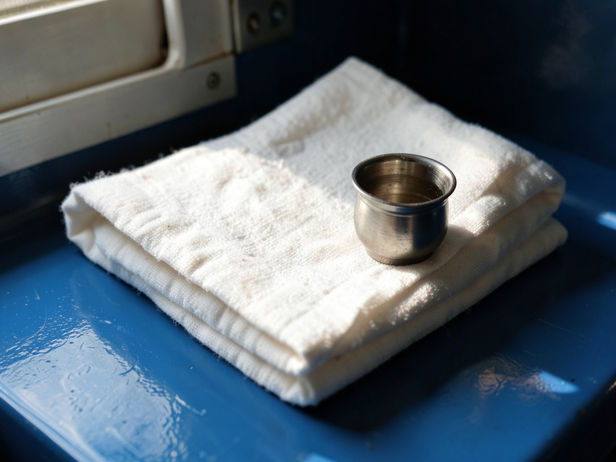
![Folded Train Blanket and Chai]()
Folded Train Blanket and Chai
Image credit : AI
My folded blanket and chai glass on the Indian train berth. I'm considering the best berth for sleeping.
What You Can Actually Control at Booking
IRCTC's seat selection interface, when available on a train, lets you pick a specific berth number. Berth numbers are printed in the coach layout diagrams that circulate widely online for both ICF and LHB configurations. Knowing that berth 15 in an S-class coach is a middle berth in the third bay from the door-end, away from the toilet, is the kind of information that turns a restless night into a manageable one. The interface is not available on all trains or all classes, but on routes where it appears, spending two minutes on it before confirming the booking is the simplest intervention available. On trains where you cannot pick, the berth type shown on the ticket, lower, middle, upper, side lower, side upper, is still actionable. A side lower in coach S2 on a train where S2 is the first coach behind the engine is a different experience from a side upper in S5. Both facts are on the ticket before you board.