The monsoon does not merely wet India, it closes it. Passes above 4,000 metres fill with snow and slide risk. Forest departments lock gates on roads through tiger reserves when visibility drops and paths turn to silt. River ferries on the Brahmaputra and in the Sundarbans suspend crossings when currents run too fast to read. By the time September ends and October begins, those closures lift one by one, and the routes that emerge are, for a few weeks, as uncrowded and as intact as they ever get.
The High Passes of Ladakh and Spiti
The Rohtang Pass, which connects Manali to Lahaul, typically reopens to private vehicles in late September or early October, depending on the Border Roads Organisation's snowfall assessment. Kunzum La, the 4,590-metre pass between Spiti and Lahaul, follows a similar schedule and is usually passable through mid-October before the first heavy snowfall of the season. The Manali-Leh Highway, which uses neither of these but crosses Baralacha La at 4,890 metres and Tanglang La at 5,359 metres, stays open a little longer, often into late October, because the BRO prioritises it as a supply route. What this means practically: if you want to drive Manali to Leh without booking a flight, the window is roughly October 1 to October 25, with the caveat that a single overnight snowfall can close any of these passes without notice. Check the BRO's daily road status updates, which are posted on their official website and are more reliable than travel forums.
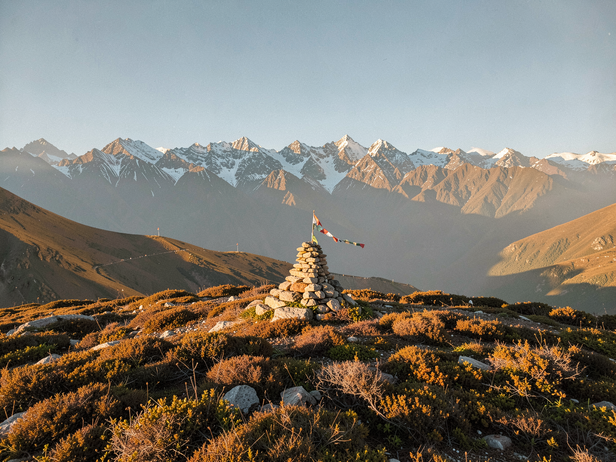
![Mountain Pass Golden Hour]()
Mountain Pass Golden Hour
Image credit : AI
I witness the clear post-monsoon sky over a majestic mountain pass, a scene bathed in low golden light. The Ladakh Spiti road is a testament to nature's beauty.
Sikkim's Eastern Passes and the Road to Gurudongmar
Nathu La, the 4,310-metre pass on the India-China border in Sikkim, closes during the monsoon and reopens for Indian tourists, foreign nationals are not permitted, in October, subject to army clearance. The road to Gurudongmar Lake at 5,183 metres, one of the highest lakes in the world, also becomes accessible again after the rains, though it requires an inner-line permit obtained in Gangtok. The post-monsoon light in North Sikkim is particular: the sky is washed clean, the Kanchenjunga range is fully visible from the road, and the high-altitude scrub turns rust and amber. The season here is genuinely short, by November, snowfall makes the upper roads unreliable, so October is the whole window.
Forest Roads in the Western Ghats
Several forest roads inside and around wildlife reserves in Kerala, Karnataka and Tamil Nadu close during the monsoon under Forest Department orders. The road through Wayanad Wildlife Sanctuary, the track into Kudremukh National Park, and the approach roads to Anamalai Tiger Reserve all fall into this category. They reopen in October, and the weeks immediately after reopening are the best time to use them: the undergrowth is dense and green, waterfalls that are dry by December are still running, and elephant and bison sightings are more reliable because the animals move to lower elevations after the rains. Entry still requires a Forest Department permit, booked through the respective state forest department's online portal; walk-in permits are available at some checkpoints but not all. Carry proof of booking. Road surfaces immediately after reopening can be rough, fallen branches, soft shoulders, the occasional wash-out, so check with the forest department before driving a low-clearance vehicle.
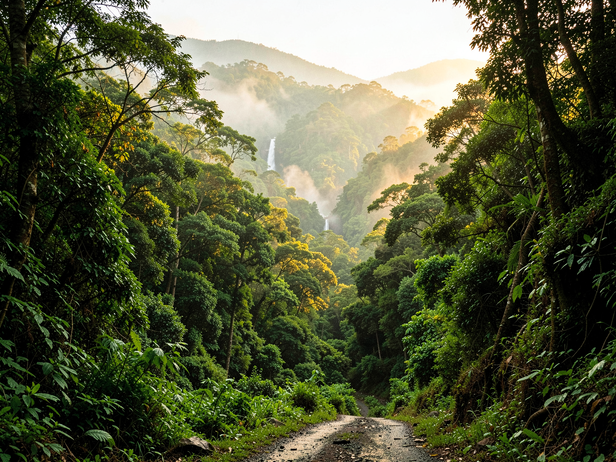
![Misty Ghats Road After Rain]()
Misty Ghats Road After Rain
Image credit : AI
Exploring post-monsoon travel in the Western Ghats, where mist rises and golden light bathes the forest road.
River Ferries in Assam and the Sundarbans
The Brahmaputra runs at its most dangerous between June and September: currents are unpredictable, sandbanks shift, and visibility across the river drops in rain. Several ferry crossings that connect Assam's north and south banks suspend or reduce services during this period. By October, the river has begun to settle. The Neamati-Majuli ferry, which is the main route to Majuli island, one of the largest river islands in the world, resumes full services, and the crossing itself, about an hour on a flat-bottomed government ferry, is at its most straightforward in the post-monsoon weeks before fog sets in by December. In the Sundarbans, the network of boat ferries that connects the inhabited islands of South 24 Parganas district is similarly more reliable in October and November than during the rains. Boats run from Godkhali and Basanti to the forest buffer zones, and the mangroves in October carry the particular quality of light that comes after months of cloud: low, gold, and long.
Planning the Window Without Wasting It
The post-monsoon opening is not a single date, it is a sequence. The Ghats roads come back first, usually by early October. The Brahmaputra ferries stabilise through October. The Ladakh and Spiti passes are open but closing, so they need to be used in the first three weeks of October rather than the last. Sikkim's high-altitude routes are the most permit-dependent and the most weather-variable; build two days of buffer into any itinerary there. Costs in this window are lower than in peak summer, hotels in Leh and Manali drop rates significantly in October, and crowds are thin enough that accommodation is available without booking months ahead. The constraint is not money or availability. It is the speed at which the window closes. A snowstorm on Rohtang in late October is not unusual. A cyclonic system in the Bay of Bengal can push rain back into the Ghats in November. The post-monsoon window is real, but it is not patient.