
‘Criticism Is Not Hate’: A R Rahman’s Children React as Composer Faces Online Attacks
Nidhi | Jan 19, 2026, 16:06 IST

AR Rahman says 'I never wished to cause pain' on the 'communal' remark controversy
Image credit : IANS
After A R Rahman faced online backlash over comments on communal undercurrents in Bollywood and criticism of Chhaava, his daughters Khatija and Raheema publicly showed support. Malayalam composer Kailas Menon condemned the abuse directed at Rahman, urging people to “disagree, don’t disgrace.” The episode has sparked a wider debate on freedom of expression, criticism, and hate speech in the arts.
After music composer A R Rahman faced backlash for comments he made about perceived “communal” undercurrents in Bollywood and his criticism of Chhaava for cashing in on “divisiveness,” his daughters Khatija Rahman and Raheema Rahman broke their silence. Both publicly supported Malayalam music composer Kailas Menon, who issued a strong statement asking people to “disagree, don’t disgrace” Rahman.
Kailas Menon shared a screengrab of a comment that called Rahman a “disgrace to Tamil Nadu and India” and responded with a detailed note on Instagram. “Disagree, don’t disgrace,” he wrote, adding that people blaming A. R. Rahman for speaking his mind were missing a basic point. According to Kailas, Rahman spoke about how he felt, and that was his right.
The composer further stated that while people may disagree with Rahman, they cannot deny him the freedom to express his experience. “What followed, however, has gone far beyond disagreement and entered the space of abuse and character assassination,” he wrote.
Calling out the tone of the criticism, Kailas questioned those attacking Rahman under the guise of opinion. “Calling a globally respected artist a ‘disgrace,’ questioning his faith, mocking his recent works, and reducing his lived experience to a ‘victim card’ is not criticism. It’s hate speech presented as opinion,” he said.
He also reminded readers that Rahman is not a random voice but someone who carried Indian music to the world, represented the country with dignity, and shaped generations through his work. “Decades of contribution to Tamil culture, Indian cinema, and global music do not disappear because an artist expresses a personal view,” Kailas wrote.
Adding further, he noted that debating Rahman’s opinion on a film or disagreeing with his interpretation is fair, but public humiliation or attacking his integrity to silence him is not. “Freedom of speech applies to Rahman as much as it applies to his critics,” he said, concluding with, “Criticism is fine, but outrage without respect says more about us than about him.”
Rahman’s daughter Khatija responded to Kailas Menon’s post by commenting with clapping, fire, hundred, and heart emojis. She also re-shared the post on her Instagram stories, clearly expressing agreement with his stand.
![Image credit: khatija.rahman Instagram]() In a separate Instagram story, Khatija shared a note that read: “Dear God, bless my friends who checked in on me without wanting anything in return. Return that love to them multiplied and bless everything they touch.”
In a separate Instagram story, Khatija shared a note that read: “Dear God, bless my friends who checked in on me without wanting anything in return. Return that love to them multiplied and bless everything they touch.”
![Image credit: khatija.rahman Instagram]() Rahman’s other daughter, Raheema, also re-shared Kailas Menon’s post about her father on her Instagram stories. Rahman’s son Ameen has not commented on the controversy so far.
Rahman’s other daughter, Raheema, also re-shared Kailas Menon’s post about her father on her Instagram stories. Rahman’s son Ameen has not commented on the controversy so far.
In an interview with the BBC Asian Network, Rahman was asked whether he ever felt prejudice in Bollywood as a Tamil composer. He responded by saying, “Maybe I never got to know of this, maybe it was concealed by God, but I didn’t feel any of this.”
He went on to add that over the past eight years, a power shift may have occurred. “People who are not creative have the power now. It might be a communal thing also… but it is not in my face,” he said. Rahman also criticised Chhaava for cashing in on “divisiveness.”
Following the backlash, Rahman shared a video statement on Sunday, reiterating his love for the country.
As reactions continue to unfold, the support from his children and fellow musicians has shifted the focus toward the distinction between legitimate disagreement and personal attacks, echoing Kailas Menon’s central message disagreement is valid, but disgrace and hate are not.
Kailas Menon calls out character assassination against A R Rahman
Kailas Menon shared a screengrab of a comment that called Rahman a “disgrace to Tamil Nadu and India” and responded with a detailed note on Instagram. “Disagree, don’t disgrace,” he wrote, adding that people blaming A. R. Rahman for speaking his mind were missing a basic point. According to Kailas, Rahman spoke about how he felt, and that was his right.
The composer further stated that while people may disagree with Rahman, they cannot deny him the freedom to express his experience. “What followed, however, has gone far beyond disagreement and entered the space of abuse and character assassination,” he wrote.
Calling out the tone of the criticism, Kailas questioned those attacking Rahman under the guise of opinion. “Calling a globally respected artist a ‘disgrace,’ questioning his faith, mocking his recent works, and reducing his lived experience to a ‘victim card’ is not criticism. It’s hate speech presented as opinion,” he said.
He also reminded readers that Rahman is not a random voice but someone who carried Indian music to the world, represented the country with dignity, and shaped generations through his work. “Decades of contribution to Tamil culture, Indian cinema, and global music do not disappear because an artist expresses a personal view,” Kailas wrote.
Adding further, he noted that debating Rahman’s opinion on a film or disagreeing with his interpretation is fair, but public humiliation or attacking his integrity to silence him is not. “Freedom of speech applies to Rahman as much as it applies to his critics,” he said, concluding with, “Criticism is fine, but outrage without respect says more about us than about him.”
AR Rahman’s children respond
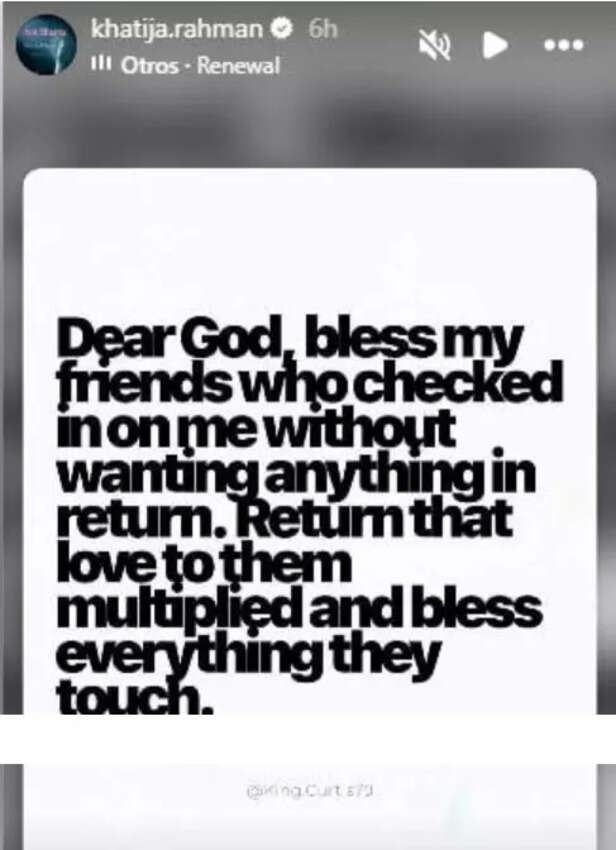
Image credit: khatija.rahman Instagram

Image credit: khatija.rahman Instagram
What A R Rahman said
He went on to add that over the past eight years, a power shift may have occurred. “People who are not creative have the power now. It might be a communal thing also… but it is not in my face,” he said. Rahman also criticised Chhaava for cashing in on “divisiveness.”
Following the backlash, Rahman shared a video statement on Sunday, reiterating his love for the country.
As reactions continue to unfold, the support from his children and fellow musicians has shifted the focus toward the distinction between legitimate disagreement and personal attacks, echoing Kailas Menon’s central message disagreement is valid, but disgrace and hate are not.