
NASA Says Now Earth Will Have Two Moons Until 2083
Kazi Nasir | Oct 22, 2025, 16:59 IST

Moon Light
Image credit : Freepik
NASA has confirmed that Earth has another temporary 'second moon' a small asteroid named 2025 PN7. Measuring between 18 and 36 metres this space rock follows a similar orbit to Earth around the Sun making it a quasi-moon. Though it won’t appear beside our Moon or influence tides its presence excites astronomers and sky-watchers alike. Scientists say 2025 PN7 has been near Earth for about 60 years and will stay until 2083. Its discovery reminds us how dynamic and ever-changing our solar system truly is.
Highlights
- NASA confirms asteroid 2025 PN7 as a temporary quasi-moon of Earth
- Discovered by the University of Hawaii’s sky survey
- Has been near Earth for nearly 60 years and will remain until 2083
NASA has recently confirmed that Earth has acquired a temporary Moon. So are we going to observe two moons in a single sky? Not exactly. Asteroid 2025 PN7, the officially quasi-moon is only 18 to 36 meters wide. The space rock orbits the sun at a similar pace to Earth. However, like our Moon, 2025 PN7 is not gravitationally bound to Earth but still shares a similar orbital trajectory around the Sun.
![Quasi-Moon]() Though the space rock has a name, 2025 PN7 is still not a real moon. Because our real moon orbits the Earth and 2025 PN7 does not directly orbit the Earth but follows a similar path around the Sun which makes it a "Quasi Moon." 2025 PN7 was discovered by the University of Hawaii during a sky survey. It's fascinating that this new moon has been orbiting near Earth for nearly 60 years, undetected. Scientists believe that this new moon will remain close to the periphery of Earth until around 2083.
Though the space rock has a name, 2025 PN7 is still not a real moon. Because our real moon orbits the Earth and 2025 PN7 does not directly orbit the Earth but follows a similar path around the Sun which makes it a "Quasi Moon." 2025 PN7 was discovered by the University of Hawaii during a sky survey. It's fascinating that this new moon has been orbiting near Earth for nearly 60 years, undetected. Scientists believe that this new moon will remain close to the periphery of Earth until around 2083.
![Second Moon]() No, because experts have assured that the quasi-moon never comes closer than 4 million kilometres which is 10 times farther than the moon. So the Earth face no threats and unlike the real moon, it has no impact on tides or our day to day life.
No, because experts have assured that the quasi-moon never comes closer than 4 million kilometres which is 10 times farther than the moon. So the Earth face no threats and unlike the real moon, it has no impact on tides or our day to day life.
![Social Media Memes]() After NASA's announcement social media buzzed with rumours. Here are few important facts:
After NASA's announcement social media buzzed with rumours. Here are few important facts:
Asteroid 2025 PN7 is not a permanent companion of Earth; its presence is temporary in our solar system. Earth has had several other quasi-moons in the past, including Kamo'oalewa. China recently this year launched the Tianwen-2 spacecraft which aims to reach 469219 Kamo'oalew to collect samples.
These celestial companions also highlight the changing nature of this universe. As astrologers and scientists continue their study of 2025 PN7 the more complete interaction will unveil and more knowledge will come forward about our planet's journey through space.
2025 PN7, The Second Moon
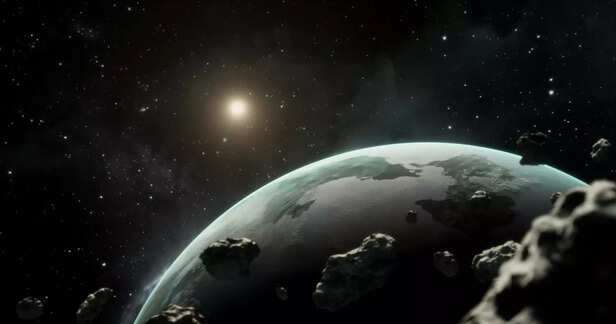
Quasi-Moon
Image credit : Freepik
Is it Dangerous?
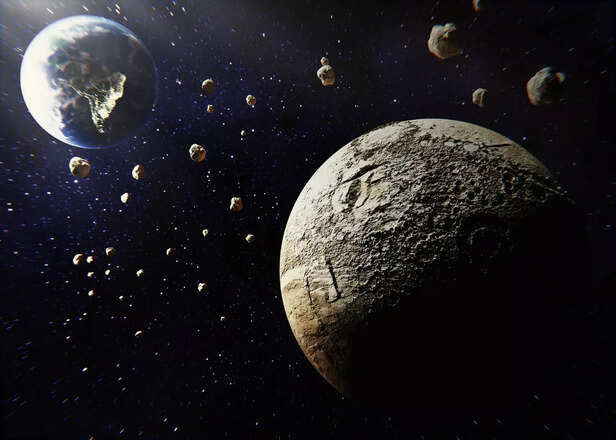
Second Moon
Image credit : Freepik
Online World

Social Media Memes
Image credit : Freepik
- This 2025 PN7 orbits the Sun, not directly the Earth.
- The term second moon is more poetic than scientific.
Asteroid 2025 PN7 is not a permanent companion of Earth; its presence is temporary in our solar system. Earth has had several other quasi-moons in the past, including Kamo'oalewa. China recently this year launched the Tianwen-2 spacecraft which aims to reach 469219 Kamo'oalew to collect samples.
These celestial companions also highlight the changing nature of this universe. As astrologers and scientists continue their study of 2025 PN7 the more complete interaction will unveil and more knowledge will come forward about our planet's journey through space.