When history recalls the wealthiest empires of the world, the Mughal Empire often features prominently for its opulent courts, monumental architecture, and dominance in the Indian subcontinent. At its peak around the 17th century, the Mughal Empire controlled about 24 % of the world’s economy, making it one of the richest states of its era.
However, history also records several other empires whose wealth, trade influence, and economic power rivalled or surpassed that of the Mughals — yet they are far less prominent in popular discourse. Below are seven such empires, drawn from regions across Africa, Asia, and Europe.
1. Mali Empire (c. 1235 – 1600)
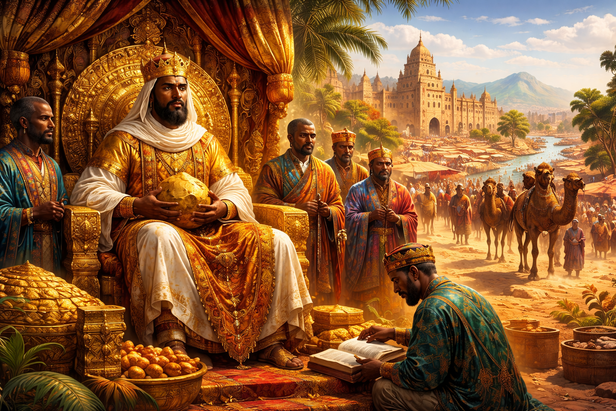
![Mali Empire]()
Mali Empire
Image credit : Ai
The Mali Empire of West Africa was one of the richest and most influential states of the medieval world, largely due to its control of gold and trans-Saharan trade. Under the reign of Mansa Musa (c. 1312 – 1337), the empire amassed extraordinary wealth. Musa’s legendary pilgrimage to Mecca reportedly distributed so much gold that it affected the value of the metal in markets across North Africa and the Middle East — highlighting just how vast Mali’s riches were.
Cities like Timbuktu became global hubs of commerce and scholarship, attracting traders and scholars from across the Islamic world.
2. Songhai Empire (c. 1456 – 1591)
Following the decline of Mali, the Songhai Empire rose to dominate much of West Africa, including the same rich trade networks. At its peak, Songhai was one of the largest empires in African history. Its economy was rooted in gold and salt trade, agriculture, and urban markets in cities like Gao and Timbuktu.
Through extensive trade routes and strategic location, Songhai rivalled other major powers of its time in wealth and regional influence.
3. Ottoman Empire (1299 – 1922)
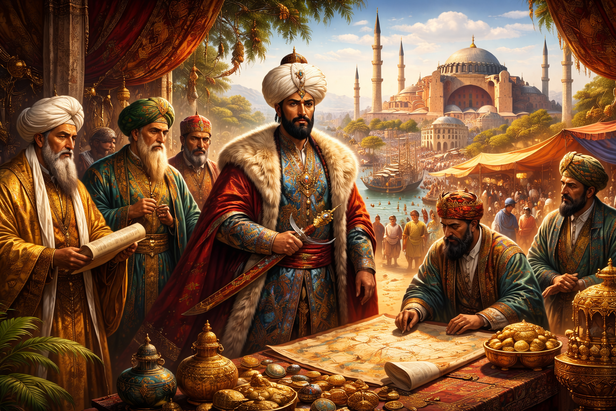
![Ottoman Empire]()
Ottoman Empire
Image credit : Ai
The Ottoman Empire was one of the longest-lasting and most powerful states in history. Spanning three continents at its zenith, the Ottomans controlled key trade routes between Europe and Asia and levied taxes on goods flowing along these routes.
This access to commerce in spices, silk, grain, and precious metals brought significant revenue, helping sustain the empire’s wealth over centuries. Despite being well-known historically, the economic scale of the Ottoman state often gets overshadowed in comparisons with the Mughals.
4. Song Dynasty (960 – 1279)
The Song Dynasty in China presided over one of the most dynamic economies of the medieval world. Its market economy, extensive trade networks, and technological innovations including early paper money - boosted economic productivity.
The Song economy was marked by booming silk and ceramics trade, agricultural productivity, and sophisticated urban markets, making it one of the wealthiest regions globally long before the rise of many later empires.
5. Ghana Empire (c. 300 – 1200)
Located in West Africa, the Ghana Empire (not related to the modern country of Ghana) was rich due to its control of trans-Saharan gold routes. Referred to by medieval Arab traders as the “Land of Gold,” the Ghana Empire’s rulers had access to abundant gold supplies that fueled commerce and diplomacy across Africa and beyond.
Though earlier in history, Ghana’s economic importance was immense and foundational to later West African kingdoms.
6. Safavid Empire (1501 – 1736)
The Safavid Empire of Persia (modern-day Iran) was a contemporary of the later Mughal period and equally prosperous. The Safavids controlled strategic land and maritime trade routes, agricultural lands, and luxury goods like silk and carpets which were highly sought after in Europe, Asia, and the Middle East.
This trade revenue, combined with cultural patronage and administrative strength, made the Safavids a wealthy and influential power in their era.
7. Chola Empire (c. 300 BCE – 1279 CE)
The Chola Empire of South India was one of the most powerful and prosperous South Asian states long before the rise of the Mughals. Its wealth was rooted in maritime trade across the Indian Ocean, agriculture, and strategic control of sea routes.
Under rulers like Rajaraja Chola I and Rajendra Chola I, the Cholas expanded their influence to Southeast Asia, fostering naval commerce and cultural exchange, and amassing significant riches over centuries.