
How Much the Rupee Has Fallen Since 1947 — The Drop Is Unbelievable
Nidhi | 3ec 03, 2025, 15:11 IST

The Indian rupee has hit a historic low of 90 per US dollar, marking its steepest fall since Independence. From an implied value of ₹3.3 per dollar in 1947 to nearly ₹90 today, the currency’s decline has been shaped by droughts, devaluations, financial crises, global shocks, FII outflows, and the latest tariff dispute with the United States. This article breaks down the complete timeline of the rupee’s fall, explains the key moments that accelerated its slide and examines why the 2025 plunge is unlike anything seen before.
For the first time ever, the Indian rupee breached the psychological barrier of 90 per dollar, slipping to 90.02 in early Wednesday trade. The slide, driven by aggressive dollar buying by banks, persistent FII outflows and hedging pressure from companies, marks a new low for the currency that has already fallen nearly 5 percent year-to-date.
The rupee is currently one of Asia’s worst-performing currencies, weighed down further by steep US tariffs on Indian goods and the prolonged uncertainty over a trade deal between New Delhi and Washington. Sat Duhra, portfolio manager at Janus Henderson Investors, told Reuters that the tariff dispute has “really accelerated the decline”, adding that India is now paying the highest US tariffs globally until the issue is resolved.
But today’s fall is only the latest chapter in a much longer story. To truly understand the significance of the rupee at 90, one needs to look back to where it all began in 1947 — and the journey is staggering.
![Rupee crashes to record low beyond 90 per dollar]() The viral idea that the rupee was equal to the dollar at Independence resurfaces every time the currency weakens. But records show this was never literally true.
The viral idea that the rupee was equal to the dollar at Independence resurfaces every time the currency weakens. But records show this was never literally true.
In 1947, the rupee was pegged to the pound sterling, not the dollar. Based on the peg, the implied value works out to roughly ₹3.3 per US dollar.
For years after Independence, the exchange rate remained administratively fixed — and relatively stable. The real slide began only when crises hit.
![RBI's move to bolster rupee trade aims to reduce dominance of US dollar]() Each decade brought its own pressures — monsoon failures, geopolitical tensions, oil shocks, global volatility, or domestic financial crises. Together, they pushed the rupee steadily downward.
Each decade brought its own pressures — monsoon failures, geopolitical tensions, oil shocks, global volatility, or domestic financial crises. Together, they pushed the rupee steadily downward.
This long-term sequence shows a clear pattern:
The rupee has weakened almost every time global stress, domestic crisis, or policy shifts rattled the economy.
![Indian Rupee likely to trade in 85.25-86.25/USD range; India-US trade deal to support currency: BoB Report]() Several overlapping pressures pushed the rupee to this unprecedented level:
Several overlapping pressures pushed the rupee to this unprecedented level:
This added immediate upward pressure on the USD–INR rate.
FIIs continued pulling money out, weakening the currency further
Businesses rushed to protect themselves against future rupee weakness, adding more demand for dollars.
The steep new tariffs — the highest India has ever faced — amplified the decline.
Uncertainty in negotiations deepened market concerns.
The combined effect pushed the currency from 88–89 in recent days to 90.02, setting a historic low.
In 1947, India effectively began with a currency valued at ₹3.3 per dollar.
Today, it stands at ₹90 per dollar.
This means the rupee has weakened by over 27 times in 78 years — a decline shaped by multiple global shocks, domestic crises, and economic transitions. And despite short periods of stability, the broader trend has been a steady downward slide.
While the psychological shock of 90 is significant, much depends on:
• the resolution of the tariff dispute
• progress in India–US trade negotiations
• global interest rate trends
• domestic inflation and fiscal stability
• foreign investor sentiment
For now, the rupee is expected to stay under pressure unless major positive triggers emerge.
The rupee is currently one of Asia’s worst-performing currencies, weighed down further by steep US tariffs on Indian goods and the prolonged uncertainty over a trade deal between New Delhi and Washington. Sat Duhra, portfolio manager at Janus Henderson Investors, told Reuters that the tariff dispute has “really accelerated the decline”, adding that India is now paying the highest US tariffs globally until the issue is resolved.
But today’s fall is only the latest chapter in a much longer story. To truly understand the significance of the rupee at 90, one needs to look back to where it all began in 1947 — and the journey is staggering.
The ‘1 Rupee = 1 Dollar’ Myth

Rupee crashes to record low beyond 90 per dollar
Image credit : IANS
In 1947, the rupee was pegged to the pound sterling, not the dollar. Based on the peg, the implied value works out to roughly ₹3.3 per US dollar.
For years after Independence, the exchange rate remained administratively fixed — and relatively stable. The real slide began only when crises hit.
The Rupee’s 78-Year Journey: From 3.3 to 90
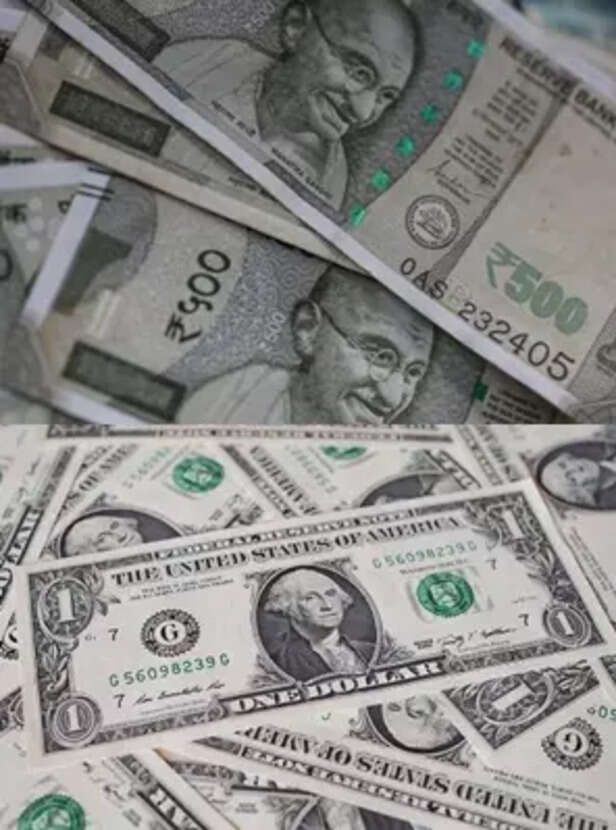
RBI's move to bolster rupee trade aims to reduce dominance of US dollar
Image credit : IANS
A Timeline of Key Rupee Levels
| Year | Rs per $1 (approx.) | Key Context |
|---|---|---|
| 1947 | 3.3 | Pegged via pound sterling after Independence |
| 1950 | 4.76 | Fixed-rate regime continues |
| 1966 | 7.50 | Major devaluation after drought and BOP stress |
| 1991 | 22.74 | Balance-of-payments crisis; start of reforms |
| 2000 | 44.94 | More market-driven rupee after liberalisation |
| 2013 | 56.57 | Fed taper tantrum hits emerging markets |
| 2018 | 70.09 | Rising oil + global risk-off |
| 2020 | 76.38 | Pandemic shock |
| 2022 | 81.35 | Global inflation + strong dollar cycle |
| 2024 | 84.83 | Current-account and outflow pressures |
| 2025 | ~88–90 | Capital outflows + US tariffs + trade deficit spike |
This long-term sequence shows a clear pattern:
The rupee has weakened almost every time global stress, domestic crisis, or policy shifts rattled the economy.
The 2025 Plunge: Why 90 Happened Now
Indian Rupee likely to trade in 85.25-86.25/USD range; India-US trade deal to support currency: BoB Report
Image credit : ANI
1. Banks buying dollars at higher levels
2. Foreign investor outflows
3. Companies hedging aggressively
4. US tariffs on Indian goods
5. No progress on the India–US trade deal
The combined effect pushed the currency from 88–89 in recent days to 90.02, setting a historic low.
Why This Drop Is So Unbelievable
Today, it stands at ₹90 per dollar.
This means the rupee has weakened by over 27 times in 78 years — a decline shaped by multiple global shocks, domestic crises, and economic transitions. And despite short periods of stability, the broader trend has been a steady downward slide.
Where Does the Rupee Go From Here?
• the resolution of the tariff dispute
• progress in India–US trade negotiations
• global interest rate trends
• domestic inflation and fiscal stability
• foreign investor sentiment
For now, the rupee is expected to stay under pressure unless major positive triggers emerge.