
If India Is the 4th Largest Economy, Why Isn’t It Even in the Top 100 by Income?
Nidhi | Dec 31, 2025, 11:17 IST

Inequality
Image credit : Ai
India has officially become the world’s fourth largest economy, overtaking Japan in nominal GDP. But despite this milestone, the country still ranks outside the top 100 globally in average income. How can one of the world’s biggest economies remain so low in per-capita prosperity? This article explains the gap between GDP growth and income reality using data on inequality, jobs, health, education, pollution, urbanisation, and human development. It explores why economic size has not yet translated into higher incomes for most Indians — and what this paradox reveals about India’s growth model.
India crossed a historic milestone yesterday, officially becoming the world’s 4th largest economy, overtaking Japan in nominal GDP. With an economic size of just over $4.1 trillion, India now stands behind only the United States, China, and Germany.
This achievement caps a remarkable decade-long rise. In 2014, India ranked 10th globally. In just eleven years, its economy more than doubled in size. The global narrative today is clear: India has arrived as an economic heavyweight.
Yet another ranking tells a very different story. In terms of average income, India still sits outside the top 125 countries. This is not a contradiction — it is the core paradox of India’s growth model.
![‘India soon to become world’s third-largest economy,’ say BJP leaders, hailing PM Modi’s leadership]() India’s total output is now among the world’s largest, but it is divided among nearly 1.4 billion people. That leaves India with a nominal per-capita income of roughly $2,950, compared to a global average of about $13,000.
India’s total output is now among the world’s largest, but it is divided among nearly 1.4 billion people. That leaves India with a nominal per-capita income of roughly $2,950, compared to a global average of about $13,000.
As a result, India ranks around 139th–143rd globally in per-capita GDP, despite being 4th in total GDP. Population scale amplifies economic size, but compresses income comparisons.
India’s Human Development Index (HDI) stands at 0.685, placing it 130th out of 193 countries. But when inequality is factored in, the score drops sharply to 0.475 — a 30.7% reduction.
This means almost one-third of potential gains in income, education, and health are lost due to unequal access. Growth exists, but it does not lift everyone proportionately, weakening improvements in average living standards.
![Smog blankets Delhi as city records AQI of 391]() Environmental stress is no longer just a public health issue - it is an income issue.
Environmental stress is no longer just a public health issue - it is an income issue.
India accounts for around 45–50 of the world’s 100 most polluted cities by PM2.5 concentration. In several urban centres, pollution levels exceed WHO safety limits by 5–10 times.
The consequences are quantifiable:
India spends only ~2.1% of GDP on public healthcare, far below:
India’s urban population has grown from 31% in 2011 to about 36% in 2024, with 8–9 million people migrating to cities every year. By the mid-2030s, over 600 million Indians are expected to live in urban areas.
But urbanisation has come with heavy costs:
![Govt unveils digital visa sponsorship letter module for production-related employment]() India’s workforce structure continues to suppress income growth:
India’s workforce structure continues to suppress income growth:
India’s Education Index stands at 0.57. While enrollment is high:
Despite economic gains:
This achievement caps a remarkable decade-long rise. In 2014, India ranked 10th globally. In just eleven years, its economy more than doubled in size. The global narrative today is clear: India has arrived as an economic heavyweight.
Yet another ranking tells a very different story. In terms of average income, India still sits outside the top 125 countries. This is not a contradiction — it is the core paradox of India’s growth model.
1. Per-Capita Arithmetic Still Pulls India Down the Income Ladder
‘India soon to become world’s third-largest economy,’ say BJP leaders, hailing PM Modi’s leadership
Image credit : IANS
As a result, India ranks around 139th–143rd globally in per-capita GDP, despite being 4th in total GDP. Population scale amplifies economic size, but compresses income comparisons.
2. Inequality Erodes Nearly One-Third of Development Gains
This means almost one-third of potential gains in income, education, and health are lost due to unequal access. Growth exists, but it does not lift everyone proportionately, weakening improvements in average living standards.
3. Air Pollution Has Become a Measurable Economic Drain
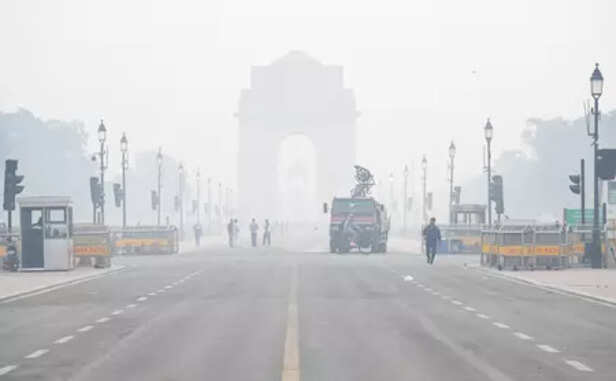
Smog blankets Delhi as city records AQI of 391
Image credit : IANS
India accounts for around 45–50 of the world’s 100 most polluted cities by PM2.5 concentration. In several urban centres, pollution levels exceed WHO safety limits by 5–10 times.
The consequences are quantifiable:
- Average life expectancy in India is reduced by ~5 years due to air pollution
- Health costs and productivity losses linked to pollution are estimated to cost 1–2% of GDP annually, or $40–80 billion
- Higher medical expenses push households into debt, limiting income growth and savings
4. Health Spending Remains Too Low to Protect Household Incomes
- Brazil (~9.5%)
- South Africa (~6.8%)
- OECD average (~9%)
5. Urbanisation Is Accelerating, But With High Economic Stress
But urbanisation has come with heavy costs:
- Over 35% of urban residents live in informal or slum-like conditions
- Housing costs absorb 30–50% of household income in major metros
- Average daily commute times exceed 90 minutes in large cities
6. Employment Growth Is Dominated by Low-Productivity Work

Govt unveils digital visa sponsorship letter module for production-related employment
Image credit : IANS
- ~90% of employment remains informal
- Agriculture employs ~45% of workers but contributes only ~16% of GDP
- Manufacturing employs just ~12% of the workforce, compared to 25–30% in successful East Asian growth economies
7. Education Has Expanded, But Skills Have Not Kept Pace
- Over 50% of Grade 5 students struggle with basic reading
- Fewer than half of graduates are considered job-ready by employers
8. Well-Being Indicators Reflect Growth Without Comfort
- World Happiness Rank: 118 out of 147 countries
- Gender Inequality Rank: 102 out of 193
- Press Freedom Rank: 159 out of 180