
India Overtakes Japan in GDP, But What Does That Mean for Ordinary Indians?
Nidhi | Dec 30, 2025, 23:04 IST

India 4th largest economy
Image credit : Ai
India has overtaken Japan to become the world’s fourth-largest economy, with GDP crossing $4.18 trillion and projections of becoming third-largest by 2028. Strong growth, rising exports, and domestic demand underline India’s macroeconomic rise. But does a higher GDP ranking translate into better lives for ordinary Indians? This article examines the gap between economic scale and lived reality by looking at income levels, employment quality, health, education, inequality, and social conditions, offering a grounded view of what India’s global rise truly means on the ground.
India’s economy crossing the $4.18 trillion mark and moving ahead of Japan in nominal GDP terms is a major headline moment. It reflects years of high growth and a scale that now places India among the world’s biggest economic powers, with projections that it could challenge Germany for the third spot in the coming years.
But GDP rank answers only one question: How large is the total output?
It does not directly answer the harder one: How well are people actually doing? For that, you have to look at income per person, jobs, health, education, inequality, and social inclusion. The most recent data available as of Dec 30, 2025 (noting that many national and global datasets publish with a 1–2 year lag) shows a mixed picture: significant progress on some fronts, persistent gaps on others.
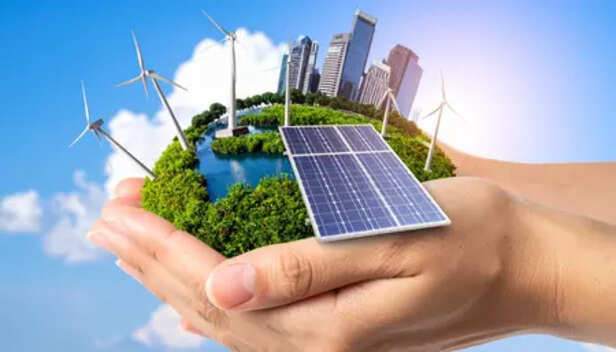
![India overtakes Japan in solar, pushes for stronger grid to support clean energy boom]() India’s rise in global GDP rankings masks the reality of low per capita income. As of the latest available data, India’s GDP per capita stood at about $2,694, a fraction of that in advanced economies.
India’s rise in global GDP rankings masks the reality of low per capita income. As of the latest available data, India’s GDP per capita stood at about $2,694, a fraction of that in advanced economies.
India’s current growth phase is largely domestic-demand driven, particularly by private consumption. This has helped insulate the economy from global trade slowdowns and policy uncertainty.
However:
On poverty, the direction is clearly positive:
![Economic reforms in 2025 set stage for India’s global rise: Economist]() Even when an economy grows fast, the distribution of gains decides how “rich” the typical citizen feels.
Even when an economy grows fast, the distribution of gains decides how “rich” the typical citizen feels.
A major 2024 research paper from the World Inequality Lab (covering up to 2022–23) estimates:
India’s next phase depends on whether it can translate scale into stable, well-paid employment, especially for a young workforce.
The government’s PLFS (Annual Report 2023–24) shows
Health outcomes are one of the clearest places where “economic rank” and “life experience” diverge.
![Emerging Study Abroad Destinations for Indian Students -- Germany, Dubai, Ireland, Japan and the Netherlands Lead the Next Wave]() India has near-universal school enrollment in many age groups, but the harder issue is foundational learning.
India has near-universal school enrollment in many age groups, but the harder issue is foundational learning.
ASER 2024 reports learning improvements compared to 2022 in several indicators, but also shows that a large share of children still struggle with basics. For example, Std III subtraction at all-India level rose to 33.7% in 2024 (up from earlier benchmarks), reflecting progress, yet also highlighting how far learning levels must rise for a modern economy.
For India to “feel” like a top economy at the household level, education quality and job relevance must rise faster than raw enrollment.
A large economy also needs broad social inclusion to convert growth into shared prosperity.
Gender: The World Economic Forum’s Global Gender Gap Report 2024 places India at 129th, stating India has closed 64.1% of its gender gap (with small declines in education/political empowerment and slight improvement in economic participation).
Caste discrimination and crimes: Officially compiled NCRB-linked reporting continues to document caste-linked vulnerability. For instance, reporting based on NCRB 2023 data notes 57,789 cases registered for crimes against Scheduled Castes in 2023.
Separately, a Government of India press note citing NCRB data mentions 24 cases reported under the Protection of Civil Rights (PCR) Act, 1955 in 2023 (often discussed in the context of “untouchability” offences under that Act).
These indicators matter economically because discrimination and insecurity reduce mobility, productivity, and equal access to opportunity.
But GDP rank answers only one question: How large is the total output?
It does not directly answer the harder one: How well are people actually doing? For that, you have to look at income per person, jobs, health, education, inequality, and social inclusion. The most recent data available as of Dec 30, 2025 (noting that many national and global datasets publish with a 1–2 year lag) shows a mixed picture: significant progress on some fronts, persistent gaps on others.
1. A $4.18 Trillion Economy With Low Income Per Person
India overtakes Japan in solar, pushes for stronger grid to support clean energy boom
Image credit : IANS
- This is around 12 times lower than Japan’s per capita income
- Nearly 20 times lower than Germany’s
- High population size, now at around 1.4 billion, dilutes gains from rapid aggregate growth
2. Growth Driven by Consumption, Not Broad-Based Prosperity
However:
- Consumption growth is uneven, concentrated among middle- and upper-income households
- Rural demand and real wage growth remain weaker
- Inflation, even when moderate, disproportionately affects lower-income groups
3) Poverty has fallen sharply, but vulnerability remains large
- Based on the global extreme poverty line of $2.15 per day (2017 PPP), India’s extreme poverty rate plunged from 16.2% in 2011–12 to just 2.3% in 2022–23. This means a dramatic reduction in the share of people living in the most basic income deprivation.
- Even with the World Bank’s updated international poverty threshold of $3.00 per day (2021 PPP) (which generally increases poverty counts globally), India’s extreme poverty rate is estimated at about 5.3% in 2022–23. P
- India’s poverty performance places it below the global average, which is around ~10% at similar thresholds.
4) Inequality has become a defining feature of the growth story
Economic reforms in 2025 set stage for India’s global rise: Economist
Image credit : IANS
A major 2024 research paper from the World Inequality Lab (covering up to 2022–23) estimates:
- Top 1% income share ~22.6%
- Top 1% wealth share ~40.1%
and describes these as among the highest historical levels in the series they compile.
5) Jobs: rising participation, but the “good jobs” challenge is the big test
The government’s PLFS (Annual Report 2023–24) shows
- Female labour force participation (15+) rising from 21.1% (2017–18) to 35.6% (2023–24) (CWS measure).
There are also official references to female LFPR reaching 41.7% in PLFS 2023–24 under certain reporting frames, highlighting improved participation.
6) Health: improving systems, but spending and nutrition gaps persist
- World Bank data shows India’s current health expenditure around 3.31% of GDP (2022) (latest published in that series).
- India’s National Health Accounts (NHA) notes rising government health spending: GHE in GDP increased from 1.13% (2014–15) to 1.84% (2021–22).
- Nutrition remains a major constraint: UNICEF notes stunting remains around 35% among under-5 children, consistent with NFHS-5 era estimates.
7) Education: access has expanded, but learning quality is the bottleneck

Emerging Study Abroad Destinations for Indian Students -- Germany, Dubai, Ireland, Japan and the Netherlands Lead the Next Wave
Image credit : ANI
ASER 2024 reports learning improvements compared to 2022 in several indicators, but also shows that a large share of children still struggle with basics. For example, Std III subtraction at all-India level rose to 33.7% in 2024 (up from earlier benchmarks), reflecting progress, yet also highlighting how far learning levels must rise for a modern economy.
For India to “feel” like a top economy at the household level, education quality and job relevance must rise faster than raw enrollment.
8) Social equality: gender gaps and caste-based vulnerability remain part of the economic reality
Gender: The World Economic Forum’s Global Gender Gap Report 2024 places India at 129th, stating India has closed 64.1% of its gender gap (with small declines in education/political empowerment and slight improvement in economic participation).
Caste discrimination and crimes: Officially compiled NCRB-linked reporting continues to document caste-linked vulnerability. For instance, reporting based on NCRB 2023 data notes 57,789 cases registered for crimes against Scheduled Castes in 2023.
Separately, a Government of India press note citing NCRB data mentions 24 cases reported under the Protection of Civil Rights (PCR) Act, 1955 in 2023 (often discussed in the context of “untouchability” offences under that Act).
These indicators matter economically because discrimination and insecurity reduce mobility, productivity, and equal access to opportunity.