
Why Are 50-Year-Old Heroes Paired With 25-Year-Old Heroines
Nidhi | 1ec 01, 2025, 21:56 IST

Ajay Devgn wishes "De De Pyaar De" co-star Rakul Preet Singh on her birthday
Image credit : IANS
Indian cinema has long normalised older male heroes romancing women half their age, but the reason goes beyond mere “audience preference.” This article breaks down the industry’s bias against ageing women, the vanity-driven casting choices of male stars, and how producers believe youth sells—only when it comes to heroines. From biological absurdities in sibling casting to VFX used exclusively on men, we explore why age gaps in films distort reality, reinforce gender stereotypes, and erase older women from mainstream storytelling.
Cinema mirrors society — but sometimes, it mirrors the prejudices more than the reality. One of the most visible, persistent patterns in Indian cinema is this: older male actors keep getting paired with significantly younger women, whether romantically or even as siblings. These pairings often defy biology, common sense and narrative logic, revealing a deeper truth about the industry's discomfort with ageing women.![Akshay Kumar remembers ‘Queen Katrina’ as he recreates 'Ek Uncha Lamba Kad' with Disha Patani in 'Welcome to the Jungle']() The absurdity becomes clear when films create sibling pairs whose age gaps are biologically improbable. In Hum Kisise Kum Nahin (2002), Amitabh Bachchan and Aishwarya Rai played siblings despite being 31 years apart. The 2021 Malayalam film One pushed this further: Mammootty (73) and Nimisha Sajayan (28) portrayed brother and sister, implying a mother whose fertility stretched over 45 years. These casting choices aren’t creative experiments — they stem from an industry that refuses to show women ageing on screen, even when the story demands it.
The absurdity becomes clear when films create sibling pairs whose age gaps are biologically improbable. In Hum Kisise Kum Nahin (2002), Amitabh Bachchan and Aishwarya Rai played siblings despite being 31 years apart. The 2021 Malayalam film One pushed this further: Mammootty (73) and Nimisha Sajayan (28) portrayed brother and sister, implying a mother whose fertility stretched over 45 years. These casting choices aren’t creative experiments — they stem from an industry that refuses to show women ageing on screen, even when the story demands it.
Producers, financiers and directors openly admit — often off record — that they believe audiences reject older female actors in lead or romantic roles. But this belief reflects their own mindset more than any proven viewer preference. In reality, it is the decision-makers (and male stars) who find older women “less interesting” for pivotal roles. Meanwhile, actresses over 35 are often restricted to mothers, aunts or background roles, while their male counterparts continue to headline love stories with women half their age.![Mumbai, Jun 20 (ANI): Actors Aamir Khan, Riteish Deshmukh and his wife Genelia p...]() Behind the scenes, many male actors insist on being cast opposite younger women because it enhances their own on-screen appeal. According to producers, pairing a 55–65-year-old man with a 25–30-year-old woman helps him appear youthful and desirable — both to audiences and in his own eyes. This explains why a 70-year-old Kamal Haasan romances 42-year-old Trisha in Thug Life, or why 60-year-old Aamir Khan is paired with 37-year-old Genelia in Sitaare Zameen Par. These are not just casting decisions; they’re brand decisions driven by male vanity and market power. Whenever questioned, male superstars often claim they pair with younger women because “audiences want it.” Sunny Deol said this after Gadar; Kamal Haasan echoed it in later interviews. But no one has ever produced concrete data proving this claim. Instead, films create and reinforce this pattern until it feels natural. The irony is that the average age gap in real Indian marriages is only 2–5 years, yet cinema portrays much larger gaps as normal — shaping perceptions globally about Indian relationships. Critics are often accused of “age-shaming” male actors. But the issue isn’t that Amitabh, Aamir, Kamal, or Mammootty continue working; they absolutely should. The real problem is that their female contemporaries are denied the same longevity. When a 60-year-old man can romance a 25-year-old woman on screen, but a 45-year-old woman “looks too old” to romance a 50-year-old man, it exposes a gendered double standard. Indian cinema allows men to age into power, wisdom and desirability — while women age into disappearance.
Behind the scenes, many male actors insist on being cast opposite younger women because it enhances their own on-screen appeal. According to producers, pairing a 55–65-year-old man with a 25–30-year-old woman helps him appear youthful and desirable — both to audiences and in his own eyes. This explains why a 70-year-old Kamal Haasan romances 42-year-old Trisha in Thug Life, or why 60-year-old Aamir Khan is paired with 37-year-old Genelia in Sitaare Zameen Par. These are not just casting decisions; they’re brand decisions driven by male vanity and market power. Whenever questioned, male superstars often claim they pair with younger women because “audiences want it.” Sunny Deol said this after Gadar; Kamal Haasan echoed it in later interviews. But no one has ever produced concrete data proving this claim. Instead, films create and reinforce this pattern until it feels natural. The irony is that the average age gap in real Indian marriages is only 2–5 years, yet cinema portrays much larger gaps as normal — shaping perceptions globally about Indian relationships. Critics are often accused of “age-shaming” male actors. But the issue isn’t that Amitabh, Aamir, Kamal, or Mammootty continue working; they absolutely should. The real problem is that their female contemporaries are denied the same longevity. When a 60-year-old man can romance a 25-year-old woman on screen, but a 45-year-old woman “looks too old” to romance a 50-year-old man, it exposes a gendered double standard. Indian cinema allows men to age into power, wisdom and desirability — while women age into disappearance.![Aamir Khan recalls Dharmendra's meeting with his son Azad, calls him 'gentle giant']() Aamir Khan recently said, “We have VFX now. Age is no longer a barrier.” But this liberation applies only to men. De-ageing tech is widely used to smooth wrinkles, enhance youthfulness, and prolong male stardom. Yet it is almost never used to cast older women opposite older men. If VFX can make a 60-year-old man look 35, why can’t it make a 55-year-old woman look 40 so she can play his partner? The answer is simple: the industry doesn’t see older women as worth preserving, technologically or otherwise. Casting a 25-year-old actress as a 70-year-old man’s sister or a 30-year-old woman as his daughter-in-law is a deliberate effort to keep the male star visually central and ageless. The younger the women around him, the less “old” he appears. This warping of biological logic protects the hero’s youth narrative — even in familial relationships. It’s less about story and more about maintaining the male star’s brand image as “timeless”. Indian films present a reality where:
Aamir Khan recently said, “We have VFX now. Age is no longer a barrier.” But this liberation applies only to men. De-ageing tech is widely used to smooth wrinkles, enhance youthfulness, and prolong male stardom. Yet it is almost never used to cast older women opposite older men. If VFX can make a 60-year-old man look 35, why can’t it make a 55-year-old woman look 40 so she can play his partner? The answer is simple: the industry doesn’t see older women as worth preserving, technologically or otherwise. Casting a 25-year-old actress as a 70-year-old man’s sister or a 30-year-old woman as his daughter-in-law is a deliberate effort to keep the male star visually central and ageless. The younger the women around him, the less “old” he appears. This warping of biological logic protects the hero’s youth narrative — even in familial relationships. It’s less about story and more about maintaining the male star’s brand image as “timeless”. Indian films present a reality where:
Older male actors continuing to rule the screen is not the problem. The problem is that their female contemporaries are denied equal narrative space, equal longevity, and equal complexity. As long as men dictate the rules — as producers, financiers, directors, and stars — ageism against women will remain the industry’s default setting.
Indian cinema needs stories where women age visibly, powerfully, and unapologetically — just like the men do. Because the simple truth is this:
Heroes can age.
Heroines deserve to age too.
1. When Casting Defies Biology More Than Storytelling

Akshay Kumar remembers ‘Queen Katrina’ as he recreates 'Ek Uncha Lamba Kad' with Disha Patani in 'Welcome to the Jungle'
Image credit : IANS
2. The Industry Assumes Audiences Don’t Want Older Women; But It’s Their Own Bias
3. Male Stars Themselves Drive This Age Gap, To Look Younger and “Cooler”
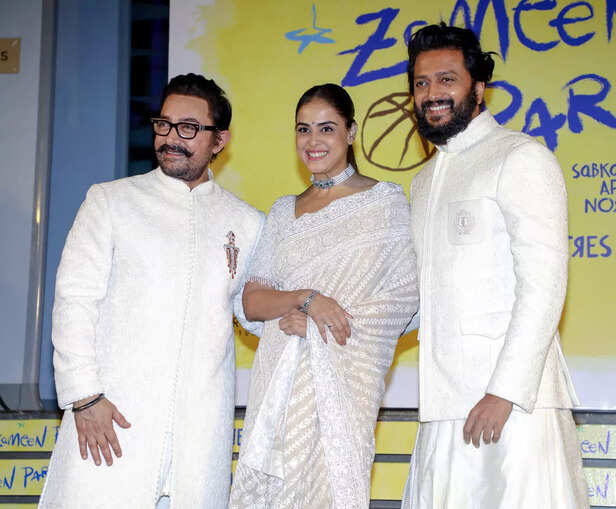
Mumbai, Jun 20 (ANI): Actors Aamir Khan, Riteish Deshmukh and his wife Genelia p...
Image credit : ANI
4. “Audience Demand” Is the Convenient Excuse, Without Evidence
5. Ageism Isn’t Against Men: It’s Against Women’s Longevity
6. Even Technology Is Used Only to Preserve Men’s Youth, Not Women’s Roles
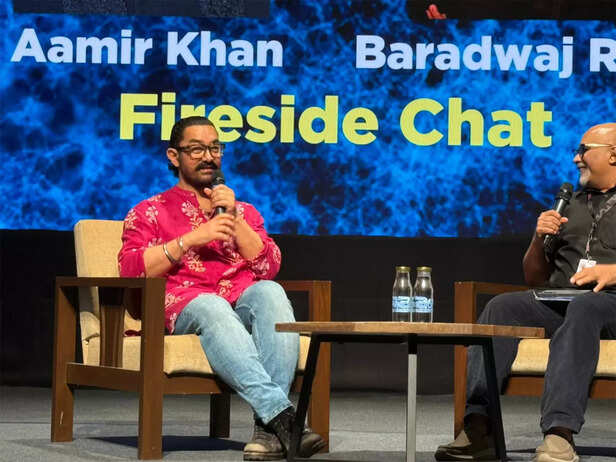
Aamir Khan recalls Dharmendra's meeting with his son Azad, calls him 'gentle giant'
Image credit : ANI
7. Distorting Family Dynamics to Protect Male Vanity
8. The Result: A Cinema That Normalises a Fictional Age Gap
- Men never age out of desirability
- Women expire from stardom before 35
- Romantic pairs are separated by 20–40 years
- Young women are props for male heroism
- Older women vanish before their male peers finish their careers
Heroes Can Age. Heroines Should Be Allowed To.
Indian cinema needs stories where women age visibly, powerfully, and unapologetically — just like the men do. Because the simple truth is this:
Heroes can age.
Heroines deserve to age too.