
What Kind of Injustice Made a Woman Curse Brahma, Vishnu, and Shiva Together?
Nidhi | Dec 22, 2025, 14:04 IST

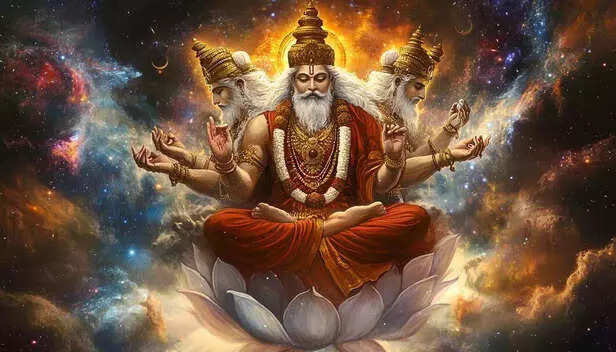
Woman cursed Trinity
( Image credit : Ai )
Sometimes, injustice is not created by cruelty but by silence. This article explores a lesser-known story from Hindu mythology where a woman’s suffering leads her to curse Brahma, Vishnu, and Shiva together. It looks at how creation, protection, and detachment failed her in different ways and why her voice became a reminder of dharma. Rather than questioning faith, the story reflects on responsibility, listening, and moral accountability, showing why ancient myths allowed even the highest divine authority to be questioned when pain was ignored.
“न स्त्री स्वातन्त्र्यमर्हति”
This line is often quoted, debated, and misunderstood. Yet Hindu mythology repeatedly tells stories where a woman’s voice becomes the final authority of dharma. One such lesser-discussed narrative speaks of a woman whose suffering was so profound that it did not stop at blaming fate or society. It rose to question even the highest divine powers. Brahma, Vishnu, and Shiva together.
At first glance, the idea sounds shocking. How could a woman curse the Trinity that governs creation, preservation, and dissolution. But this story was never meant to shock. It was meant to warn.
This is not a tale of rage alone. It is a story about injustice created by neglect, silence, and moral distance. It asks an uncomfortable question. What happens when power exists, but responsibility does not act.
In this narrative tradition, the woman is not portrayed as powerless or impulsive. She is shown as a moral witness. Her suffering grants her authority to question the system that failed her.
In Hindu texts, tapasya, truth, and suffering give spiritual legitimacy. When injustice is endured silently and consciously, it gains force. The woman’s curse derives its power not from anger but from moral clarity. She does not curse out of ego. She curses after realizing that no divine structure came forward to protect what was right.
![Brahma]()
Brahma represents creation and order. His role is to initiate life and ensure balance at its origin. In stories where Brahma is implicated, the injustice often relates to unchecked desire, imbalance in creation, or failure to uphold ethical boundaries.
The woman’s curse toward Brahma reflects a deeper accusation. Creation without restraint leads to chaos. When the creator forgets accountability, creation itself becomes unjust. The curse symbolizes a loss of legitimacy rather than a loss of power. This is why Brahma’s worship diminishes in later tradition. The story explains why creation alone is not worthy of reverence unless guided by responsibility.
Vishnu is the preserver of dharma. His promise is intervention when balance is threatened. Yet mythology repeatedly shows that Vishnu acts only when conditions align with cosmic law.
In this story, the woman’s suffering continues because Vishnu does not intervene at the human level. His silence becomes the injustice. The curse directed at Vishnu is not for cruelty but for inaction. Protection delayed becomes protection denied.
The narrative raises a critical ethical question. Is following cosmic law enough if immediate injustice continues unchecked. The woman’s curse forces Vishnu’s role to be questioned not as a god but as a guardian.
![lord shiva]()
Shiva represents renunciation, destruction of ego, and transcendence beyond worldly pain. Yet this detachment can become indifference when suffering demands compassion.
The woman’s curse toward Shiva challenges spiritual aloofness. It asks whether detachment absolves responsibility. Shiva’s acceptance of the curse without resistance is crucial. It reflects acknowledgment rather than denial. The story suggests that spiritual elevation does not excuse moral distance.
The power of this story lies in the fact that no single god is blamed alone. The curse addresses all three because injustice thrived in the space between their roles.
Creation existed. Preservation hesitated. Destruction did not correct imbalance in time.
Together, this forms a complete system that failed one individual. The curse becomes collective accountability. It shows that when institutions pass responsibility between themselves, injustice survives.
A striking aspect of the narrative is that none of the gods attempt to undo the curse. This is not because they lack power. It is because the curse is aligned with truth.
In Hindu philosophy, a curse spoken from righteous suffering carries the weight of dharma itself. Reversing it would mean denying moral failure. The gods accept the curse because acceptance restores balance more than denial ever could.
The woman is never portrayed as anti divine. She does not reject faith. She rejects neglect. Her curse does not destroy the gods. It humbles them.
This is a recurring theme in Hindu mythology. Women like Gandhari, Kunti, Sita, and Draupadi do not rebel against divinity. They confront it with truth. Their words hold power because they speak from lived injustice, not theoretical morality.
This line is often quoted, debated, and misunderstood. Yet Hindu mythology repeatedly tells stories where a woman’s voice becomes the final authority of dharma. One such lesser-discussed narrative speaks of a woman whose suffering was so profound that it did not stop at blaming fate or society. It rose to question even the highest divine powers. Brahma, Vishnu, and Shiva together.
At first glance, the idea sounds shocking. How could a woman curse the Trinity that governs creation, preservation, and dissolution. But this story was never meant to shock. It was meant to warn.
This is not a tale of rage alone. It is a story about injustice created by neglect, silence, and moral distance. It asks an uncomfortable question. What happens when power exists, but responsibility does not act.
1. The Woman as the Moral Witness
In Hindu texts, tapasya, truth, and suffering give spiritual legitimacy. When injustice is endured silently and consciously, it gains force. The woman’s curse derives its power not from anger but from moral clarity. She does not curse out of ego. She curses after realizing that no divine structure came forward to protect what was right.
2. Brahma’s Failure of Restraint and Responsibility
Brahma
( Image credit : Freepik )
Brahma represents creation and order. His role is to initiate life and ensure balance at its origin. In stories where Brahma is implicated, the injustice often relates to unchecked desire, imbalance in creation, or failure to uphold ethical boundaries.
The woman’s curse toward Brahma reflects a deeper accusation. Creation without restraint leads to chaos. When the creator forgets accountability, creation itself becomes unjust. The curse symbolizes a loss of legitimacy rather than a loss of power. This is why Brahma’s worship diminishes in later tradition. The story explains why creation alone is not worthy of reverence unless guided by responsibility.
3. Vishnu’s Silence Despite Being the Protector
In this story, the woman’s suffering continues because Vishnu does not intervene at the human level. His silence becomes the injustice. The curse directed at Vishnu is not for cruelty but for inaction. Protection delayed becomes protection denied.
The narrative raises a critical ethical question. Is following cosmic law enough if immediate injustice continues unchecked. The woman’s curse forces Vishnu’s role to be questioned not as a god but as a guardian.
4. Shiva’s Detachment Turning Into Distance

lord shiva
( Image credit : Freepik )
Shiva represents renunciation, destruction of ego, and transcendence beyond worldly pain. Yet this detachment can become indifference when suffering demands compassion.
The woman’s curse toward Shiva challenges spiritual aloofness. It asks whether detachment absolves responsibility. Shiva’s acceptance of the curse without resistance is crucial. It reflects acknowledgment rather than denial. The story suggests that spiritual elevation does not excuse moral distance.
5. Collective Failure, Not Individual Sin
Creation existed. Preservation hesitated. Destruction did not correct imbalance in time.
Together, this forms a complete system that failed one individual. The curse becomes collective accountability. It shows that when institutions pass responsibility between themselves, injustice survives.
6. Why the Curse Could Not Be Reversed
In Hindu philosophy, a curse spoken from righteous suffering carries the weight of dharma itself. Reversing it would mean denying moral failure. The gods accept the curse because acceptance restores balance more than denial ever could.
7. The Woman as Dharma, Not Opponent of God
This is a recurring theme in Hindu mythology. Women like Gandhari, Kunti, Sita, and Draupadi do not rebel against divinity. They confront it with truth. Their words hold power because they speak from lived injustice, not theoretical morality.