
Why Ancient India Was Called Bharatvarsha - The Truth Explained
Nidhi | Mar 20, 2026, 12:11 IST

Bharatvarsha
Image credit : Ai
Before the name “India,” this land was known as Bharatvarsha, a term rooted in ancient texts and deeper cultural meaning. But what did “Varsha” actually signify, and why was the land associated with Bharata? This article explores the historical, linguistic, and philosophical origins of Bharatvarsha, explaining how it represented not just a geographical region but a unified civilizational identity across ancient India.
Long before the word “India” existed, this land was known as Bharatvarsha. But this name was not just a label for geography. It carried meaning, identity, and a deeper understanding of the land and its people.
To understand why ancient India was called Bharatvarsha, we must look beyond modern definitions and explore how language, history, and culture came together to shape this name.
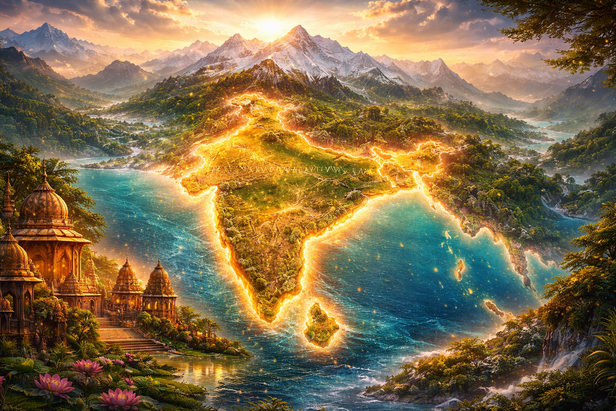
![Bharat]() The word Bharatvarsha comes from two Sanskrit roots. “Bharata” refers to an ancient king or tribe, and “Varsha” refers to a region or land. Together, Bharatvarsha means “the land of Bharata.”
The word Bharatvarsha comes from two Sanskrit roots. “Bharata” refers to an ancient king or tribe, and “Varsha” refers to a region or land. Together, Bharatvarsha means “the land of Bharata.”
Ancient texts such as the Mahabharata and various Puranas use this term to describe the Indian subcontinent as the land inhabited by the descendants of Bharata.
This shows that the name was not randomly assigned. It emerged from lineage, memory, and a shared identity.
Ancient Indian texts did not just use the name symbolically. They described Bharatvarsha with clear natural boundaries.
According to the Vishnu Purana, the land lying south of the Himalayas and north of the ocean was called Bharat.
Over time, this definition expanded to include the entire Indian subcontinent, stretching from the Himalayas in the north to the southern tip of the peninsula, and from the Arabian Sea to the Bay of Bengal.
This indicates that people in ancient India already had a strong geographical understanding of a unified land.
One of the biggest misunderstandings today is the meaning of the word “Varsha.”
In modern usage, it is often associated with rain. But in ancient Sanskrit, “Varsha” referred to a division of land or a geographical region, often separated by natural features like mountains.
This changes the meaning entirely. Bharatvarsha was not a poetic term. It was a structured way of describing a defined region within a larger world.
Ancient Indian texts described the earth differently from modern maps. They divided the world into large regions called dvipas. Bharatvarsha was one such region within Jambudvipa.
This means Bharatvarsha was not just a country in isolation. It was part of a larger philosophical and cosmological framework that explained the structure of the world.
In this system, Bharatvarsha held a central and significant place, both geographically and culturally.
![Civilization]() Even when India was divided into multiple kingdoms, the idea of Bharatvarsha continued to exist.
Even when India was divided into multiple kingdoms, the idea of Bharatvarsha continued to exist.
People identified with their local regions, but there was also a broader sense of belonging to a shared cultural space. This concept evolved from identifying a specific tribe to representing the entire Indian subcontinent as a unified civilizational region.
This unity was not political. It was cultural, spiritual, and philosophical.
The origin of the name Bharata is linked to multiple traditions. It is associated with the Bharata tribe mentioned in the Rig Veda, as well as legendary figures like King Bharata in ancient texts.
Over time, the land inhabited by these people came to be known as Bharatvarsha. This shows that the name emerged from a shared heritage rather than a political decision.
As history progressed, the land came to be known by different names. Hindustan emerged through Persian influence, and India came from the Indus river as used by Greeks and later Europeans.
However, the original name did not disappear. Even today, the Constitution recognizes this continuity by stating, “India, that is Bharat.”
This reflects the enduring legacy of the name Bharatvarsha.
To understand why ancient India was called Bharatvarsha, we must look beyond modern definitions and explore how language, history, and culture came together to shape this name.
1. It Meant “The Land of Bharata”
Bharat
Image credit : Ai
Ancient texts such as the Mahabharata and various Puranas use this term to describe the Indian subcontinent as the land inhabited by the descendants of Bharata.
This shows that the name was not randomly assigned. It emerged from lineage, memory, and a shared identity.
2. It Defined a Clear Geographical Region
According to the Vishnu Purana, the land lying south of the Himalayas and north of the ocean was called Bharat.
Over time, this definition expanded to include the entire Indian subcontinent, stretching from the Himalayas in the north to the southern tip of the peninsula, and from the Arabian Sea to the Bay of Bengal.
This indicates that people in ancient India already had a strong geographical understanding of a unified land.
3. “Varsha” Meant Region, Not Rain
In modern usage, it is often associated with rain. But in ancient Sanskrit, “Varsha” referred to a division of land or a geographical region, often separated by natural features like mountains.
This changes the meaning entirely. Bharatvarsha was not a poetic term. It was a structured way of describing a defined region within a larger world.
4. It Was Part of a Larger Worldview
This means Bharatvarsha was not just a country in isolation. It was part of a larger philosophical and cosmological framework that explained the structure of the world.
In this system, Bharatvarsha held a central and significant place, both geographically and culturally.
5. It Represented a Civilizational Identity
Civilization
Image credit : Freepik
People identified with their local regions, but there was also a broader sense of belonging to a shared cultural space. This concept evolved from identifying a specific tribe to representing the entire Indian subcontinent as a unified civilizational region.
This unity was not political. It was cultural, spiritual, and philosophical.
6. The Name Has Deep Roots in Ancient Traditions
Over time, the land inhabited by these people came to be known as Bharatvarsha. This shows that the name emerged from a shared heritage rather than a political decision.
7. The Name Evolved, But the Identity Remained
However, the original name did not disappear. Even today, the Constitution recognizes this continuity by stating, “India, that is Bharat.”
This reflects the enduring legacy of the name Bharatvarsha.