India is now among the fastest-growing large economies in the world. According to official estimates, the country is on track to cross the US $4 trillion GDP mark by FY 2026, reflecting robust growth in sectors ranging from technology to services.
Concurrently, India is creating wealth fast. But paradoxically, a significant number of high-net-worth individuals (HNIs) — including millionaires — are preparing global footprints for their families. This trend is captured in the latest global wealth-migration data: in 2024, about 4,300 Indian millionaires were projected to relocate abroad, and in 2025 the number is estimated around 3,500.
This raises a fundamental question: why, in a booming economy, would those with means and privilege choose to raise their children outside India?
The answer lies in a combination of realities — environmental, institutional, educational, and aspirational. What follows is a breakdown of the most important factors — all backed by recent data and observations.
1. Wealth Migration: The Numbers Behind the Trend
![Air India Express completes safety checks on most of its Airbus A320 fleet]()
Air India Express completes safety checks on most of its Airbus A320 fleet
Image credit : ANI
Air India Express completes safety checks on most of its Airbus A320 fleet
- As per the 2025 edition of the Henley & Partners “Private Wealth Migration Report,” an estimated 142,000 millionaires globally are expected to migrate in 2025.
- Among those, according to Indian financial media, about 3,500 Indian millionaires are likely to relocate abroad in 2025 — placing India among the top countries in net outflows of wealthy individuals.
- In prior years: 5,100 millionaires in 2023, ~4,300 in 2024.
Implication: This is not a marginal blip — the emigration of wealth-holders from India is a sustained and visible trend, large enough to reflect deep-rooted structural motivations.
2. Air Pollution & Environmental Stress — A Real Concern
![Delhi chokes under rising pollution as AQI nears 400 across NCR]()
Delhi chokes under rising pollution as AQI nears 400 across NCR
Image credit : IANS
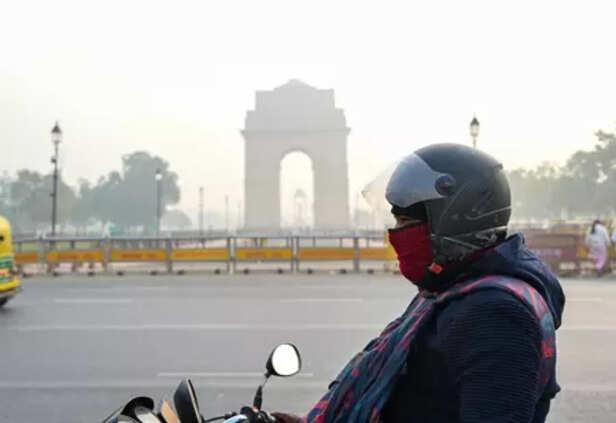
New Delhi, Nov 24 (IANS) A thin layer of pollution was seen over the national Capital, with the Air Quality Index (AQI) touching 396 on Monday, firmly in the 'very poor' category. However, this brought slight respite from the 'very severe' AQI of over 500 in many hotspots that was witnessed across Delhi-NCR on Saturday.
One of the leading drivers for migration among wealthy, urban Indian families is the worsening quality of air and environment in major cities.
What the Data Says
- In the 2024 global ranking of air quality by the IQAir World Air Quality Report, India ranked 5th most polluted country globally with an average PM2.5 concentration of 50.6 µg/m³, far above safe standards.
- The 2025 pollution-reporting platforms still frequently list Indian cities among the worst in the world. For instance, recent live AQI data from late November 2025 lists multiple Indian cities — including cities in NCR and other states — among the top 10 globally worst performing by air quality.
- In 2025 reports, urban air contamination, PM2.5 & PM10 spikes, and hazardous AQI events remain regular enough that many consider Indian megacities “unlivable” for children’s respiratory and long-term health.
Why This Matters for Parents with Means
- For affluent parents, ensuring a “healthy childhood” goes beyond private schools and tutoring — air quality, clean environment, safe neighborhoods, and predictable civic amenities matter.
- Moving abroad becomes not just a lifestyle decision — but a health and future-wellbeing decision for children.
3. Institutional Stability & Legal/Regulatory Predictability
![CPI-M's Kerala local polls candidate sentenced to 20 years in bomb attack case]()
CPI-M's Kerala local polls candidate sentenced to 20 years in bomb attack case
Image credit : IANS
Kannur (Kerala), Nov 25 (IANS) V.K. Nishad, the CPI-M candidate contesting from Ward 46 of Kerala's Payyannur Municipality, now faces a serious legal roadblock to becoming a people’s representative after a court here on Tuesday sentenced him to 20 years in prison in an over-decade-old bomb attack case.
For wealthy families whose assets and businesses depend on stability, the institutional environment becomes a key concern.
Context & Constraints in India
- Indian cities — especially major metros — face recurring civic infrastructure stress: pollution, overpopulation, congestion, inconsistent public services.
- Legal and regulatory frameworks in India are often criticized for complexity, delays, and unpredictability when it comes to business regulations, tax laws, compliance and enforcement — factors that weigh heavily on HNIs with diversified interests.
Migration as a Form of Institutional Hedging
For many HNIs, relocating families — or at least setting up second residencies abroad — becomes a form of
insurance against institutional unpredictability: better rule-of-law, more transparent business regulation, stable inheritance/tax regimes, and global financial access. This helps protect not just individual wealth but generational legacy.
4. Global Mobility and Opportunity for the Next Generation
![One Tech Tip: iPhone users can now add US passport info to their digital wallets]()
One Tech Tip: iPhone users can now add US passport info to their digital wallets
Image credit : AP
FILE - The cover of a U.S. Passport is displayed in Tigard, Ore., Saturday, Dec. 11, 2021. (AP Photo/Jenny Kane, File)
Passport / Residency vs Opportunities
- The Indian passport — while improving — still offers far less global mobility compared to European, North American or Gulf alternatives.
- Families with resources increasingly view residency or citizenship abroad as a strategic asset: enabling children to access global universities, work in global companies, take advantage of international career opportunities, and enjoy better safety nets.
- Given global uncertainty — economic, environmental, geo-political — multiple residencies provide an optionality that protects against risks.
Thus, relocation becomes less about “leaving India forever” and more about giving children
global optionality.
5. Educational Aspirations & Global-Ready Upbringing
Wealthy Indian families tend to have high aspirations for their children. And global education — especially in well-resourced foreign schools and universities — offers:
- Exposure to broader worldviews, diverse peer groups, multicultural environments
- Access to specialized curricula, modern pedagogy, research facilities, global internships
- Freedom from the intense competition and exam-centric stress common in Indian schooling
For many, investing in a “global childhood” is part of preparing children for success on a global stage — not just domestic competition.
6. Lifestyle, Social Fabric & Quality of Upbringing
Wealth also offers choice — and many HNIs are choosing environments where:
- The social ecosystem is safe, clean, global, and inclusive
- Children can grow without the stresses of pollution, urban chaos, civic uncertainty
- Opportunities exist for alternative career paths — arts, technology, global business, entrepreneurship — beyond traditional tracks
For such families, raising children abroad becomes a strategic lifestyle decision — combining comfort, global exposure, health, and access to opportunity.
7. What This Means for India - Challenges and Signals
![Lakshmi Mittal]()
Lakshmi Mittal
Image credit : Ai
This migration trend among India’s wealthy families is not just personal. It carries broader implications:
- Potential capital flight and loss of domestic investment interest — even if the wealth remains partially invested in India, a shift in physical residency can lead to long-term allocation of resources abroad.
- Brain drain of human capital and entrepreneurial mindset — future generations of business leaders may grow, study and settle abroad rather than build in India.
- Pressure on India’s civic, environmental and social systems — if affluent families are choosing to leave for quality-of-life reasons, it signals where infrastructure and institutions need urgent improvement.
- Growing disparity in opportunities — global mobility becomes a privilege tied to wealth, reinforcing inequality based on birth or income.
Migration as a Calculated Investment, Not an Escape
For many Indian millionaire families, moving abroad or raising children overseas isn’t about fleeing poverty or failure. It’s about
securing stability, health, opportunity, and optionality for the next generation.
In a world where air quality, institutional reliability, global mobility, and education are increasingly tied to geography, such families view migration as a
long-term strategy and investment — not a surrender.
India is growing fast. But this growing trend reveals what the wealthy believe the country still needs:
clean air, stable institutions, global mobility, and world-class opportunities for their children. Until then, many will continue to use their wealth not just to prosper — but to shield their families from uncertainties.