
Why So Many Indians Believe the West Is Better Than India
Nidhi | Feb 23, 2026, 17:07 IST

Virat Kohli surprises fans as he shares adorable picture with Anushka Sharma, says "been a minute"
Image credit : ANI
Why do many Indians believe the West offers a better quality of life than India? From 1.8 million students studying abroad to millions migrating every year, real data shows how economic opportunity, infrastructure, meritocracy, and global influence shape this perception. This article explores migration trends, diaspora numbers, education mobility, and social factors that explain why Western countries often appear more reliable and aspirational to Indian families.
In many Indian homes, a familiar sentence carries unusual weight: “My son is in Canada now.” The pride is visible. But if the same son were working in Pune or Noida, the reaction might be quieter. Why does geography change perception so dramatically?
This belief that the West offers a better life is not random. It is shaped by migration data, education trends, economic comparisons, media exposure, and lived experience. When we look at the numbers closely, the mindset begins to make sense.
![flight cabin]()
India has one of the largest overseas populations in the world. Around 35.4 million Indians live abroad as Non Resident Indians or people of Indian origin. That is larger than the population of many countries.
When millions of Indians are seen succeeding globally in technology, medicine, research, and business, it reinforces the idea that opportunity flourishes abroad. The scale itself creates influence. If so many leave and succeed, the destination begins to look superior.
In 2025, approximately 1.8 million Indian students were enrolled in institutions abroad. That makes India one of the largest exporters of students globally.
In the United States alone, Indian students crossed 400000 in 2024. Canada and the United Kingdom also host hundreds of thousands of Indian students annually.
When such large numbers of families invest heavily in foreign education, it strengthens the perception that Western degrees offer stronger career returns and global credibility.
![Study Abroad]()
India sees roughly 2.5 million people migrating abroad annually for work, education, and long term settlement.
Migration at this scale reflects tangible motivations. Higher salaries, stronger currencies, and better structured job markets pull professionals outward. When millions choose to move each year, it signals that people perceive better opportunity outside.
Every year over 1.5 million students appear for highly competitive exams like JEE for limited elite seats. Acceptance rates for top institutions are often below 2 percent.
This intense bottleneck creates a perception that opportunity in India is scarce and unevenly distributed. In contrast, Western universities and job markets appear broader and more flexible, giving the impression of greater accessibility.
When opportunity feels limited, trust shifts to systems perceived as more open.
India’s GDP per capita remains significantly lower than that of many Western nations. For example, the United States GDP per capita is several times higher than India’s.
Higher average income levels translate into better funded infrastructure, healthcare systems, and social safety nets. Even if living costs are high abroad, the perception of economic security shapes trust strongly.
Numbers influence belief.
India has over 800 million internet users. Much of the consumed content includes Western media, travel visuals, and diaspora lifestyle stories.
Repeated exposure to images of clean cities, disciplined public systems, and structured work cultures creates a mental benchmark. At the same time, domestic news often highlights issues such as pollution, civic inefficiency, and traffic.
The contrast, repeated daily, subtly influences perception of what “better” looks like.
![Global network]()
Surveys show Indians trust certain institutions strongly, especially the armed forces. However, trust levels in bureaucracy and public systems vary depending on personal experience.
When daily interactions involve delays or unpredictability, comparisons with perceived Western efficiency emerge. It is not about lack of patriotism. It is about reliability in systems.
Trust grows where systems work consistently.
Many Indians believe Western systems reward effort more directly. Whether fully accurate or not, the perception that promotions and opportunities depend more on measurable performance strengthens confidence.
The idea that hard work correlates clearly with reward creates trust in those systems. Perception often influences decisions more than statistical reality.
This belief that the West offers a better life is not random. It is shaped by migration data, education trends, economic comparisons, media exposure, and lived experience. When we look at the numbers closely, the mindset begins to make sense.
1. A 35 Million Strong Indian Diaspora Shapes Aspirations
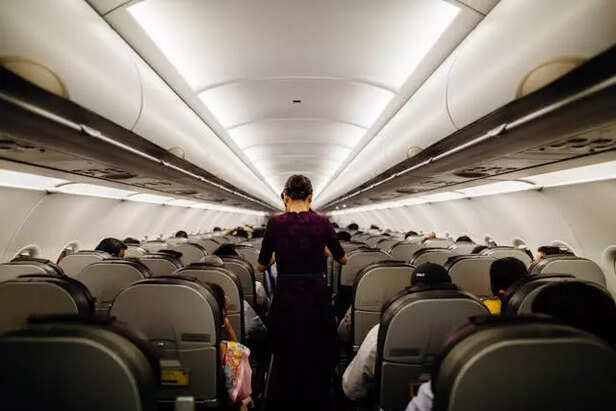
flight cabin
Image credit : Pexels
India has one of the largest overseas populations in the world. Around 35.4 million Indians live abroad as Non Resident Indians or people of Indian origin. That is larger than the population of many countries.
When millions of Indians are seen succeeding globally in technology, medicine, research, and business, it reinforces the idea that opportunity flourishes abroad. The scale itself creates influence. If so many leave and succeed, the destination begins to look superior.
2. 1.8 Million Indian Students Chose Foreign Universities in 2025
In the United States alone, Indian students crossed 400000 in 2024. Canada and the United Kingdom also host hundreds of thousands of Indian students annually.
When such large numbers of families invest heavily in foreign education, it strengthens the perception that Western degrees offer stronger career returns and global credibility.
3. Around 2.5 Million Indians Migrate Overseas Every Year

Study Abroad
Image credit : Freepik
India sees roughly 2.5 million people migrating abroad annually for work, education, and long term settlement.
Migration at this scale reflects tangible motivations. Higher salaries, stronger currencies, and better structured job markets pull professionals outward. When millions choose to move each year, it signals that people perceive better opportunity outside.
4. Extreme Competition at Home Pushes Talent Outward
This intense bottleneck creates a perception that opportunity in India is scarce and unevenly distributed. In contrast, Western universities and job markets appear broader and more flexible, giving the impression of greater accessibility.
When opportunity feels limited, trust shifts to systems perceived as more open.
5. Economic Gap Influences Perception
Higher average income levels translate into better funded infrastructure, healthcare systems, and social safety nets. Even if living costs are high abroad, the perception of economic security shapes trust strongly.
Numbers influence belief.
6. Media Exposure Reinforces a Western Benchmark
Repeated exposure to images of clean cities, disciplined public systems, and structured work cultures creates a mental benchmark. At the same time, domestic news often highlights issues such as pollution, civic inefficiency, and traffic.
The contrast, repeated daily, subtly influences perception of what “better” looks like.
7. Institutional Trust Is Uneven, Not Absent

Global network
Image credit : Pexels
Surveys show Indians trust certain institutions strongly, especially the armed forces. However, trust levels in bureaucracy and public systems vary depending on personal experience.
When daily interactions involve delays or unpredictability, comparisons with perceived Western efficiency emerge. It is not about lack of patriotism. It is about reliability in systems.
Trust grows where systems work consistently.
8. Meritocracy Feels More Transparent Abroad
The idea that hard work correlates clearly with reward creates trust in those systems. Perception often influences decisions more than statistical reality.