
In Kashi, Not Every Dead Body Is Cremated, Here’s the Truth
Nidhi | Mar 25, 2026, 12:51 IST

Kashi
Image credit : Ai
Kashi is often seen as the city where every final journey ends at the funeral pyre. The image is powerful: the ghats, the sacred fire, the Ganga, and the belief that dying here brings moksha. But the real story is more layered.
In Kashi, cremation is the most visible final rite, yet it is not the only one. Some people are buried, and some are given different rites based on age, spiritual identity, or long-held tradition. That is what makes Kashi even more fascinating. It is not a place of one single rule, but a place where death is understood through meaning, symbolism, and belief.
![Varanasi, Mar 19 (ANI): Devotees participate in the grand Ganga Aarti on the aus...]() Many people assume that every dead body in Kashi is cremated in the same way. That is not true. Cremation is the most common practice, especially at famous ghats like Manikarnika and Harishchandra, but Hindu last rites have never been exactly the same for everyone. The ritual often changes depending on who the person was and what place they held in life.
Many people assume that every dead body in Kashi is cremated in the same way. That is not true. Cremation is the most common practice, especially at famous ghats like Manikarnika and Harishchandra, but Hindu last rites have never been exactly the same for everyone. The ritual often changes depending on who the person was and what place they held in life.
In many traditions, very young children are not treated the same as adults after death. They are often seen as pure souls who have not yet fully entered worldly life. Because of this belief, burial may be preferred instead of cremation. This is one of the clearest reasons why the idea that every body in Kashi is burned is simply not accurate.
Ascetics and sadhus are often seen differently from ordinary householders. In spiritual thought, they have already renounced worldly life while living. So after death, they may be buried rather than cremated. In a city like Kashi, where spiritual renunciation holds deep importance, this distinction becomes even more meaningful.
In Kashi, death rituals are not only about the body. They are also about what the life represented. Different rites reflect different spiritual understandings. So the question is not just how someone died, but what kind of farewell tradition considers appropriate for that person. That is why the city’s rituals may look different from one case to another.
![Kashi Vishwanath Temple is Located Near Ganges River]()
Most outsiders know Kashi through the image of burning ghats, but local customs have always been more detailed than that. Certain groups have traditionally been given different rites, and these customs have survived because they are tied to old beliefs about purity, renunciation, and liberation. The truth is that Kashi is sacred not because everything is done the same way, but because every rite carries meaning.
The deepest lesson of Kashi is that moksha is not reduced to one visible act. The city’s spiritual power does not come from making every death look identical. It comes from the belief that every soul’s journey matters. Cremation may be the most known ritual, but Kashi reminds us that the path from life to death has always had room for difference, dignity, and faith.
Kashi is not just a city of death rituals. It is a city of questions about life, soul, and what truly matters in the end. If even death is not treated in one fixed way here, then maybe the real sacredness of Kashi lies in how deeply it understands that every journey is different.
1. Kashi follows tradition, not one fixed rule
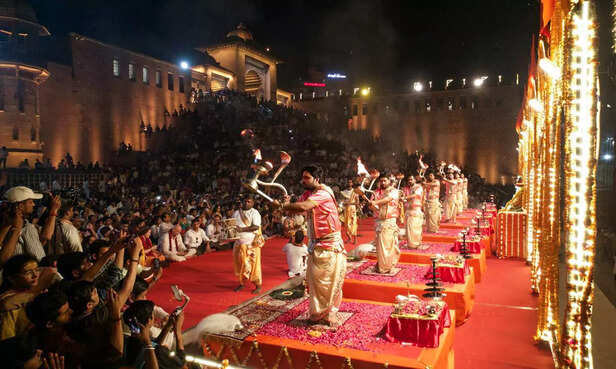
Varanasi, Mar 19 (ANI): Devotees participate in the grand Ganga Aarti on the aus...
Image credit : ANI
2. Children are often given different final rites
3. Sadhus are not always cremated
4. Final rites depend on spiritual meaning
5. The sacred image of Kashi hides many lesser-known exceptions
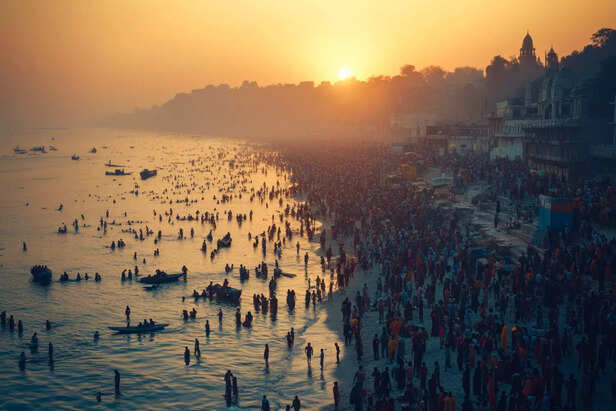
Kashi Vishwanath Temple is Located Near Ganges River
Image credit : Freepik
Most outsiders know Kashi through the image of burning ghats, but local customs have always been more detailed than that. Certain groups have traditionally been given different rites, and these customs have survived because they are tied to old beliefs about purity, renunciation, and liberation. The truth is that Kashi is sacred not because everything is done the same way, but because every rite carries meaning.
6. Kashi teaches that liberation is bigger than one ritual
Kashi is not just a city of death rituals. It is a city of questions about life, soul, and what truly matters in the end. If even death is not treated in one fixed way here, then maybe the real sacredness of Kashi lies in how deeply it understands that every journey is different.