
Why Shiva Had to Prove Himself Before Marrying Parvati on Maha Shivratri
Nidhi | Feb 11, 2026, 12:36 IST

Mahashivratri
Image credit : Ai
Maha Shivratri is often celebrated as the divine wedding night of Shiva and Parvati. But few know that before this sacred union, Shiva had to prove his readiness and Parvati had to undergo intense tapasya. Based on stories from the Shiva Purana and other scriptures, this article explores why their marriage required spiritual tests, cosmic balance, and transformation, revealing the deeper meaning behind one of Hinduism’s most powerful divine unions.
तपसा हि शुद्ध्यन्ति देहा न संशयः
भक्त्या तु लभ्यते देवः शंकरः शाश्वतः।
Through tapasya the body and mind are purified; through devotion the eternal Shankara is attained.
On Maha Shivratri, temples glow through the night. Bells echo. Devotees whisper “Om Namah Shivaya” with folded hands. Many celebrate it as the wedding night of Shiva and Parvati. But behind the celebration lies a powerful story. This was not a simple marriage. This was not love at first sight. This was a union that demanded transformation.
Shiva, the great ascetic, detached from the world, had once lost Sati. Grief had turned him inward. He withdrew into deep meditation, untouched by desire, untouched by society. And then came Parvati. Not as a princess seeking romance, but as a soul determined to restore cosmic balance.
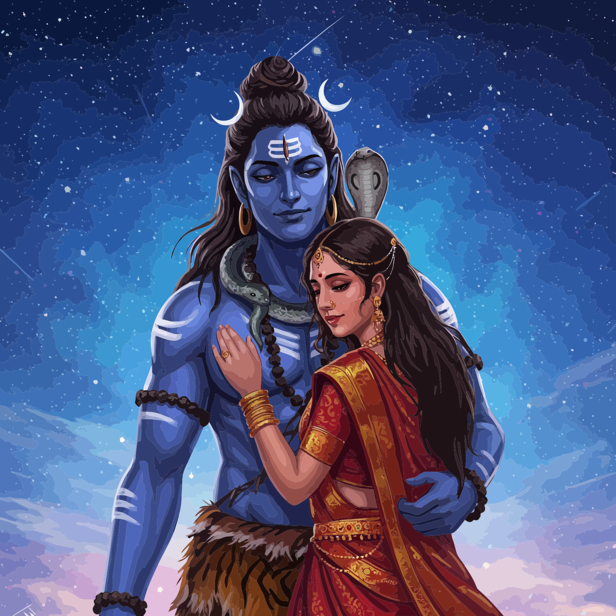
![Parvati and Shiva]()
Parvati was born to King Himavan and Queen Mena in the Himalayas. Royalty surrounded her. Luxury was available to her. Yet her heart was drawn to the ash-smeared yogi who lived beyond kingdoms and ornaments.
The Shiva Purana describes how she undertook severe austerities. She meditated in freezing winds. She reduced her food to leaves and eventually gave up even that. Her tapasya was not emotional longing. It was spiritual alignment. She was not asking Shiva to change for her. She was raising herself to his level of consciousness.
The first proof in this story was hers. She proved that divine love is earned through discipline.
When Parvati’s penance shook the heavens, Shiva decided to see whether her resolve was steady or impulsive. In the poetic telling of Kumarasambhavam, he appeared before her disguised as a wandering sage.
He spoke lightly of Shiva’s flaws. He described him as homeless, ash-covered, surrounded by spirits. He questioned why a princess would desire such a groom.
This was not insult. It was examination.
Parvati did not hesitate. She defended Shiva with calm conviction. She spoke of his cosmic nature, his detachment, his supreme consciousness. She did not love the image of Shiva. She understood his truth.
In that moment, she proved that her devotion was rooted in wisdom, not fantasy.
![Parvati]()
Shiva’s withdrawal after Sati’s death was not weakness. It was depth of feeling. But before he could accept Parvati, he had to transcend his grief.
The marriage could not happen while he remained bound to sorrow. The proving, in this sense, was internal. Shiva had to move from isolation back into engagement with the world.
When he finally accepted Parvati, it signified healing. It signified readiness to create again. Their son Kartikeya would later defeat the demon Tarakasura, restoring cosmic order. The marriage was part of a larger divine design.
Shiva is Mahayogi. He meditates in cremation grounds. He renounces ornaments. He is beyond convention. Parvati represents life, fertility, movement, and warmth.
For their marriage to take place, Shiva had to embrace the role of Grihastha, the householder. The Skanda Purana narrates how his wedding procession of ganas initially frightened Parvati’s family. The wildness of ascetic life met the refinement of royal tradition.
This transformation was symbolic. Spirituality does not reject life. It balances it. Shiva proved himself by showing that transcendence and responsibility can coexist.
Philosophically, Shiva without Shakti is inert. The verse from the Saundarya Lahari reminds us that without Shakti, even Shiva cannot manifest creation.
Their marriage is not merely romantic. It is metaphysical. Shiva is pure consciousness. Parvati is dynamic energy. When they unite, the universe functions in harmony.
The proving was mutual. Parvati proved devotion. Shiva proved balance. Only then could consciousness and energy merge as equals.
Maha Shivratri is associated not only with their marriage but also with Shiva’s revelation as the infinite pillar of light described in the Linga Purana. That endless column symbolized the defeat of ego.
On this night, devotees fast and remain awake. The wakefulness represents awareness. Just as Shiva and Parvati underwent tests before union, devotees undergo discipline before blessing.
The celebration is joyful, but its foundation is tapasya.
![Shiva and Parvati]()
In the end, Shiva did not need to prove his divinity. He proved his readiness. He proved that detachment could coexist with compassion. He proved that supreme consciousness could accept partnership without losing itself.
Parvati did not seek a perfect groom. She sought alignment. And Shiva did not accept devotion blindly. He ensured it was rooted in strength.
Their marriage teaches that divine union is not about desire. It is about growth. It is about evolving into worthiness.
On Maha Shivratri, as lamps flicker in temples and chants fill the air, the story whispers a deeper truth. Before seeking union, prepare yourself. Before seeking blessing, transform.
Perhaps that is why even Mahadev had to prove himself.
Because the greatest unions in the universe are not granted. They are earned.
भक्त्या तु लभ्यते देवः शंकरः शाश्वतः।
Through tapasya the body and mind are purified; through devotion the eternal Shankara is attained.
On Maha Shivratri, temples glow through the night. Bells echo. Devotees whisper “Om Namah Shivaya” with folded hands. Many celebrate it as the wedding night of Shiva and Parvati. But behind the celebration lies a powerful story. This was not a simple marriage. This was not love at first sight. This was a union that demanded transformation.
Shiva, the great ascetic, detached from the world, had once lost Sati. Grief had turned him inward. He withdrew into deep meditation, untouched by desire, untouched by society. And then came Parvati. Not as a princess seeking romance, but as a soul determined to restore cosmic balance.
A princess who chose penance over comfort

Parvati and Shiva
Image credit : Pixabay
Parvati was born to King Himavan and Queen Mena in the Himalayas. Royalty surrounded her. Luxury was available to her. Yet her heart was drawn to the ash-smeared yogi who lived beyond kingdoms and ornaments.
The Shiva Purana describes how she undertook severe austerities. She meditated in freezing winds. She reduced her food to leaves and eventually gave up even that. Her tapasya was not emotional longing. It was spiritual alignment. She was not asking Shiva to change for her. She was raising herself to his level of consciousness.
The first proof in this story was hers. She proved that divine love is earned through discipline.
A god who tested devotion in disguise
He spoke lightly of Shiva’s flaws. He described him as homeless, ash-covered, surrounded by spirits. He questioned why a princess would desire such a groom.
This was not insult. It was examination.
Parvati did not hesitate. She defended Shiva with calm conviction. She spoke of his cosmic nature, his detachment, his supreme consciousness. She did not love the image of Shiva. She understood his truth.
In that moment, she proved that her devotion was rooted in wisdom, not fantasy.
A grief that had to heal before love could return
Parvati
Image credit : Pixabay
Shiva’s withdrawal after Sati’s death was not weakness. It was depth of feeling. But before he could accept Parvati, he had to transcend his grief.
The marriage could not happen while he remained bound to sorrow. The proving, in this sense, was internal. Shiva had to move from isolation back into engagement with the world.
When he finally accepted Parvati, it signified healing. It signified readiness to create again. Their son Kartikeya would later defeat the demon Tarakasura, restoring cosmic order. The marriage was part of a larger divine design.
From ash-smeared yogi to divine householder
For their marriage to take place, Shiva had to embrace the role of Grihastha, the householder. The Skanda Purana narrates how his wedding procession of ganas initially frightened Parvati’s family. The wildness of ascetic life met the refinement of royal tradition.
This transformation was symbolic. Spirituality does not reject life. It balances it. Shiva proved himself by showing that transcendence and responsibility can coexist.
The union of consciousness and energy
Their marriage is not merely romantic. It is metaphysical. Shiva is pure consciousness. Parvati is dynamic energy. When they unite, the universe functions in harmony.
The proving was mutual. Parvati proved devotion. Shiva proved balance. Only then could consciousness and energy merge as equals.
A wedding remembered as a night of awakening
On this night, devotees fast and remain awake. The wakefulness represents awareness. Just as Shiva and Parvati underwent tests before union, devotees undergo discipline before blessing.
The celebration is joyful, but its foundation is tapasya.
A love that demanded transformation

Shiva and Parvati
Image credit : Pixabay
In the end, Shiva did not need to prove his divinity. He proved his readiness. He proved that detachment could coexist with compassion. He proved that supreme consciousness could accept partnership without losing itself.
Parvati did not seek a perfect groom. She sought alignment. And Shiva did not accept devotion blindly. He ensured it was rooted in strength.
Their marriage teaches that divine union is not about desire. It is about growth. It is about evolving into worthiness.
On Maha Shivratri, as lamps flicker in temples and chants fill the air, the story whispers a deeper truth. Before seeking union, prepare yourself. Before seeking blessing, transform.
Perhaps that is why even Mahadev had to prove himself.
Because the greatest unions in the universe are not granted. They are earned.