
5 Endangered Animals That Made a Stunning Comeback
Ritika | Dec 09, 2025, 11:15 IST

Endangered animals that made a comeback
Image credit : Pixabay
We often think that once a species is gone, it’s gone forever. But with all other miracles on the planet earth, this fact has been overturned too. Thanks to strict laws and human help, these five amazing creatures made a miraculous return.
Imagine a world without the majestic Bald Eagle soaring in the sky or the Giant Panda munching on bamboo. It sounds like a nightmare, but not long ago, it was almost our reality.
Humans have done a lot of damage to nature through hunting, pollution, and destroying forests. Many species were pushed to the very edge of the cliff. But here is the good news: when people work together to protect nature, miracles happen. Here are five incredible animals that came back from almost being gone forever.
![Bald eagle]()
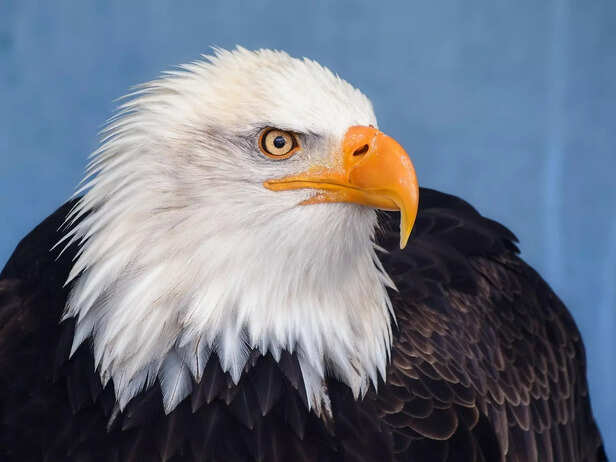
In the 1960s, the national bird of the United States was in big trouble. There were fewer than 500 nesting pairs left in the entire country. The reason wasn't just hunting; it was a bug spray called DDT.
This chemical washed into rivers and was eaten by fish, which were then eaten by eagles. The poison made the eagles’ eggshells very thin, like paper. When the mother sat on the eggs to keep them warm, they would break.
The government then took the step and banned DDT in 1972, and passed strict laws to protect the birds. It worked, and today, there are hundreds of thousands of Bald Eagles. You can see them flying high across North America again.
![Panda]()
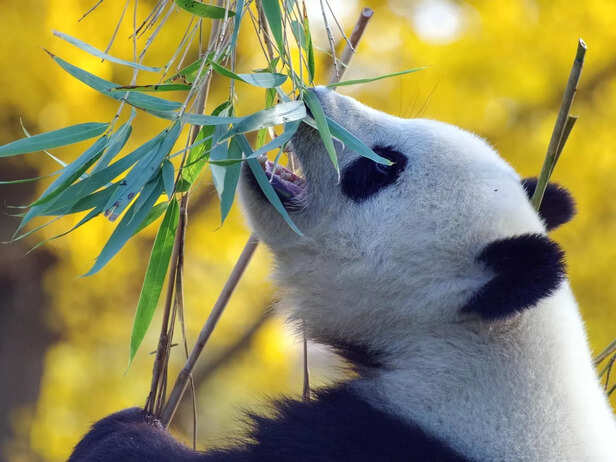
Everyone loves pandas, but being cute didn't save them from losing their homes. As China grew, forests were cut down for farming and timber. Pandas, who only eat bamboo, had nowhere to go and nothing to eat. By the 1980s, their numbers had dropped dangerously low.
The Chinese government then created huge nature reserves just for pandas. They also started planting more bamboo forests. These efforts paid off, and in 2016, scientists officially changed the Panda’s status from "Endangered" to "Vulnerable." They aren't totally safe yet, but they are no longer on the brink of disappearing.
![Humpback whale's tail]()
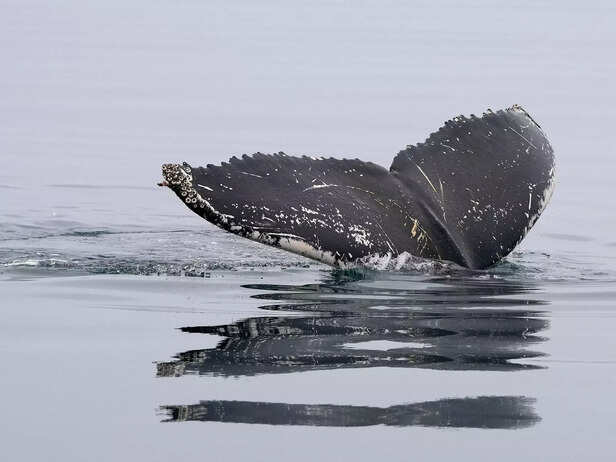
For a long time, whales were hunted for their blubber (fat) and meat. Commercial whaling ships killed them by the thousands. By the mid-20th century, the Humpback Whale population had disappeared. In some parts of the ocean, 95% of them were gone.
Then, in 1966, a ban was put on hunting Humpback Whales. Since then, their numbers have bounced back in a huge way. Today, there are about 80,000 Humpbacks whales swimming in our oceans. They are now famous for their "songs" and for putting on shows for whale watchers.
![Bison]()
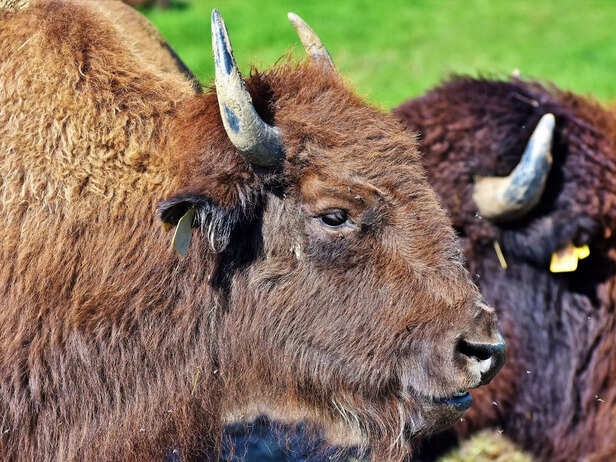
In the early 1800s, there were roughly 30 to 60 million bison (buffalo) roaming America. But the settlers hunted them for sport and for their hides. By the late 1800s, the population dropped from millions to just a few hundred. They were practically extinct.
Then, a few conservationists and ranchers gathered the last remaining bison to breed them in safety. Slowly, their numbers grew. Today, there are roughly 500,000 bison in the US. While they don't roam as freely as before, the species was saved from being wiped out completely.
![Gray wolf]()
Wolves were once seen as villains in fairy tales and in real life. Farmers and hunters in the US shot them until they were completely gone from the famous Yellowstone National Park. But without wolves, the deer and elk population grew out of control and ate all the plants. The whole ecosystem fell apart.
Then, in a controversial move in 1995, scientists brought wolves from Canada and released them into Yellowstone. It was a huge success. The wolves balanced the deer population, the plants grew back, and even the rivers became healthier.
Explore the latest trends and tips in Health & Fitness, Spiritual, Travel, Life Hacks, Trending, Fashion & Beauty, and Relationships at Times Life!
Frequently Asked Questions (FAQs)
Humans have done a lot of damage to nature through hunting, pollution, and destroying forests. Many species were pushed to the very edge of the cliff. But here is the good news: when people work together to protect nature, miracles happen. Here are five incredible animals that came back from almost being gone forever.
1. The Bald Eagle
Bald eagle
Image credit : Pixabay
In the 1960s, the national bird of the United States was in big trouble. There were fewer than 500 nesting pairs left in the entire country. The reason wasn't just hunting; it was a bug spray called DDT.
This chemical washed into rivers and was eaten by fish, which were then eaten by eagles. The poison made the eagles’ eggshells very thin, like paper. When the mother sat on the eggs to keep them warm, they would break.
The government then took the step and banned DDT in 1972, and passed strict laws to protect the birds. It worked, and today, there are hundreds of thousands of Bald Eagles. You can see them flying high across North America again.
2. The Giant Panda
Panda
Image credit : Pixabay
Everyone loves pandas, but being cute didn't save them from losing their homes. As China grew, forests were cut down for farming and timber. Pandas, who only eat bamboo, had nowhere to go and nothing to eat. By the 1980s, their numbers had dropped dangerously low.
The Chinese government then created huge nature reserves just for pandas. They also started planting more bamboo forests. These efforts paid off, and in 2016, scientists officially changed the Panda’s status from "Endangered" to "Vulnerable." They aren't totally safe yet, but they are no longer on the brink of disappearing.
3. The Humpback Whales
Humpback whale's tail
Image credit : Pixabay
For a long time, whales were hunted for their blubber (fat) and meat. Commercial whaling ships killed them by the thousands. By the mid-20th century, the Humpback Whale population had disappeared. In some parts of the ocean, 95% of them were gone.
Then, in 1966, a ban was put on hunting Humpback Whales. Since then, their numbers have bounced back in a huge way. Today, there are about 80,000 Humpbacks whales swimming in our oceans. They are now famous for their "songs" and for putting on shows for whale watchers.
4. The American Bison
Bison
Image credit : Pixabay
In the early 1800s, there were roughly 30 to 60 million bison (buffalo) roaming America. But the settlers hunted them for sport and for their hides. By the late 1800s, the population dropped from millions to just a few hundred. They were practically extinct.
Then, a few conservationists and ranchers gathered the last remaining bison to breed them in safety. Slowly, their numbers grew. Today, there are roughly 500,000 bison in the US. While they don't roam as freely as before, the species was saved from being wiped out completely.
5. The Gray Wolf
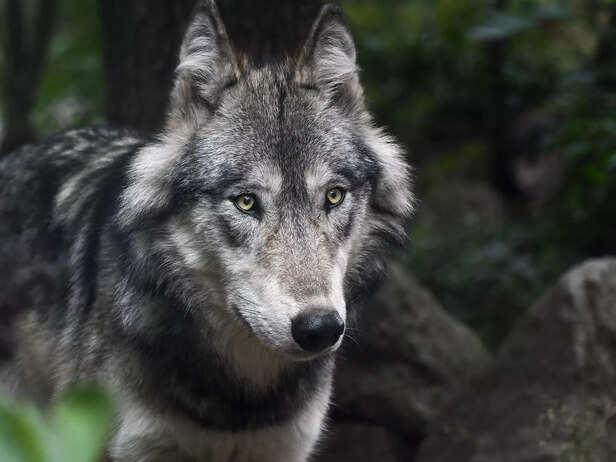
Gray wolf
Image credit : Pixabay
Wolves were once seen as villains in fairy tales and in real life. Farmers and hunters in the US shot them until they were completely gone from the famous Yellowstone National Park. But without wolves, the deer and elk population grew out of control and ate all the plants. The whole ecosystem fell apart.
Then, in a controversial move in 1995, scientists brought wolves from Canada and released them into Yellowstone. It was a huge success. The wolves balanced the deer population, the plants grew back, and even the rivers became healthier.
Explore the latest trends and tips in Health & Fitness, Spiritual, Travel, Life Hacks, Trending, Fashion & Beauty, and Relationships at Times Life!
Frequently Asked Questions (FAQs)
- What is the #1 rarest animal in the world?
The vaquita is widely considered the world's rarest animal, with an estimated population of only 10 individuals remaining in the wild. - What animals are declared extinct in 2025?
By 2025, several species faced imminent extinction or were declared extinct, including the Slender-billed Curlew, with critically endangered animals like the Vaquita (as few as 10 left). - Which animal has only 10 left?
The vaquita is the most endangered in the world.