
How to Decode Your Cat’s Tail Movements
Ritika | Sept 18, 2025, 20:10 IST

Cat
Image credit : Pixabay
Cats don't very often communicate in sounds only. Their tail, an often-overlooked body part, speaks an entire vocabulary of mood, warning, and invitation. It isn't a matter of becoming a "cat whisperer," but of slowing down long enough to pay attention. A swish, a flick, a soft curl, each is a sign.
Cats are usually described as enigmatic, sometimes distant, sometimes lovable. But their tails betray them more than they know. Cats, unlike dogs, who wag just about the same no matter whether they're excited or stressed out, tail-wise are subtle. A tail can function as a mood thermometer, changing minute by minute.
![Cat sitting on floor]()
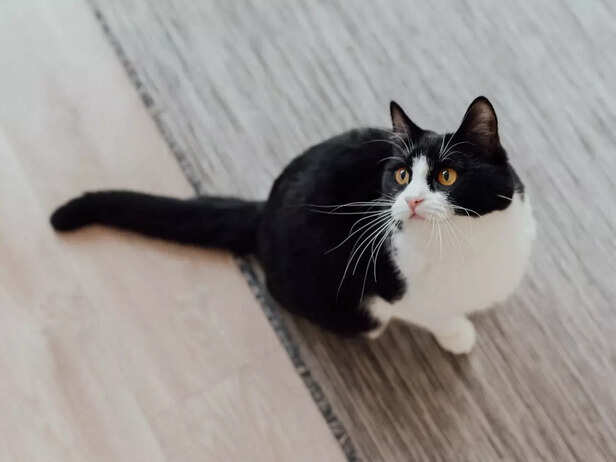
Take the vertical tail, for instance. When a cat walks into a room with its tail held high, perhaps with only the tip being curved, that's a cocky greeting. That's the cat equivalent of waving to you on the street. A tucked tail, however, conveys another message. That's fear or insecurity, a cat attempting to shrink.
And then there's the big, puffy tail. Any kid knows the picture: a Halloween silhouette, tail fluffed like a bottlebrush. That's not accidental, that's all survival instinct. The cat wishes to look big so that it can intimidate whatever it is picking up on. It's incredible the way something as simple as hair on end can go from adorable to intimidating.
The Quick Flick and What it Signifies
![A cat looking back]()
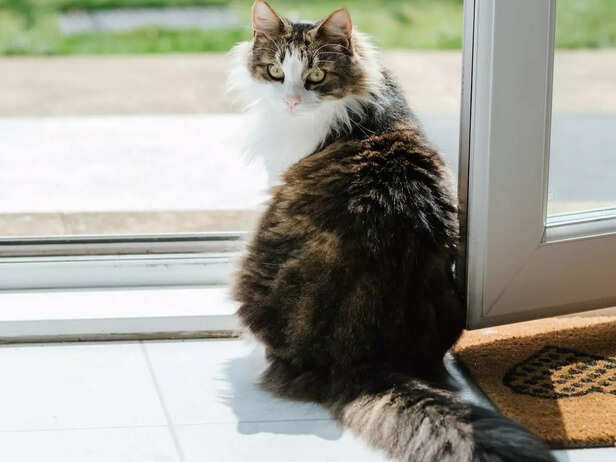
Cats also communicate with speed. The rate at which a movement is made can be everything. A leisurely back-and-forth rocking when a cat suns itself usually means that they're relaxing. They are aware of what's happening around them but simply don't care.
Now compare that to a quick, sharp flick. That's irritation. Tail swatting on the floor is your danger signal: the cat doesn't want you to touch her, or perhaps the game has been played long enough. Heed not this warning and you can expect to be swatted or nipped.
Surprisingly, cats wag their tails when they are concentrated. Watch one of them stalk a bird or toy across the window. The body is still, but the tip of the tail quivers like a live wire. It's the energy release, the indication they are in the zone. Lots of owners incorrectly identify it as irritation, but it is rather concentration. That distinction is vital if you don't want to get your cat wrong.
![Kitten]()
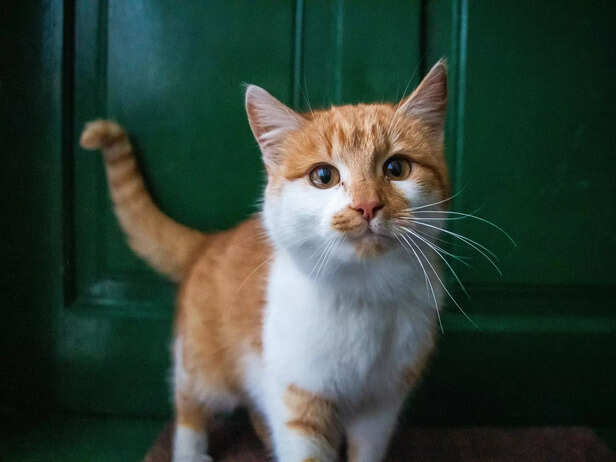
Tail language is not only about mood; it's also about social behavior. Cats communicate with us and with one another through it. An example is when a cat wraps its tail softly around another cat's body, or around your leg, which is the cat equivalent of holding hands. It's wordless affection.
Kittens are taught this early. Observe a mother cat. She'll give a head signal with her tail as she leads them, sometimes even lifting her tail so kittens copy. Mature cats retain this instinct, frequently raising their tails in greeting to see someone familiar. It's subtle but really social.
And then there's the low, straight-out tail in multi-cat families. When a cat approaches another with the tail held level, it’s often a neutral stance, not quite hostile but not openly friendly either. It’s like saying, “I see you, but I’m cautious.” Over time, learning these social cues helps you manage harmony at home, especially if you live with more than one cat.
![Cat]()
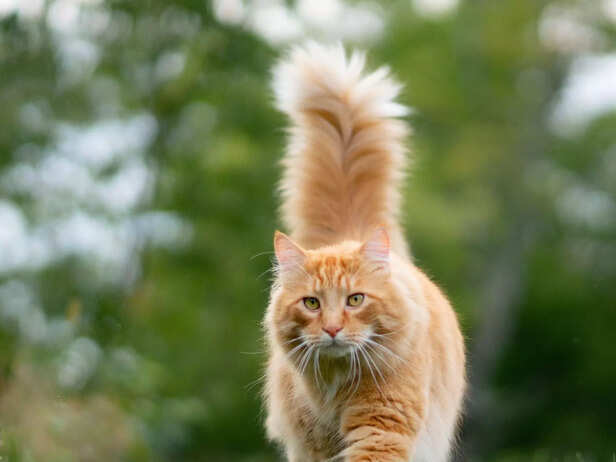
Playtime renders tails unreliable. Playful cats tend to lash their tails back and forth with excitement, but this is accompanied by dilation of the pupils and that goofy sideways bounce cats are so well known for. Catch them close up, and you'll notice how their tails become integral to the play, stalking, pouncing, batting.
But even in rest, tails don’t fall silent. Cats twitch their tails in sleep, sometimes lightly, sometimes with sharp jerks. Many believe this links to dreaming. Since cats spend much of their lives asleep, tail twitching might be their way of acting out dream sequences, stalking, hunting, running. It’s speculation, but one that feels convincing when you’ve sat next to a sleeping cat whose tail is living a life of its own.
Cats are not mysterious creatures as we perceive them; we simply fail to always be attuned to listening. Their tails are perhaps the most blatant channel of communication, always expressing confidence, fear, irritation, or affection. Pay attention to the speed, the height, the texture, and you understand what your cat is experiencing in a given moment.
And perhaps that is the true reward. Not only fewer scratches from misunderstanding their signals, but a stronger bond. A language that had been there all along, waiting to be heard. The tail is not just an ornament; it is a voice.
Explore the latest trends and tips in Health & Fitness, Spiritual, Travel, Life Hacks, Trending, Fashion & Beauty, and Relationships at Times Life!
The Tail as a Mood Barometer
Cat sitting on floor
Image credit : Pexels
Take the vertical tail, for instance. When a cat walks into a room with its tail held high, perhaps with only the tip being curved, that's a cocky greeting. That's the cat equivalent of waving to you on the street. A tucked tail, however, conveys another message. That's fear or insecurity, a cat attempting to shrink.
And then there's the big, puffy tail. Any kid knows the picture: a Halloween silhouette, tail fluffed like a bottlebrush. That's not accidental, that's all survival instinct. The cat wishes to look big so that it can intimidate whatever it is picking up on. It's incredible the way something as simple as hair on end can go from adorable to intimidating.
The Quick Flick and What it Signifies
A cat looking back
Image credit : Pexels
Cats also communicate with speed. The rate at which a movement is made can be everything. A leisurely back-and-forth rocking when a cat suns itself usually means that they're relaxing. They are aware of what's happening around them but simply don't care.
Now compare that to a quick, sharp flick. That's irritation. Tail swatting on the floor is your danger signal: the cat doesn't want you to touch her, or perhaps the game has been played long enough. Heed not this warning and you can expect to be swatted or nipped.
Surprisingly, cats wag their tails when they are concentrated. Watch one of them stalk a bird or toy across the window. The body is still, but the tip of the tail quivers like a live wire. It's the energy release, the indication they are in the zone. Lots of owners incorrectly identify it as irritation, but it is rather concentration. That distinction is vital if you don't want to get your cat wrong.
The Tail in Relationships
Kitten
Image credit : Pixabay
Tail language is not only about mood; it's also about social behavior. Cats communicate with us and with one another through it. An example is when a cat wraps its tail softly around another cat's body, or around your leg, which is the cat equivalent of holding hands. It's wordless affection.
Kittens are taught this early. Observe a mother cat. She'll give a head signal with her tail as she leads them, sometimes even lifting her tail so kittens copy. Mature cats retain this instinct, frequently raising their tails in greeting to see someone familiar. It's subtle but really social.
And then there's the low, straight-out tail in multi-cat families. When a cat approaches another with the tail held level, it’s often a neutral stance, not quite hostile but not openly friendly either. It’s like saying, “I see you, but I’m cautious.” Over time, learning these social cues helps you manage harmony at home, especially if you live with more than one cat.
When Tails Speak during Play and Sleep
Cat
Image credit : Pixabay
Playtime renders tails unreliable. Playful cats tend to lash their tails back and forth with excitement, but this is accompanied by dilation of the pupils and that goofy sideways bounce cats are so well known for. Catch them close up, and you'll notice how their tails become integral to the play, stalking, pouncing, batting.
But even in rest, tails don’t fall silent. Cats twitch their tails in sleep, sometimes lightly, sometimes with sharp jerks. Many believe this links to dreaming. Since cats spend much of their lives asleep, tail twitching might be their way of acting out dream sequences, stalking, hunting, running. It’s speculation, but one that feels convincing when you’ve sat next to a sleeping cat whose tail is living a life of its own.
Wrapping Up
And perhaps that is the true reward. Not only fewer scratches from misunderstanding their signals, but a stronger bond. A language that had been there all along, waiting to be heard. The tail is not just an ornament; it is a voice.
Explore the latest trends and tips in Health & Fitness, Spiritual, Travel, Life Hacks, Trending, Fashion & Beauty, and Relationships at Times Life!