
When Shiva Fought the Sun And Light Fell to Earth
Noopur Kumari | Nov 04, 2025, 06:06 IST

Shiva’s Trident Struck the Sun:
Image credit : Times Life Bureau
Most people know the Sun as a symbol of life and energy, but few know that, according to the Brahmavaivarta Purana, the Sun once battled Lord Shiva himself. That divine clash changed the course of creation and gave birth to three sacred places of worship in India. From the radiant Konark Temple in Odisha to the mystical Devark and Lolark Temples in Bihar and Kashi each stands where a fragment of Surya once fell. This is not just mythology; it’s a story of divine power, cosmic balance, and the eternal bond between light and destruction.
When the eternal forces of light and destruction collided, a story was born one few remember today. According to the Brahmavaivarta Purana, when Lord Shiva’s trident struck the radiant Sun God, three fragments of light fell upon the earth, giving birth to India’s sacred Sun Temples. This tale is not just mythology it’s a reminder of balance between power and purpose, light and shadow. Each temple stands as a symbol of how even divine conflict can create eternal harmony and illuminate the world a new.
![Shiva and Surya battle illustration]()
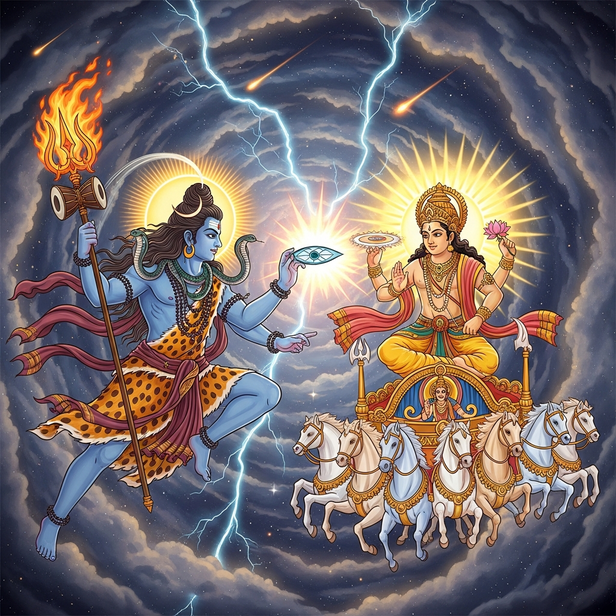
In the Brahmavaivarta Purana, a fierce battle once took place between Lord Shiva and Surya Dev, the Sun God. It began when Ravana’s maternal grandfather, Sumali, gained immense power after receiving a boon from Shiva. Blinded by arrogance, Sumali attempted to challenge the heavens themselves and ascended toward the Sun. To protect cosmic balance, Surya Dev unleashed his radiance, but Sumali, overpowered, called upon Lord Shiva for help. Bound by his promise, Shiva appeared and soon, divinity faced divinity. The battle between Shiva’s fury and Surya’s brilliance shook the cosmos.
![Shiva’s trident striking the Sun]()
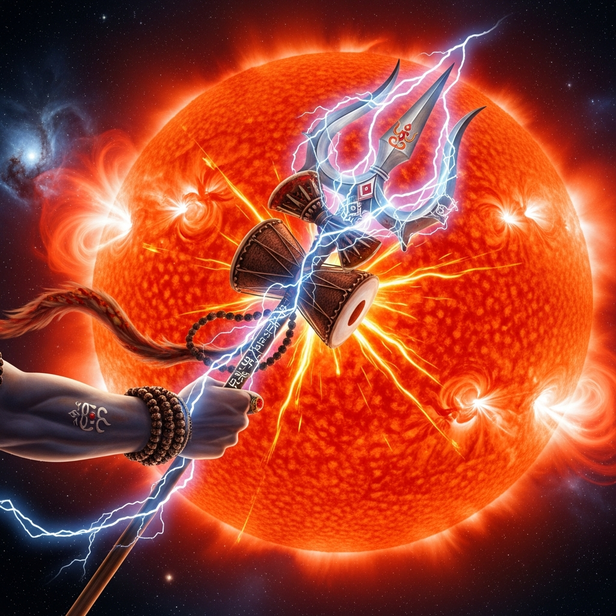
As the celestial war intensified, Lord Shiva hurled his mighty Trishul (trident) at Surya Dev. The weapon struck with such power that the radiant Sun split into three glowing fragments. The heavens dimmed, and Surya Dev lost consciousness. This moment marked not just a clash of gods, but the balance between creation and destruction. When Surya’s father, Sage Kashyapa, saw his son wounded, he was overcome with sorrow and anger. In grief, he cursed Shiva that one day, he too would strike his own son with a trident. That curse later manifested when Shiva, unknowingly, used his Trishul on his beloved son, Lord Ganesha.
![Map of India showing Konark, Devark, and Lolark Temples]()
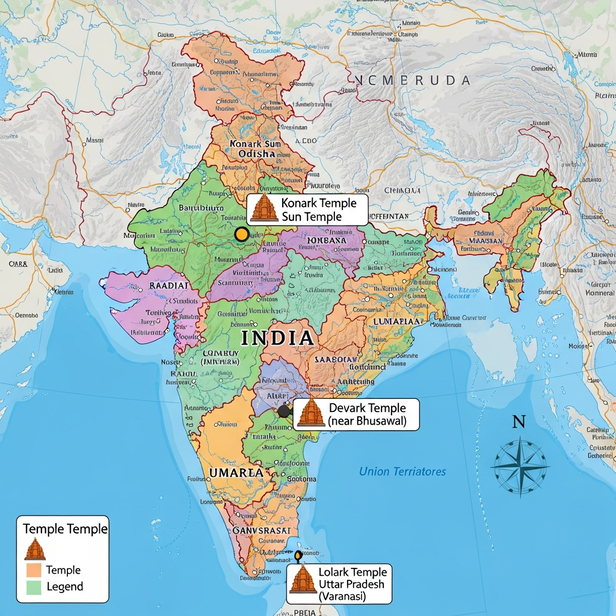
The three fragments of the Sun God did not vanish they descended upon Earth, blessing three sacred lands with divine light.
![Devotees offering prayers]()
This story isn’t just a myth it reflects the eternal truth of balance in the universe. Even the brightest light must face darkness, and even the destroyer, Shiva, must protect creation. The fall of Surya symbolizes the humbling of power; his rise again represents rebirth through grace. During Chhath Puja, when devotees stand in rivers offering Arghya to the Sun, they’re not just worshipping the deity they’re honoring the cosmic promise that light will always return, no matter how deep the night.
![Morning rays illuminating Konark Temple]()
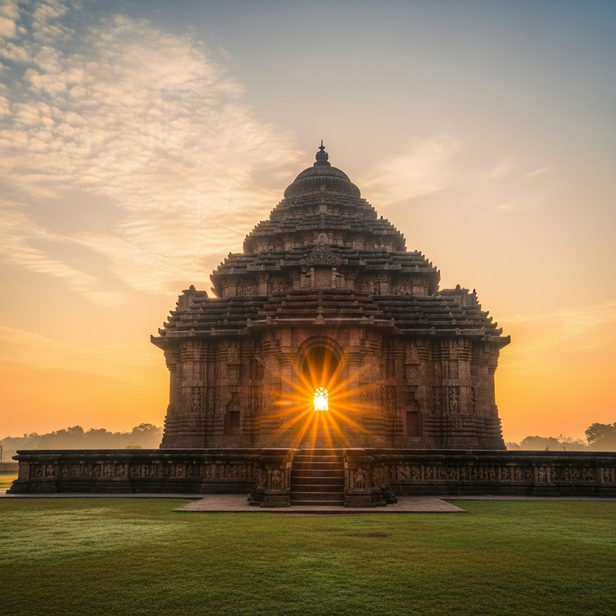
Even today, at dawn, when the first golden rays touch the stones of Konark, Devark, and Lolark, it is believed that the Sun God blesses every devotee with new energy. The architecture of these temples reflects the journey of Surya across the sky, reminding us that life too is a cycle from darkness to dawn, from fall to rise. Every offering of water, every folded hand before the rising sun, is a continuation of that ancient story of humility, forgiveness, and light.
In the dance between light and shadow, Shiva and Surya showed the world the essence of divine balance. The three Sun Temples are not just ancient marvels they are living symbols of energy, devotion, and the eternal cycle of fall and rise. When you bow before the morning Sun, remember you’re not just greeting a star, but touching the same divine light that once faced Lord Shiva and rose again to illuminate the world
Explore the latest trends and tips in Health & Fitness, Spiritual, Travel, Life Hacks, Trending, Fashion & Beauty, and Relationships at Times Life!
1. The Divine Clash: When Sun Faced Shiva
Shiva and Surya battle illustration
Image credit : Times Life Bureau
In the Brahmavaivarta Purana, a fierce battle once took place between Lord Shiva and Surya Dev, the Sun God. It began when Ravana’s maternal grandfather, Sumali, gained immense power after receiving a boon from Shiva. Blinded by arrogance, Sumali attempted to challenge the heavens themselves and ascended toward the Sun. To protect cosmic balance, Surya Dev unleashed his radiance, but Sumali, overpowered, called upon Lord Shiva for help. Bound by his promise, Shiva appeared and soon, divinity faced divinity. The battle between Shiva’s fury and Surya’s brilliance shook the cosmos.
2. The Moment of the Trident
Shiva’s trident striking the Sun
Image credit : Times Life Bureau
As the celestial war intensified, Lord Shiva hurled his mighty Trishul (trident) at Surya Dev. The weapon struck with such power that the radiant Sun split into three glowing fragments. The heavens dimmed, and Surya Dev lost consciousness. This moment marked not just a clash of gods, but the balance between creation and destruction. When Surya’s father, Sage Kashyapa, saw his son wounded, he was overcome with sorrow and anger. In grief, he cursed Shiva that one day, he too would strike his own son with a trident. That curse later manifested when Shiva, unknowingly, used his Trishul on his beloved son, Lord Ganesha.
3. Where the Sun Fell: Birth of Three Sacred Temples
Map of India showing Konark, Devark, and Lolark Temples
Image credit : Times Life Bureau
The three fragments of the Sun God did not vanish they descended upon Earth, blessing three sacred lands with divine light.
- The first piece fell in Odisha, where the magnificent Konark Sun Temple now stands a temple shaped like a chariot that carries the Sun across the sky.
- The second piece descended in Bihar, forming the Devark Sun Temple, where devotees gather to worship during Chhath Puja.
- The third piece landed near Kashi (Varanasi), where the Lolark Kund still glows with faith and purity.
4. The Spiritual Meaning Behind the Legend

Devotees offering prayers
Image credit : Times Life Bureau
This story isn’t just a myth it reflects the eternal truth of balance in the universe. Even the brightest light must face darkness, and even the destroyer, Shiva, must protect creation. The fall of Surya symbolizes the humbling of power; his rise again represents rebirth through grace. During Chhath Puja, when devotees stand in rivers offering Arghya to the Sun, they’re not just worshipping the deity they’re honoring the cosmic promise that light will always return, no matter how deep the night.
5. The Living Presence of Surya in Every Temple
Morning rays illuminating Konark Temple
Image credit : Times Life Bureau
Even today, at dawn, when the first golden rays touch the stones of Konark, Devark, and Lolark, it is believed that the Sun God blesses every devotee with new energy. The architecture of these temples reflects the journey of Surya across the sky, reminding us that life too is a cycle from darkness to dawn, from fall to rise. Every offering of water, every folded hand before the rising sun, is a continuation of that ancient story of humility, forgiveness, and light.
The Divine Story Behind India’s Three Sun Temples
Explore the latest trends and tips in Health & Fitness, Spiritual, Travel, Life Hacks, Trending, Fashion & Beauty, and Relationships at Times Life!