
Why Ashtami and Navami Are Celebrated: The Power of Durga’s Final Days
Manika | Sept 29, 2025, 05:36 IST

Why Ashtami and Navami Are Celebrated: The Power of Durga’s Final Days
Image credit : Freepik
Ashtami and Navami, the eighth and ninth days of Navratri, hold a special place in the hearts of devotees. These days mark the peak of the goddess’s energy during Navratri and are often considered the most powerful. Ashtami (Durga Ashtami) symbolizes the fierce destruction of evil, while Navami (Mahanavami) signifies the completion of this divine battle and the celebration of victory. They are observed with rituals like Kanya Pujan and Havan, where devotees honor both the goddess and the feminine force. Together, these two days remind us that true victory comes when courage is balanced with compassion.
Navratri, the nine-day festival of the divine feminine, is not just about rituals but about inner transformation. While each day has its own significance, Ashtami (the eighth day) and Navami (the ninth day) are considered the most powerful. These two days mark the climax of the goddess’s battle against evil and are celebrated with great devotion across India.
On Ashtami, devotees worship the fierce side of the goddess, who destroys negativity and removes obstacles. On Navami, they celebrate her victory and her role as the nurturer who restores peace. Together, these two days represent the perfect balance of shakti (power) and shanti (peace).
![Kanya]()
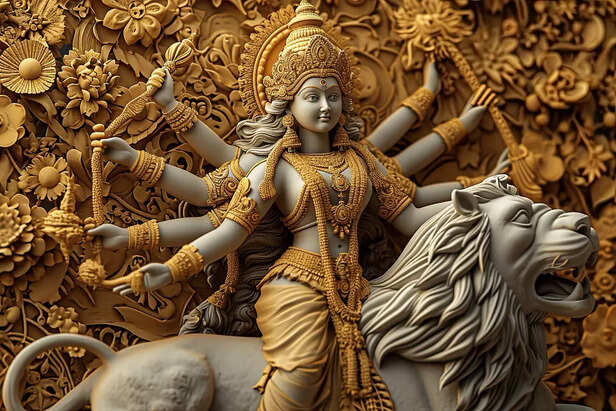
Ashtami, also called Durga Ashtami or Maha Ashtami, is when the goddess is worshipped in her most ferocious forms like Mahishasuramardini, the slayer of the buffalo demon. It symbolizes the moment when good finally begins to overpower evil.
2.
One of the most important rituals of Ashtami is Kanya Pujan, where young girls (representing the nine forms of Durga) are worshipped. Their feet are washed, they are offered food, gifts, and respect. This tradition reminds us to honor the feminine force in every form, especially innocence and purity.
Ashtami is about conquering inner demons too. Just as the goddess slays asuras, devotees are reminded to fight ego, anger, greed, and envy within themselves.
![Devi]()
Navami, also known as Mahanavami, represents the end of the goddess’s battle. On this day, the goddess is worshipped as Siddhidatri, the ninth form of Durga who grants wisdom, strength, and blessings to her devotees.
Devotees perform Havan (sacred fire rituals) and offer prayers to mark the completion of the goddess’s journey. In many traditions, Navami is the day when Ayudha Puja (worship of tools, weapons, and instruments) is performed, signifying respect for everything that sustains life and work.
Navami teaches that after every struggle comes peace. It reminds us that battles, whether external or internal, are not fought forever. They end, and the end brings new beginnings filled with wisdom and balance.
![Puja]()
The lessons of Ashtami and Navami are timeless. In our modern lives, negativity comes not in the form of demons but through stress, fear, and toxic influences.
Ashtami and Navami are not just the eighth and ninth days of Navratri, they are the heart of the festival. They represent the goddess at her most powerful and compassionate forms. Ashtami destroys what no longer serves us, and Navami blesses us with wisdom and peace for the future.
When devotees perform rituals on these days, they are not just worshipping the goddess, they are invoking the same power within themselves. They are reminded to fight bravely like Durga and to restore harmony like Siddhidatri.
In essence, Ashtami and Navami are celebrated because they mark the transformation of struggle into victory, and fear into peace.
Explore the latest trends and tips in Health & Fitness, Spiritual, Travel, Life Hacks, Trending, Fashion & Beauty, and Relationships at Times Life!
On Ashtami, devotees worship the fierce side of the goddess, who destroys negativity and removes obstacles. On Navami, they celebrate her victory and her role as the nurturer who restores peace. Together, these two days represent the perfect balance of shakti (power) and shanti (peace).
The Significance of Ashtami

Kanya
Image credit : Freepik
1. The Fierce Destruction of Evil
2. Kanya Pujan Ritual
3. The Inner Meaning
The Significance of Navami
Devi
Image credit : Freepik
1. The Culmination of Power
2. Rituals of Victory
3. The Inner Meaning
Why Both Days Are Important Together
- Ashtami is the fight, Navami is the victory.
- Ashtami is courage, Navami is wisdom.
- Ashtami removes negativity, Navami restores harmony.
Cultural Variations Across India
Puja
Image credit : Freepik
- In North India, Ashtami and Navami are celebrated with Kanya Pujan and fasting.
- In West Bengal, these days overlap with Durga Puja, where Ashtami is the day of Sandhi Puja, marking the most intense worship of Durga.
- In South India, Navami is observed with Ayudha Puja, where people worship tools, books, and instruments of learning.
- In Gujarat, Ashtami and Navami are marked with special Garba and Dandiya nights that celebrate the goddess’s energy through dance and devotion.
Relevance in Today’s World
- Ashtami teaches us to fight back against these forces with courage and discipline.
- Navami teaches us to restore balance and celebrate victories, no matter how small.
Ashtami and Navami are not just the eighth and ninth days of Navratri, they are the heart of the festival. They represent the goddess at her most powerful and compassionate forms. Ashtami destroys what no longer serves us, and Navami blesses us with wisdom and peace for the future.
When devotees perform rituals on these days, they are not just worshipping the goddess, they are invoking the same power within themselves. They are reminded to fight bravely like Durga and to restore harmony like Siddhidatri.
In essence, Ashtami and Navami are celebrated because they mark the transformation of struggle into victory, and fear into peace.
Explore the latest trends and tips in Health & Fitness, Spiritual, Travel, Life Hacks, Trending, Fashion & Beauty, and Relationships at Times Life!