
5 Decisions That Changed the World Forever
Kazi Nasir | Jan 02, 2026, 15:22 IST

Decisions That Changed the World
Image credit : Ai - ChatGPT
History does not always change through wars or inventions alone; sometimes, it pivots on a single decision. From Gutenberg’s choice to mass-produce text to CERN releasing the World Wide Web for free, this article explores five pivotal decisions that reshaped knowledge, power, rights, warfare and global connectivity.
Change - one of the absolute true phenomena of this universe. Most of the time, it occurs because of wars, revolutions or inventions. But there are also moments where one single decision turns the direction of history. It might be a signature on a document or a vote taken by a handful of people or a choice to make something free instead of a profit.
These moments didn't may feel world-changing at the time, yet it shapes how you read, speak, vote, learn, fear and even think. This article explores the five decisions that shape the contemporary world, changing the course of history.
![Gutenberg Printing Press Impact]()
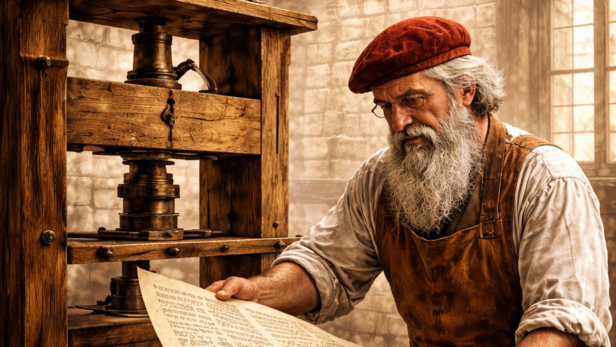
It's not because he invented printing, but the way he chose mass production of text, which was a radical idea for the time.
Before the era of printing, the course of history and knowledge used to move at the speed of handwriting. But afterwards, whether it's religion, science, politics or propaganda, all accelerate robustly.
The Gutenberg Bible was printed in about 180 copies, which is a mass-production leap for its era. By 1500, Europe had more than 9,000,000 printed books.
In 1833, Britain became the first country in the modern world to abolish slavery. By freeing more than 800,000 people. But the decision came with a revealing compromise. They had to compensate the slave owners by £20 million from the government treasury, which was about 40% of its annual expenditure, to protect economic stability and maintain order. The freed slave receive no land or restitution and were pushed towards a coercive apprenticeship system that was a little similar to slavery itself. However, abolishing slavery in Britain paved the way globally to dismantle slavery.
![Universal Declaration of Human Rights]()
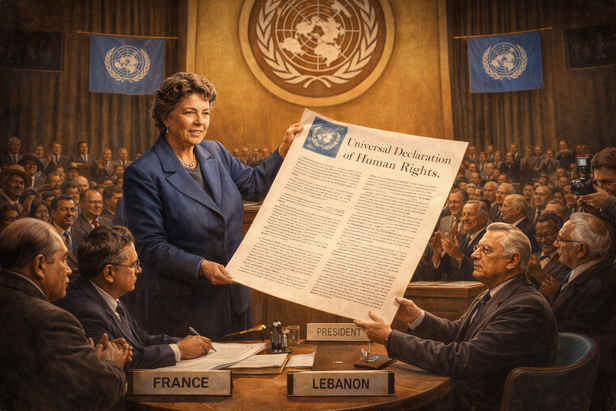
Two world wars brought unimaginable chaos and disaster to the world. Entire globle was struggling with a fundamental question: how do you prevent humanity from repeating its worst crimes? On 10 December 1948, the United Nations came up with the Universal Declaration of Human Rights, asserting that some basic rights belong to individuals simply because they are human, not because a state grants them. Which became a kind of moral benchmark under which states and nations are judged. Which shapes global constitutions, court ruling and activism.
4. Use of the Atomic Bomb (August 1945)
Smashing the principles of morality into smithereens and blinded by military logic, US President Truman authorised the use of atomic bombs on Hiroshima and Nagasaki in August 1945. Around 78,000 people were killed instantly in Hiroshima and 27,000 in Nagasaki. Total deaths rose by about 210,000. The incident was the beginning of the nuclear era. An era that boosted the arms race among countries, normalising weapons that are capable of annihilating entire cities, and a constant threat of existential destruction.
![World Wide Web - Internet]()
The European Organisation for Nuclear Research (CERN) on 30 April 1993 made a quiet decision to release the World Wide Web into the public domain. The decision led to radical change; they gave up all intellectual property rights so anyone could use and build on it anything freely. That was a single act that reshaped modern economies, media, education and politics, eventually connecting billions together in webs. While it also created new challenges like misinformation, surveillance and concentration of power to small group of people.
Explore the latest trends and tips in Health & Fitness, Spiritual, Travel, Life Hacks, Trending, Fashion & Beauty, and Relationships at Times Life!
These moments didn't may feel world-changing at the time, yet it shapes how you read, speak, vote, learn, fear and even think. This article explores the five decisions that shape the contemporary world, changing the course of history.
1. Gutenberg's Printing Press (1450s)
Gutenberg Printing Press Impact
Image credit : AI - ChatGPT
It's not because he invented printing, but the way he chose mass production of text, which was a radical idea for the time.
Before the era of printing, the course of history and knowledge used to move at the speed of handwriting. But afterwards, whether it's religion, science, politics or propaganda, all accelerate robustly.
The Gutenberg Bible was printed in about 180 copies, which is a mass-production leap for its era. By 1500, Europe had more than 9,000,000 printed books.
2. Britain abolishes slavery (1833)
In 1833, Britain became the first country in the modern world to abolish slavery. By freeing more than 800,000 people. But the decision came with a revealing compromise. They had to compensate the slave owners by £20 million from the government treasury, which was about 40% of its annual expenditure, to protect economic stability and maintain order. The freed slave receive no land or restitution and were pushed towards a coercive apprenticeship system that was a little similar to slavery itself. However, abolishing slavery in Britain paved the way globally to dismantle slavery.
3. The UN adopts the Universal Declaration of Human Rights (1948)
Universal Declaration of Human Rights
Image credit : AI - ChatGPT
Two world wars brought unimaginable chaos and disaster to the world. Entire globle was struggling with a fundamental question: how do you prevent humanity from repeating its worst crimes? On 10 December 1948, the United Nations came up with the Universal Declaration of Human Rights, asserting that some basic rights belong to individuals simply because they are human, not because a state grants them. Which became a kind of moral benchmark under which states and nations are judged. Which shapes global constitutions, court ruling and activism.
4. Use of the Atomic Bomb (August 1945)
Smashing the principles of morality into smithereens and blinded by military logic, US President Truman authorised the use of atomic bombs on Hiroshima and Nagasaki in August 1945. Around 78,000 people were killed instantly in Hiroshima and 27,000 in Nagasaki. Total deaths rose by about 210,000. The incident was the beginning of the nuclear era. An era that boosted the arms race among countries, normalising weapons that are capable of annihilating entire cities, and a constant threat of existential destruction.
5. World Wide Web into the public domain (30 April 1993)

World Wide Web - Internet
Image credit : AI - ChatGPT
The European Organisation for Nuclear Research (CERN) on 30 April 1993 made a quiet decision to release the World Wide Web into the public domain. The decision led to radical change; they gave up all intellectual property rights so anyone could use and build on it anything freely. That was a single act that reshaped modern economies, media, education and politics, eventually connecting billions together in webs. While it also created new challenges like misinformation, surveillance and concentration of power to small group of people.
Explore the latest trends and tips in Health & Fitness, Spiritual, Travel, Life Hacks, Trending, Fashion & Beauty, and Relationships at Times Life!