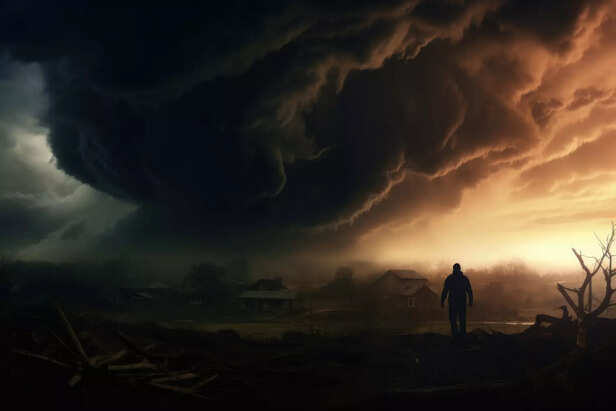
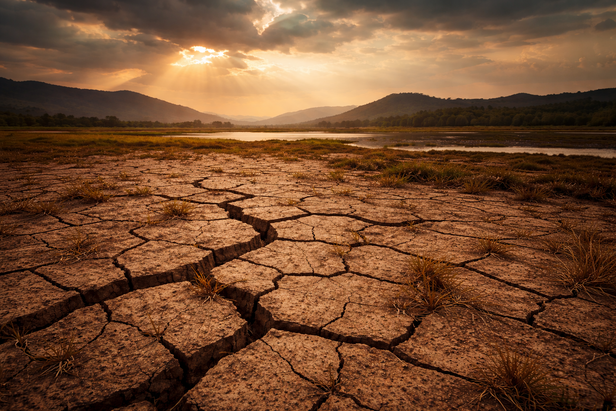
Since the dawn of human civilisations till this day, humans looked at the mountains, sky and the ocean, and contemplated "How is the world going to end?" - the doomsday. From ancient tablets to sacred texts, from tribal myths to medieval prophecies, almost every human civilisation have a story about the final day, when the world is going to collapse or fall into darkness. The fascinating thing is, although people of these cultures may never met, they worshipped different gods, yet they all feared the same thing. The article tried to answer the question of why the idea of the world ending appears again and again across civilisations separated by time and geography.
When Nature Felt Unpredictable, the End Felt Inevitable
![Why Humans fear End of the World]()
Why Humans fear End of the World
Image credit : Freepik
Primitive human societies used to live at the mercy of nature. Natural disasters feel sudden and are uncontrollable ofcourse. Scientific explanations were present at that time, so destruction was felt to be irrational at that time for rational being humans.
They used to feel earthquakes like ground shaking or how solar eclipses looked like the sky going dark. Try to imagine when a single flood could erase generations, imagining the end of the world didn’t feel dramatic. It felt logical.
End-of-World Myths Were Moral Warnings, Not Predictions
![Ancient Apocalypse Stories]()
Ancient Apocalypse Stories
Image credit : AI - ChatGPT
Apocalypse stories weren’t just about destruction; behind it hides the reason why societies should behave ethically. So it is fear that helps to maintain order and obedience in society. Good deeds, righteousness or morality promise survival or heaven and bad deeds or behaviour invite destruction. So the concept was that the world didn’t end because time ran out. It ended because humans failed to live rightly.
Even today, no matter what statistics or science explain disasters, fear still remains intact. Some day the word might end - maybe that's true. But who is going to be responsible for that, is it the humans? (Climate change, fast nuclear race and war, uncontrolled artificial intelligence boom) Or the nature itself?
Explore the latest trends and tips in
Health & Fitness,
Spiritual,
Travel,
Life Hacks,
Trending,
Fashion & Beauty, and
Relationships at
Times Life!FAQs
Q1. How will the world end according to some?Ans: Four billion years, some calculate.
Q2. What will happen in 2050 to Earth?Ans: Intensified climate impacts like extreme weather, greater water stress, and ecosystem disruption.
Q3. What will life be like in 2070?Ans: Maybe Artificial Intelligence (AI) will be ubiquitous.