
3 Buddha Teachings That End Overthinking & Bring Peace
Deepak Rajeev | Apr 24, 2026, 16:20 IST

Golden Buddha statue
Image credit : Freepik
Buddhism provides timeless wisdom for a peaceful life. Key teachings from Gautama Buddha, found in the Dhammapada, focus on moral conduct, including abstaining from harm and falsehood. Meditation techniques like Anapana and Vipassana cultivate a calm mind. Understanding impermanence, the universal truth of change, leads to liberation. These practices offer a path to profound inner peace and meaning for all.
Highlights
- Buddhism emphasises practical principles that assist in achieving inner peace.
- The five basic moral precepts in Buddhism are known as Sila.
- Anapana meditation & Vipassana meditation are essential for attaining Nirvana.
- The universal law of impermanence is a fundamental tenet of Buddhism.
Buddhism is one of the most practical and beautiful philosophies that has been helping humanity in finding peace and meaning for thousands of years. The Dhammapada, a classic text which was written almost 2,000 years ago, contains the essence of Buddhism as taught by Gautama Buddha. In this article, we will explore 3 key teachings from The Buddha that can help us live a life of deep inner peace and meaning.
![Which are the 5 Important Moral Precepts]() The Buddha believed that, to create the foundation of our paths toward Nirvana or ultimate liberation from all kinds of earthly attachments, we have to follow a number of basic moral precepts. As a matter of fact, almost all the religions in the world believes in following these precepts. In Buddhism, this foundational steps are known as Sila. Five basic moral precepts that we should follow in order to create lasting peace and also to stop generating negativity are:
The Buddha believed that, to create the foundation of our paths toward Nirvana or ultimate liberation from all kinds of earthly attachments, we have to follow a number of basic moral precepts. As a matter of fact, almost all the religions in the world believes in following these precepts. In Buddhism, this foundational steps are known as Sila. Five basic moral precepts that we should follow in order to create lasting peace and also to stop generating negativity are:
![The Buddha]() Meditation is the second, and one of the most important step, that we should follow in order to create true inner peace. The first meditation technique that we should master is known as Anapana. To do this, we have to sit up straight in a comfortable position. Then, we should focus on our breath going in and coming out through the nostrils. During the process, we will notice the mind wandering on the wings of random thoughts and emotions. When this happens, instead of reacting with frustration, we should calmly bring our focus back to the breath again. Continue doing this meditation and in a few days time your mind will become much calmer and grounded. After mastering Anapana, we can begin practising Vipassana. Vipassana is the meditation technique that has the power to purify our minds from the depth, leading to liberation from all kinds of attachments that we have accumulated over the years and even generations of lives.
Meditation is the second, and one of the most important step, that we should follow in order to create true inner peace. The first meditation technique that we should master is known as Anapana. To do this, we have to sit up straight in a comfortable position. Then, we should focus on our breath going in and coming out through the nostrils. During the process, we will notice the mind wandering on the wings of random thoughts and emotions. When this happens, instead of reacting with frustration, we should calmly bring our focus back to the breath again. Continue doing this meditation and in a few days time your mind will become much calmer and grounded. After mastering Anapana, we can begin practising Vipassana. Vipassana is the meditation technique that has the power to purify our minds from the depth, leading to liberation from all kinds of attachments that we have accumulated over the years and even generations of lives.
A fundamental principle that lies at the heart of Buddhism is the universal law of impermanence. If we observe any phenomenon in this universe, we will understand that of all them arise and pass away. Nothing stays here forever. Through meditation, we can realise this truth at an experiential level. Vipassana meditation teaches us to observe the thoughts and sensations that are constantly arising in our mind and body with equanimity, creating profound realisation about the ultimate truth of impermanence at an experiential level. Today, you can find a number of Vipassana meditation centres throughout the world. It is important that we learn this technique from the right Guru at the meditation centre itself.
Explore the latest trends and tips in Health & Fitness, Spiritual, Travel, Life Hacks, Trending, Fashion & Beauty, and Relationships at Times Life!
Frequently Asked Questions (FAQs)
1. The Buddha’s Moral Precepts
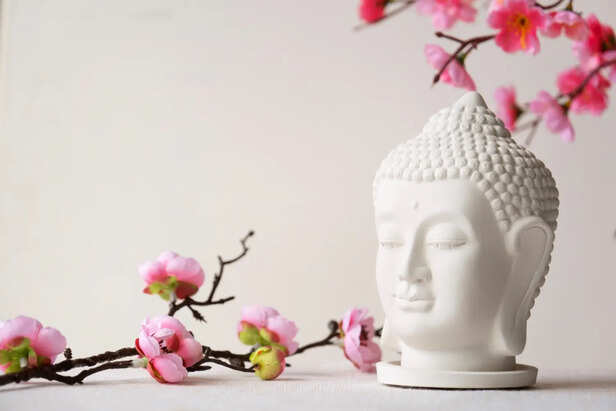
Which are the 5 Important Moral Precepts
Image credit : Freepik
- Abstain from killing any being
- Abstain from stealing
- Abstain from sexual misconduct
- Abstain from telling lies
- Abstain from all intoxicants
2. The Buddha’s Technique of Meditation

The Buddha
Image credit : Freepik
3. The Buddha’s Ultimate Truth of Impermanence
A fundamental principle that lies at the heart of Buddhism is the universal law of impermanence. If we observe any phenomenon in this universe, we will understand that of all them arise and pass away. Nothing stays here forever. Through meditation, we can realise this truth at an experiential level. Vipassana meditation teaches us to observe the thoughts and sensations that are constantly arising in our mind and body with equanimity, creating profound realisation about the ultimate truth of impermanence at an experiential level. Today, you can find a number of Vipassana meditation centres throughout the world. It is important that we learn this technique from the right Guru at the meditation centre itself.
Explore the latest trends and tips in Health & Fitness, Spiritual, Travel, Life Hacks, Trending, Fashion & Beauty, and Relationships at Times Life!
Frequently Asked Questions (FAQs)
- What does Buddha say about overthinking?
According to Buddhist teachings, overthinking is a restless mind trapped in a cycle of attachment and aversion. It causes unnecessary suffering. - What is the Buddhist concept of emptiness?
Buddhist emptiness or śūnyatā is the profound insight that all things- including the self- lack independent, permanent or solid existence. - What does the Buddha say about loneliness?
The Buddha taught that loneliness stems from internal craving, attachment and a misguided sense of separation rather than external isolation.