
3 Powerful Buddha Teachings for Deep Inner Peace & Clarity
Deepak Rajeev | Jan 23, 2026, 13:00 IST

3 Key Ideas From The Buddha's Philosophy
Image credit : Unsplash
Discover Gautama Buddha's path to inner peace. Learn about Sila, the practice of righteousness through simple precepts. Explore Samadhi, using mindfulness meditation to control the mind. Understand Paññā, the Universal Law of Impermanence. These steps lead to profound peace and liberation from life's struggles. Begin experiencing change today.
Highlights
- The Buddha's philosophy offers an effective path to achieve profound inner harmony.
- The first step is practicing righteousness by following basic precepts.
- Anapana meditation helps individuals control their racing thoughts.
- The core of The Buddha's teachings is the Universal Law of Impermanence.
Gautama Buddha’s philosophy provides us one of the most effective paths to achieve profound inner peace and harmony. Whatever the struggles that you may be going through in life right now, the Elightened One’s words of wisdom can gift you solace. In this article we will explore 3 of the most powerful and practical steps curated from the teachings of The Buddha. In fact, we will begin to experience change from the first day of implementing these techniques in our lives. Let’s go.
![The Buddha Statue]() To purify our souls, the first step is to become righteous in our actions. In other words, to stop creating negativity, we have to follow some basic precepts. According to The Buddha, these fundamental precepts for a peaceful life include:
To purify our souls, the first step is to become righteous in our actions. In other words, to stop creating negativity, we have to follow some basic precepts. According to The Buddha, these fundamental precepts for a peaceful life include:
Once we begin to follow these precepts rigorously, the unconscious act of creating negativity will halt. Now, our duty is to destroy the accumulated cravings and aversions that are lying deep within.
![Conquering the Mind Through Meditation]() The second step is to go deep into our subconscious mind and remove the impurities lying there from the roots. To achieve this, we can start practising the mindfulness meditation technique called Anapana. Anapana is a meditation technique in which we have to focus entirely on our breaths going in and coming out through the nostrils. As we begin meditating, we will observe that the mind is jumping here and there. Don’t worry and don’t react to this phenomenon in anyway. It is absolutely natural. Whenever this happens, bring your focus back into the breath again. As you continue practising this meditation everyday, your mind’s tendency to run around will reduce significantly. It will remain within your control and, as a result, transform into a powerful alley.
The second step is to go deep into our subconscious mind and remove the impurities lying there from the roots. To achieve this, we can start practising the mindfulness meditation technique called Anapana. Anapana is a meditation technique in which we have to focus entirely on our breaths going in and coming out through the nostrils. As we begin meditating, we will observe that the mind is jumping here and there. Don’t worry and don’t react to this phenomenon in anyway. It is absolutely natural. Whenever this happens, bring your focus back into the breath again. As you continue practising this meditation everyday, your mind’s tendency to run around will reduce significantly. It will remain within your control and, as a result, transform into a powerful alley.
![Golden Buddha Statue at Bangkok Temple]() The core idea that lies at the root of The Buddha’s teachings is the Universal Law of Impermanence. Nothing in this world stays forever. Whether it is the rock or a building or a living being; everything arises and passes away just like our emotions and thoughts. Meditation is an opportunity for us to experience this phenomenon happening within our minds. Quietly observe how hundreds and thousands of thoughts are arising within, along with a plethora of emotions. However, when you remain equanimous, observe how it is all leaving you. No thought or emotion is staying inside your mind forever. By realising this truth at an experiential level, we can become equanimous. The equanimity that we develop during the moments of meditation will naturally fill the hours that we spend in the outside world. This is the path towards deep inner peace and liberation from the constant push and pull of cravings and aversions.
The core idea that lies at the root of The Buddha’s teachings is the Universal Law of Impermanence. Nothing in this world stays forever. Whether it is the rock or a building or a living being; everything arises and passes away just like our emotions and thoughts. Meditation is an opportunity for us to experience this phenomenon happening within our minds. Quietly observe how hundreds and thousands of thoughts are arising within, along with a plethora of emotions. However, when you remain equanimous, observe how it is all leaving you. No thought or emotion is staying inside your mind forever. By realising this truth at an experiential level, we can become equanimous. The equanimity that we develop during the moments of meditation will naturally fill the hours that we spend in the outside world. This is the path towards deep inner peace and liberation from the constant push and pull of cravings and aversions.
Explore the latest trends and tips in Health & Fitness, Spiritual, Travel, Life Hacks, Trending, Fashion & Beauty, and Relationships at Times Life!
Sila- The Buddha’s Teaching on Righteousness
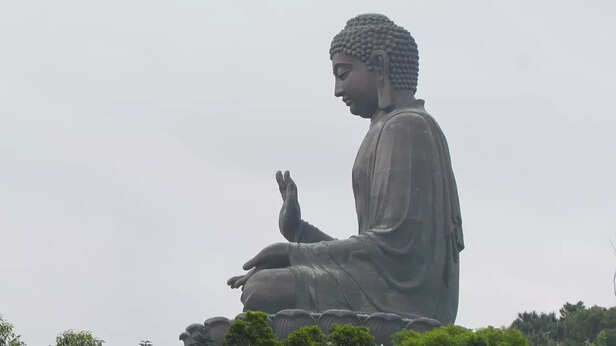
The Buddha Statue
Image credit : Pixabay
- Abstain from killing any being.
- Abstain from stealing.
- Abstain from sexual misconduct.
- Abstain from telling lies.
- Abstain from all intoxicants.
Once we begin to follow these precepts rigorously, the unconscious act of creating negativity will halt. Now, our duty is to destroy the accumulated cravings and aversions that are lying deep within.
The Buddha’s Teaching on Samadhi
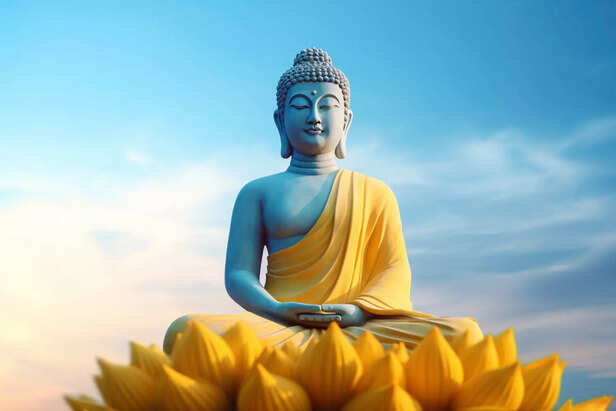
Conquering the Mind Through Meditation
Image credit : Freepik
The Buddha’s Teaching on Paññā
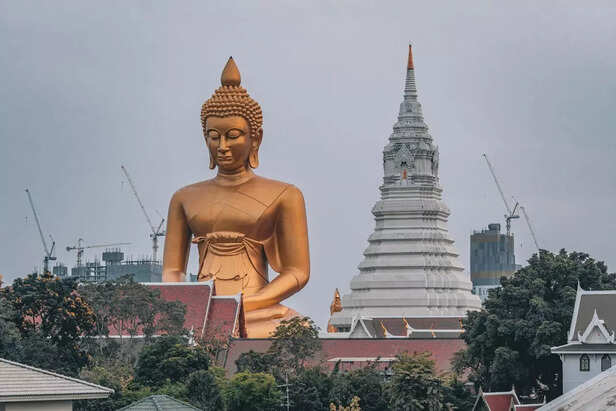
Golden Buddha Statue at Bangkok Temple
Image credit : Pexels
Explore the latest trends and tips in Health & Fitness, Spiritual, Travel, Life Hacks, Trending, Fashion & Beauty, and Relationships at Times Life!
- Which Buddhist mantra is the most powerful?
Om Mani Padme Hum is widely considered as one of the most significant Buddhist mantra for compassion and wisdom. - What are the three scriptures of Buddhism?
Buddhism's core scriptures are the Tripitaka which means "Three Baskets." The Tripitaka are Vinaya Pitaka, the Sutta Pitaka and the Abhidhamma Pitaka. - What does the Buddha say about stress?
Buddhist teachings suggest accepting the reality of stress without fighting it, which reduces its power over us. The Buddha points out the truth that everything impermanent. Thus, when you remain non-reactive, stress will loose its power over you gradually.