
Stephen Hawking's Views on God & Life After Death Explained
Deepak Rajeev | 16ec 16, 2025, 18:39 IST

What did Stephen Hawking think about God?
Image credit : Times Life Bureau
Stephen Hawking, the brilliant physicist, challenged conventional beliefs about life after death and the existence of God. He compared the human brain to a computer that ceases to function upon death, dismissing notions of heaven or an afterlife. Hawking believed in living this one life to its fullest, appreciating the universe's design.
Highlights
- Stephen Hawking was diagnosed with Amyotrophic Lateral Sclerosis at the age of 21
- But he defied medical predictions and lived until the age of 76.
- He stated in the book Brief Answers to the Big Questions that there is no God or divine direction in our lives.
- Hawking's perspectives were rooted in his trust in natural and physical laws.
- He advocated for a focused life of meaning in the absence of an afterlife.
Stephen Hawking was one of the few figures in human history who reshaped what we believed about the vast universe. A man who defied the medical diagnosis of a life-threatening disease, Hawking was a symbol of courage and the unlimited potential of the human will. However, he was also a thinker who went beyond the limits of science and attempted to answer questions related to life after death, God and heaven. His answers on these concepts were as direct and uncompromising as his scientific discoveries. Through this article, we will explore his perspectives on these topics and thereby attain a better understanding about how one of the most influential minds of the modern age worked.
![Stephen Hawking's Spirit of Enquiry Went Beyond Science]() He was a normal student like most of us till doctors diagnosed Hawking with Amyotrophic Lateral Sclerosis or ALS. His age was 21 at that time and doctors predicted that he only had 2 more years to spend in this world. On the contrary, he lived with us till the age of 76 and breathed his last in 2018. The truth is, even though his physical condition was being affected negatively by the disease, his brain and scientific reasoning skills remained as sharp as a sword.
He was a normal student like most of us till doctors diagnosed Hawking with Amyotrophic Lateral Sclerosis or ALS. His age was 21 at that time and doctors predicted that he only had 2 more years to spend in this world. On the contrary, he lived with us till the age of 76 and breathed his last in 2018. The truth is, even though his physical condition was being affected negatively by the disease, his brain and scientific reasoning skills remained as sharp as a sword.
When he was asked what happens when a human being die, by The Guardian in 2011, his answer was unflinching: “I regard the brain as a computer which will stop working when its components fail. There is no heaven or afterlife for broken down computers; that is a fairy story for people afraid of the dark.”
These words reflected his strong faith in the power of scientific enquiry. For Stephen Hawking, death was a reminder; a reminder about the finitude of existence, a reminder to make the best use of the little time that we have got in a lifetime. The key to remember is, by rejecting the belief of an afterlife, he was recommending people to live a focused life of deep meaning where we must “seek the greatest value of our action.”
![Stephen Hawking- a Symbol of Resilience]() In his final book, Brief Answers to the Big Questions, Hawking wrote:
In his final book, Brief Answers to the Big Questions, Hawking wrote:
“We are each free to believe what we want and it’s my view that the simplest explanation is there is no God. No one created the universe and no one directs our fate. This leads me to a profound realisation, there’s probably no Heaven and no afterlife, either.
We have this one life to appreciate the grand design of the universe and for that I am extremely grateful.”
In conclusion, we must realise that these ideas of Hawking were not originating from pessimism. But it was coming from his profound trust in the natural and physical laws based on which the whole world, galaxies and the human life works. That is, his consideration for rational thinking over religious revelation was not a refusal to explore the unknown, but a sincere acknowledgement of its true scale and endless possibilities.
Explore the latest trends and tips in Health & Fitness, Spiritual, Travel, Life Hacks, Trending, Fashion & Beauty, and Relationships at Times Life!
Frequently Asked Questions (FAQs)
The Life of Stephen Hawking
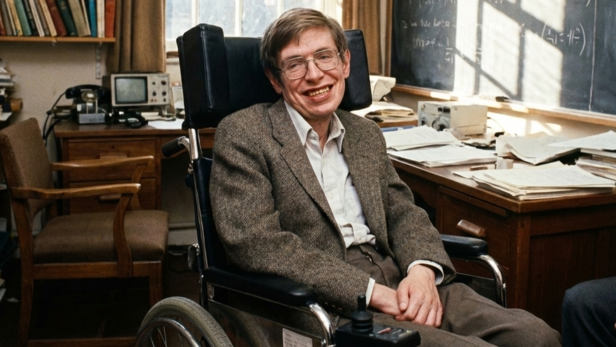
Stephen Hawking's Spirit of Enquiry Went Beyond Science
Image credit : Times Life Bureau
Humans Don’t Have an Afterlife- Stephen Hawking
When he was asked what happens when a human being die, by The Guardian in 2011, his answer was unflinching: “I regard the brain as a computer which will stop working when its components fail. There is no heaven or afterlife for broken down computers; that is a fairy story for people afraid of the dark.”
These words reflected his strong faith in the power of scientific enquiry. For Stephen Hawking, death was a reminder; a reminder about the finitude of existence, a reminder to make the best use of the little time that we have got in a lifetime. The key to remember is, by rejecting the belief of an afterlife, he was recommending people to live a focused life of deep meaning where we must “seek the greatest value of our action.”
Is There God?- Stephen Hawking’s Answer
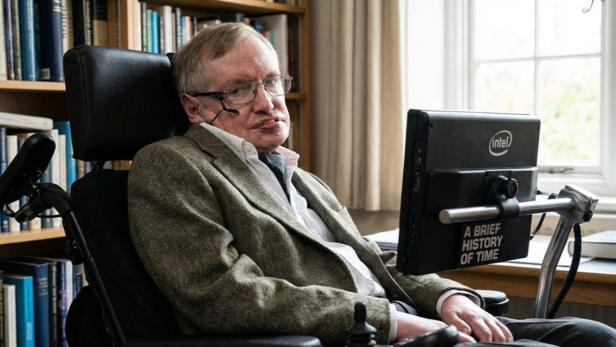
Stephen Hawking- a Symbol of Resilience
Image credit : Times Life Bureau
“We are each free to believe what we want and it’s my view that the simplest explanation is there is no God. No one created the universe and no one directs our fate. This leads me to a profound realisation, there’s probably no Heaven and no afterlife, either.
We have this one life to appreciate the grand design of the universe and for that I am extremely grateful.”
In conclusion, we must realise that these ideas of Hawking were not originating from pessimism. But it was coming from his profound trust in the natural and physical laws based on which the whole world, galaxies and the human life works. That is, his consideration for rational thinking over religious revelation was not a refusal to explore the unknown, but a sincere acknowledgement of its true scale and endless possibilities.
Explore the latest trends and tips in Health & Fitness, Spiritual, Travel, Life Hacks, Trending, Fashion & Beauty, and Relationships at Times Life!
Frequently Asked Questions (FAQs)
- What did Stephen Hawking say before death?
Stephen Hawking's last words on his death are unknown. He was using speech-generating devices and was unable to sleep in his last moments. - What was Stephen Hawking's last warning?
Stephen Hawking gave an strong warning against the prevalence of Artificial Intelligence. He said that AI could result in the destruction of humankind. - What was Stephen Hawking's life advice?
Stephen Hawking said "Remember to look up at the stars and not down at your feet." Through his life, Hawking demonstrated that great odds can be overcome through human will, purposeful living and resilience.