
3 Powerful Bhagavad Gita Lessons to Reduce Stress & Anxiety
Deepak Rajeev | Jan 15, 2026, 19:31 IST

Bhagavad Gita on Anxiety (Image Credit: AI)
Lord Krishna's wisdom from the Bhagavad Gita provides solace for life's challenges. Three key lessons help reduce stress and anxiety. Dedicate actions to the Supreme to foster selflessness. Attain freedom from attachments by letting go of cravings and aversions. Understand the impermanence of all things, leading to peace. These teachings guide towards a more fulfilling existence.
Highlights
- Lord Krishna's teachings in the Bhagavad Gita provide guidance for peace.
- One key lesson is to dedicate all actions to the Supreme.
- Secondly, attain freedom from attachments through a sattvic lifestyle.
- Krishna emphasises understanding the impermanence of life.
Lord Krishna’s words in Bhagavad Gita has been helping generations to find peace and solace during times of hardships and anxieties. Indeed, whatever the situation that you may be in life right now, you can find answers to your problems in this sacred text. Therefore, in this article, we have curated 3 of the best lessons from Lord Krishna to significantly reduce stress and anxiety so as a to thrive in life.
![Lord Krishna (Image Credit: AI)]() Krishna tells Arjuna in Chapter 18 of Gita:
Krishna tells Arjuna in Chapter 18 of Gita:
"Abandon all varieties of dharmas and simply surrender unto Me alone. I shall liberate you from all sinful reactions; do not fear.”
Instead of performing our duties for fulfilling selfish needs, we can dedicate everything on the foot of Bhagwan. The Vedas point out that God or the ultimate truth of existence i.e., Brahman is omniscient and omnipotent. When we are deeply focused and immersed in the this Supreme energy, our attachments will begin to die out. Every morning, before starting your day, light a diyas and pray to Bhagwan that everything that you will be doing throughout the day will be dedicated to Him. When we perform duties in this way, we move towards the door of Moksha. This is the path towards selflessness and ultimate liberation.
![Lord Krishna's Idol]() Holding the shoulders of a perplexed and disillusioned Arjuna, Krishna said: “When a man is not attached to sense-objects or to actions, having renounced all thoughts, then he is said to have attained to yoga.”
Holding the shoulders of a perplexed and disillusioned Arjuna, Krishna said: “When a man is not attached to sense-objects or to actions, having renounced all thoughts, then he is said to have attained to yoga.”
Most human beings are stuck in the tug of war of craving and aversion. We are constantly craving for positive outcomes and hating negative situations and people. However, to achieve true liberation and success, we have to let go of this bondage. A sattvic lifestyle can support us very strongly in this journey. Wake up everyday during the Brahma Muhurta and offer prayers to Lord Krishna. Meditate, avoid telling lies, eat natural food items, practice yoga and engage in charity. Moderation in everything is key. When our minds become deeply immersed in our purpose and when we continue performing our duties without expecting anything in return, we will begin to experience ourselves transforming into a yogi.
![Lord Krishna Speaking to Sage Narada (Image Credit: AI)]() In Chapter 2, Krishna tells Arjuna: “O Son of Kunti, the ideas of heat and cold, pleasure and pain, are produced by the contacts of the senses with their objects. Such ideas are limited by a beginning and an end. They are transitory, O Descendent of Bharata; bear them with patience!”
In Chapter 2, Krishna tells Arjuna: “O Son of Kunti, the ideas of heat and cold, pleasure and pain, are produced by the contacts of the senses with their objects. Such ideas are limited by a beginning and an end. They are transitory, O Descendent of Bharata; bear them with patience!”
The universal law of impermanence is the ultimate truth that permeates everything. Whether we like it or not, all of us will die. Furthermore, no one knows when death will arrive. In this world of absolute transitoriness, running after sensual gratifications is meaningless. Perform your duties. Help others. Become a candle of light and truth. Indeed, this is the path towards attaining freedom from anxieties and other other mental health problems.
Explore the latest trends and tips in Health & Fitness, Spiritual, Travel, Life Hacks, Trending, Fashion & Beauty, and Relationships at Times Life!
Frequently Asked Questions (FAQs)
1. Dedicate Your Actions to the Supreme
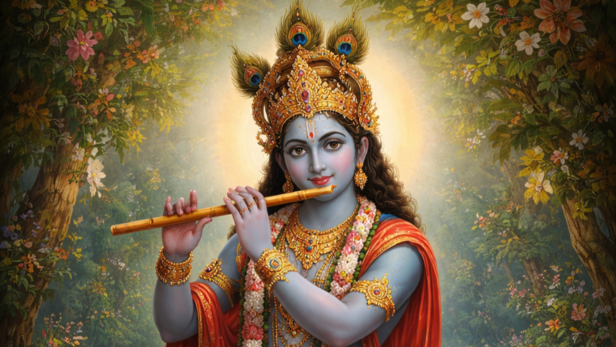
Lord Krishna (Image Credit: AI)
"Abandon all varieties of dharmas and simply surrender unto Me alone. I shall liberate you from all sinful reactions; do not fear.”
Instead of performing our duties for fulfilling selfish needs, we can dedicate everything on the foot of Bhagwan. The Vedas point out that God or the ultimate truth of existence i.e., Brahman is omniscient and omnipotent. When we are deeply focused and immersed in the this Supreme energy, our attachments will begin to die out. Every morning, before starting your day, light a diyas and pray to Bhagwan that everything that you will be doing throughout the day will be dedicated to Him. When we perform duties in this way, we move towards the door of Moksha. This is the path towards selflessness and ultimate liberation.
2. Attaining Freedom From Attachments
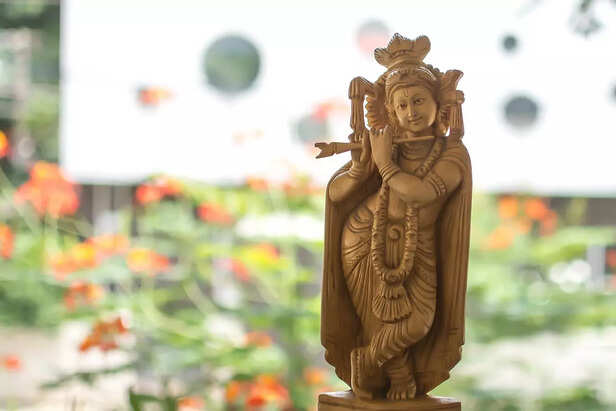
Lord Krishna's Idol
Image credit : Pixabay
Most human beings are stuck in the tug of war of craving and aversion. We are constantly craving for positive outcomes and hating negative situations and people. However, to achieve true liberation and success, we have to let go of this bondage. A sattvic lifestyle can support us very strongly in this journey. Wake up everyday during the Brahma Muhurta and offer prayers to Lord Krishna. Meditate, avoid telling lies, eat natural food items, practice yoga and engage in charity. Moderation in everything is key. When our minds become deeply immersed in our purpose and when we continue performing our duties without expecting anything in return, we will begin to experience ourselves transforming into a yogi.
3. Gita About Understanding Impermanence
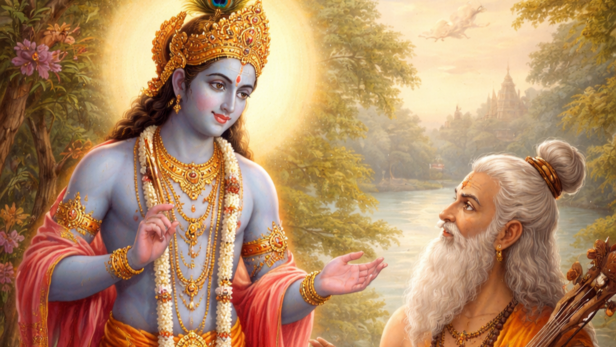
Lord Krishna Speaking to Sage Narada (Image Credit: AI)
The universal law of impermanence is the ultimate truth that permeates everything. Whether we like it or not, all of us will die. Furthermore, no one knows when death will arrive. In this world of absolute transitoriness, running after sensual gratifications is meaningless. Perform your duties. Help others. Become a candle of light and truth. Indeed, this is the path towards attaining freedom from anxieties and other other mental health problems.
Explore the latest trends and tips in Health & Fitness, Spiritual, Travel, Life Hacks, Trending, Fashion & Beauty, and Relationships at Times Life!
Frequently Asked Questions (FAQs)
- Which mantra is powerful for anxiety?
Om Namah Shivaya and Om Shanti Shanti Shantih, are very powerful for reducing anxiety. - What is the golden rule of the Bhagavad Gita?
The quote “Do to others what you would like others to do to you”, represents the golden rule of Bhagavad Gita. - Which chapter of Gita should be read every day?
Chapter 2 named Sankhya Yoga is widely recommended for daily reading as it summarises many of the core Gita teachings.