
Feeling Lost? 3 Timeless Bhagavad Gita Lessons to Find Hope
Deepak Rajeev | Jan 10, 2026, 23:48 IST

Bhagavad Gita Lessons for Finding Hope and Positivity (Image Credit: AI)
The Bhagavad Gita provides timeless wisdom for modern life. Krishna's teachings guide individuals towards inner freedom through Karma Yoga. Detachment from desires leads to true peace. We have to realise the multiplying effect of sensual pleasures to detach ourselves from them. Embracing equanimity, or samatvam, helps navigate life's ups and downs. To achieve the same, Krishna teaches us the universal law of impermanence. These principles offer hope and positivity during difficult times.
Highlights
- The Bhagavad Gita offers profound wisdom, helping individuals find hope and positivity.
- Performing duties selflessly, without attachment to outcomes, is essential for achieving inner freedom.
- Krishna emphasises that true peace can only be attained by being unperturbed by the flow of desires.
- Krishna teaches that the impermanence of life is a universal truth.
- Therefore, individuals must cultivate equanimity and remain composed through life's ups and downs.
Whatever the struggles or hardships that you may be going through in life, Bhagavad Gita, always provides powerful words of wisdom. In fact, as we all know, it was Krishna’s advice that helped Arjuna overcome his doubts and fears so as to fight valiantly and win the Mahabharata war. In today’s fast-paced, competitive environment, the importance of Krishna’s words are becoming more imminent. In this article, we have curated 3 of the best pieces of advice from Bhagwan that you can adopt in your life to find hope and positivity during times of darkness.
![“Work must be done as a yajna to the Supreme Lord." (Image Credit: AI)]() Seeing his own brothers and family members, standing prepared to fight till death, Arjuna fell into despair and confusion. After mentioning his fears about fighting the “terrible war” of Mahabharata, Arjuna told Krishna: “ Please tell me decisively the one path by which I may attain the highest good.” Hearing this, Krishna looked at Arjuna with kindness and replied: “Work must be done as a yajna to the Supreme Lord; otherwise, work causes bondage in this material world. Therefore, O son of Kunti, for the satisfaction of God, perform your prescribed duties, without being attached to the results.”
Seeing his own brothers and family members, standing prepared to fight till death, Arjuna fell into despair and confusion. After mentioning his fears about fighting the “terrible war” of Mahabharata, Arjuna told Krishna: “ Please tell me decisively the one path by which I may attain the highest good.” Hearing this, Krishna looked at Arjuna with kindness and replied: “Work must be done as a yajna to the Supreme Lord; otherwise, work causes bondage in this material world. Therefore, O son of Kunti, for the satisfaction of God, perform your prescribed duties, without being attached to the results.”
These powerful words provide us a fundamental definition of Karma Yoga. Each and every day, we must perform our duties without craving for positive outcomes. When our work becomes sincere, Bhagwan will gift us fruitful results. However, if we are always thinking about the future and about getting what we want, we will lose focus from the present. Hence, with absolute dedicated to the Supreme Lord, lets engage in selfless action. This is the right path towards freedom.
![Perform Your Duty Without Thinking About Results (Image Credit: AI)]() In chapter 2 of Bhagavad Gita, Krishna tells Arjuna:
In chapter 2 of Bhagavad Gita, Krishna tells Arjuna:
"A person who is not disturbed by the incessant flow of desires - that enter like rivers into the ocean, which is ever being filled but is always still - can alone achieve peace, and not the man who strives to satisfy such desires."
A central problem with sensual pleasures is the fact that the more we run towards them, the stronger they become. We may have observed those people who become addicted to alcohol, junk foods or cigarettes. The more they are trying to quench their desire for these things, the deeper they are falling into the pit of craving. However, to achieve true inner peace, we have to look within, follow a sattvic life, meditate, pray and dedicate ourselves in pursuit of our purpose in life without thinking about the results. Realising the multiplying effect of short term gratifications and distractions, we must become equanimous.
![Equanimity by Realising the Transitory Nature of Life (Image Credit: AI)]() Krishna told Arjuna: “For one who has taken birth, death is certain.” This universal law of impermanence is applicable to every living being. No individual gets out of the hands of death. Similarly, every emotion, thought and belief are also transitory. As we grow and obtain more experiences, we change. By internalising this truth, we have to develop samatvam or even-mindedness. Night won’t last forever. Sun will rise. In the same way, life also has ups and downs. A true yogi will remain equanimous through all stages of existence. By reading and by implementing the teachings mentioned in the Bhagavad Gita, all of us should reach samatvam. When we are even-minded, we can act selflessly and as a result make this world a better a place. May all of us receive the blessings of Lord Krishna.
Krishna told Arjuna: “For one who has taken birth, death is certain.” This universal law of impermanence is applicable to every living being. No individual gets out of the hands of death. Similarly, every emotion, thought and belief are also transitory. As we grow and obtain more experiences, we change. By internalising this truth, we have to develop samatvam or even-mindedness. Night won’t last forever. Sun will rise. In the same way, life also has ups and downs. A true yogi will remain equanimous through all stages of existence. By reading and by implementing the teachings mentioned in the Bhagavad Gita, all of us should reach samatvam. When we are even-minded, we can act selflessly and as a result make this world a better a place. May all of us receive the blessings of Lord Krishna.
Explore the latest trends and tips in Health & Fitness, Spiritual, Travel, Life Hacks, Trending, Fashion & Beauty, and Relationships at Times Life!
1. Karma Yoga for Inner Freedom
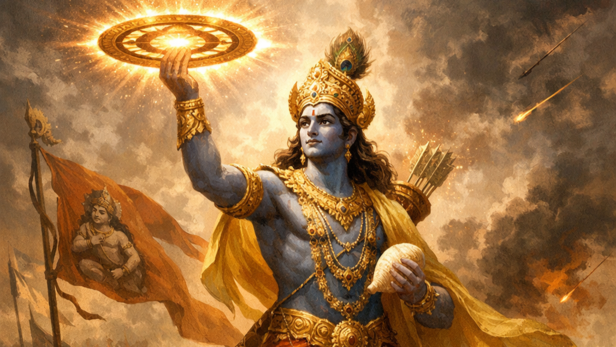
“Work must be done as a yajna to the Supreme Lord." (Image Credit: AI)
These powerful words provide us a fundamental definition of Karma Yoga. Each and every day, we must perform our duties without craving for positive outcomes. When our work becomes sincere, Bhagwan will gift us fruitful results. However, if we are always thinking about the future and about getting what we want, we will lose focus from the present. Hence, with absolute dedicated to the Supreme Lord, lets engage in selfless action. This is the right path towards freedom.
2. Gita on Attaining Freedom From Attachments

Perform Your Duty Without Thinking About Results (Image Credit: AI)
"A person who is not disturbed by the incessant flow of desires - that enter like rivers into the ocean, which is ever being filled but is always still - can alone achieve peace, and not the man who strives to satisfy such desires."
A central problem with sensual pleasures is the fact that the more we run towards them, the stronger they become. We may have observed those people who become addicted to alcohol, junk foods or cigarettes. The more they are trying to quench their desire for these things, the deeper they are falling into the pit of craving. However, to achieve true inner peace, we have to look within, follow a sattvic life, meditate, pray and dedicate ourselves in pursuit of our purpose in life without thinking about the results. Realising the multiplying effect of short term gratifications and distractions, we must become equanimous.
3. Bhagavad Gita’s Teachings on Samatvam
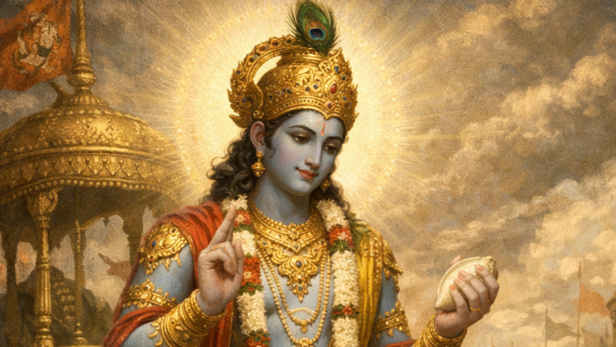
Equanimity by Realising the Transitory Nature of Life (Image Credit: AI)
Explore the latest trends and tips in Health & Fitness, Spiritual, Travel, Life Hacks, Trending, Fashion & Beauty, and Relationships at Times Life!