
Buddha Purnima 2026: What the Puranas Reveal About Buddha
Deepak Rajeev | May 01, 2026, 13:18 IST

Lord Vishnu and The Buddha (Image Credit: AI)
Buddha Purnima, observed on May 1, 2026, holds dual significance. Beyond Buddhism, Hindu Puranas describe Buddha as an avatar of Lord Vishnu. This interpretation highlights a divine intervention to restore balance through introspection. The day, Vaishakha Purnima, is sacred for spiritual renewal. This dual perspective reveals interconnectedness between traditions and the evolving nature of spiritual truth.
There are certain days in the Indian spiritual calendar that feel larger than a festival, days that seem to carry layers of meaning that go far beyond ritual, and Buddha Purnima is one of them. In 2026, this sacred occasion falls on May 1, observed on the full moon day of the Vaishakha month, and it commemorates not just the birth, but also the enlightenment and Mahaparinirvana of Buddha. Yet beyond the familiar story of Buddha as a teacher of peace and mindfulness, there exists another layer of interpretation preserved in Hindu tradition, particularly within the Puranas, where Buddha is not just a historical figure, but a divine manifestation with a very specific purpose.
How the Puranas Describe Buddha as an Avatar
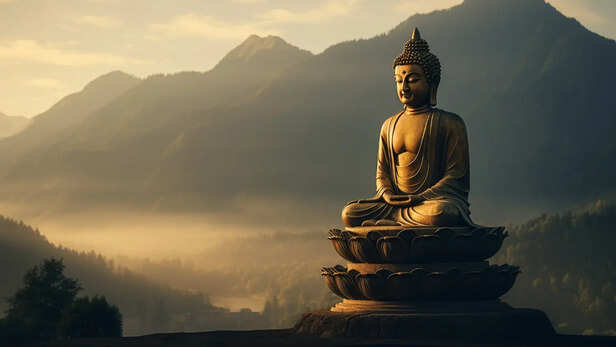
![The Buddha]() In several Hindu texts, especially the Bhagavata Purana and Vishnu Purana, Buddha is described as an incarnation of Lord Vishnu. This interpretation places Buddha within the larger framework of the Dashavatara, the ten principal avatars of Vishnu. According to these texts, Vishnu incarnates whenever dharma declines and imbalance begins to spread in the world. In this context, Buddha’s appearance is not seen as separate from Hindu philosophy, but as a continuation of it, responding to a specific spiritual condition of the time.
In several Hindu texts, especially the Bhagavata Purana and Vishnu Purana, Buddha is described as an incarnation of Lord Vishnu. This interpretation places Buddha within the larger framework of the Dashavatara, the ten principal avatars of Vishnu. According to these texts, Vishnu incarnates whenever dharma declines and imbalance begins to spread in the world. In this context, Buddha’s appearance is not seen as separate from Hindu philosophy, but as a continuation of it, responding to a specific spiritual condition of the time.
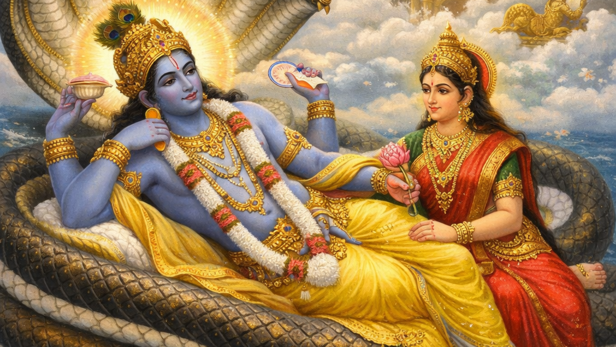
![Lord Vishnu and Lakshmi Devi (Image Credit: AI)]() The Puranic interpretation of Buddha is deeply tied to the idea of restoring balance, but in a way that is different from earlier avatars. Instead of using force or direct confrontation, Buddha’s role is often described as one that shifts people away from rigid or misapplied practices and guides them toward introspection and awareness. Some traditional interpretations suggest that this incarnation appeared during a time when certain ritual practices had lost their deeper meaning. In this view, Buddha’s teachings offered a corrective path, emphasising compassion, non-violence, and understanding over mechanical observance. This perspective is not about rejection of tradition, but about refinement. It reflects a recurring idea in Hindu philosophy that dharma is not static, but evolves based on the needs of time.
The Puranic interpretation of Buddha is deeply tied to the idea of restoring balance, but in a way that is different from earlier avatars. Instead of using force or direct confrontation, Buddha’s role is often described as one that shifts people away from rigid or misapplied practices and guides them toward introspection and awareness. Some traditional interpretations suggest that this incarnation appeared during a time when certain ritual practices had lost their deeper meaning. In this view, Buddha’s teachings offered a corrective path, emphasising compassion, non-violence, and understanding over mechanical observance. This perspective is not about rejection of tradition, but about refinement. It reflects a recurring idea in Hindu philosophy that dharma is not static, but evolves based on the needs of time.
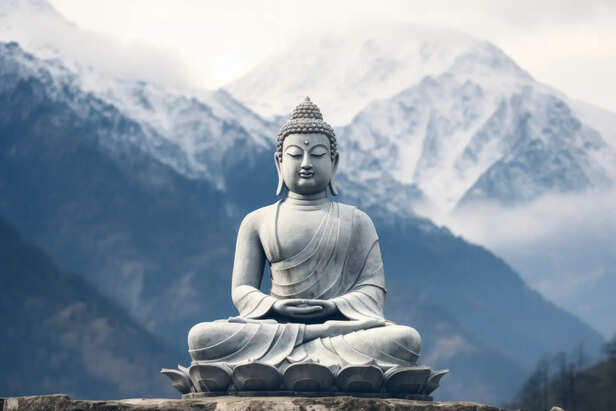
![Buddha Purnima 2026]() When compared to other incarnations of Lord Vishnu, Buddha stands apart in a striking way. Earlier avatars like Rama or Krishna are often associated with restoring order through action, leadership, and direct engagement with conflict. Buddha, however, represents a shift inward. His teachings focus on the nature of suffering, the role of desire, and the importance of awareness. This aligns with a deeper philosophical progression seen across many interpretations of the avatars, where the emphasis gradually moves from external action to internal transformation. This is what makes the Puranic interpretation so compelling. It suggests that preservation of balance does not always require force. Sometimes it requires understanding.
When compared to other incarnations of Lord Vishnu, Buddha stands apart in a striking way. Earlier avatars like Rama or Krishna are often associated with restoring order through action, leadership, and direct engagement with conflict. Buddha, however, represents a shift inward. His teachings focus on the nature of suffering, the role of desire, and the importance of awareness. This aligns with a deeper philosophical progression seen across many interpretations of the avatars, where the emphasis gradually moves from external action to internal transformation. This is what makes the Puranic interpretation so compelling. It suggests that preservation of balance does not always require force. Sometimes it requires understanding.
Although Buddha Purnima is primarily associated with Buddhism, it also holds significance in Hindu tradition. The day falls on Vaishakha Purnima, which is considered sacred and is often associated with devotion, charity, and spiritual reflection. In many Hindu beliefs, this day is connected to Lord Vishnu, and it is seen as an auspicious time for inner cleansing and renewal. This overlap highlights something important. The festival is not confined to one tradition. It represents a shared spiritual moment that brings together different paths under a common theme of awareness and transformation.
What the Puranas reveal about Buddha is not just a theological statement. It is a philosophical insight. It suggests that divinity does not remain fixed in one form or one method. It adapts. In this framework, Buddha represents a stage where the emphasis shifts from external systems to internal clarity. He embodies the idea that true transformation begins within, and that understanding the mind is as important as understanding the world. This interpretation also bridges a gap that many people assume exists between Hinduism and Buddhism. Instead of seeing them as separate or opposing, it presents them as interconnected, part of a larger continuum of thought.
On May 1, 2026, as Buddha Purnima is observed across India and the world, the deeper message behind the day becomes impossible to ignore. Buddha is remembered not only as a teacher who showed the path to enlightenment, but also, in the Puranic view, as a manifestation of Lord Vishnu who appeared at a critical moment in history. This dual perspective does not create contradiction. It creates depth. It reminds us that spiritual truth is not limited to one form, one path, or one interpretation. It evolves, adapts, and reveals itself in ways that match the needs of the time. And perhaps that is the most powerful idea of all. That what appears as different traditions may, at a deeper level, be expressions of the same search for understanding.
Explore the latest trends and tips in Health & Fitness, Spiritual, Travel, Life Hacks, Trending, Fashion & Beauty, and Relationships at Times Life!
How the Puranas Describe Buddha as an Avatar
The Buddha
Image credit : Freepik
The Context Behind Buddha’s Appearance in the Puranas
Lord Vishnu and Lakshmi Devi (Image Credit: AI)
Why Buddha’s Role Feels Different from Other Avatars
Buddha Purnima 2026
The Overlapping Significance of Buddha Purnima in Hinduism
Although Buddha Purnima is primarily associated with Buddhism, it also holds significance in Hindu tradition. The day falls on Vaishakha Purnima, which is considered sacred and is often associated with devotion, charity, and spiritual reflection. In many Hindu beliefs, this day is connected to Lord Vishnu, and it is seen as an auspicious time for inner cleansing and renewal. This overlap highlights something important. The festival is not confined to one tradition. It represents a shared spiritual moment that brings together different paths under a common theme of awareness and transformation.
The Deeper Meaning Behind What the Puranas Reveal
What the Puranas reveal about Buddha is not just a theological statement. It is a philosophical insight. It suggests that divinity does not remain fixed in one form or one method. It adapts. In this framework, Buddha represents a stage where the emphasis shifts from external systems to internal clarity. He embodies the idea that true transformation begins within, and that understanding the mind is as important as understanding the world. This interpretation also bridges a gap that many people assume exists between Hinduism and Buddhism. Instead of seeing them as separate or opposing, it presents them as interconnected, part of a larger continuum of thought.
Conclusion: A Truth That Connects Traditions
On May 1, 2026, as Buddha Purnima is observed across India and the world, the deeper message behind the day becomes impossible to ignore. Buddha is remembered not only as a teacher who showed the path to enlightenment, but also, in the Puranic view, as a manifestation of Lord Vishnu who appeared at a critical moment in history. This dual perspective does not create contradiction. It creates depth. It reminds us that spiritual truth is not limited to one form, one path, or one interpretation. It evolves, adapts, and reveals itself in ways that match the needs of the time. And perhaps that is the most powerful idea of all. That what appears as different traditions may, at a deeper level, be expressions of the same search for understanding.
Explore the latest trends and tips in Health & Fitness, Spiritual, Travel, Life Hacks, Trending, Fashion & Beauty, and Relationships at Times Life!