
Ram Mandir Ayodhya Facts: Architecture, Faith and the Glory of Lord Ram
Deepak Rajeev | 17ec 17, 2025, 15:36 IST

A View of Shri Ram Janmabhoomi Mandir
Image credit : ANI
The Ram Mandir in Ayodhya was inaugurated on January 22, 2024. This grand structure, built using ancient Nagara techniques, features intricate designs and significant spiritual elements. A notable feature is the Surya Tilak on Ram Navami, a scientific and devotional marvel. The temple is designed to last for at least a millennium, inviting devotees for a unique spiritual experience.
Highlights
- The Ram Mandir in Ayodhya is constructed without the use of steel or iron.
- It showcases a traditional stone architecture using pink sandstone from Mirzapur and materials from Rajasthan.
- The main structure of Ram Mandir features five mandaps, 390 pillars, and 46 doors.
- A spiritual highlight occurs during Ram Navami when sunlight illuminates the forehead of the Ram Lalla idol.
- Its has an expansive area of 71 acres and construction costs totalling 1,800 crore Indian Rupees.
The prestigious Ram Mandir at Ayodhya was inaugurated on 22nd January 2024. The Pran Pratishtha or the ritual of consecration has been considered as a key moment in the history of Hinduism. It was attended by Prime Minister Narendra Modi, RSS chief Mohan Bhagwat, along with other special invitees. In this article, we will explore some of the most intriguing facts about this holy place that all of us should visit at least once in our lifetime.
![Ram Mandir is Created in the Ancient Nagara Technique]() The iconic Ram Mandir is a 3-storey structure that is created in the ancient Nagara technique. The architecture of the Mandir reflects North Indian temple tradition’s grandeur and artistic excellence.
The iconic Ram Mandir is a 3-storey structure that is created in the ancient Nagara technique. The architecture of the Mandir reflects North Indian temple tradition’s grandeur and artistic excellence.
For construction, sandstones that are pink in colour from Mirzapur and the materials from the Bansi-Paharpur region in Rajasthan have ben bought together. Built across an area of 71 acres, the temple costed 1,800 crore rupees for completion.
Before going through Singh Dwar, devotees has to climb 32 steps that has a height of around 16.11 ft. Furthermore, to form the Saptmandir inside the complex, development works of the temples that honour Maharishi Vashishtha, Valmiki, Agastya, Vishwamitra and Nishad Raj and Mata Shabri, are in progress. With the addition of these temples, the place will transform into a perfect spiritual spot dedicated entirely to Lord Ram and his important associates. Reports also point out that steel and iron were not used in the construction. That is, the temple was built entirely of stones.
![The Beautiful Idol of Ram Lalla Inside Ram Mandir]() The main temple has 5 mandals, 390 pillars and 46 doors. A beautiful idol of Ram Lalla could be found inside the main sanctum sanctorum or Garbh Griha. The main five mandaps and the sanctum sanctorum are on the ground floor. The first floor is allocated for Ram Darbar. When we walk beside each of the 390 pillars, we will be able to see 16-28 idols of Gods. Additionally, the walls are also filled with structures of mythical figures. Just taking a walk through these areas in itself will begin purifying your soul with deep spiritual energy.
The main temple has 5 mandals, 390 pillars and 46 doors. A beautiful idol of Ram Lalla could be found inside the main sanctum sanctorum or Garbh Griha. The main five mandaps and the sanctum sanctorum are on the ground floor. The first floor is allocated for Ram Darbar. When we walk beside each of the 390 pillars, we will be able to see 16-28 idols of Gods. Additionally, the walls are also filled with structures of mythical figures. Just taking a walk through these areas in itself will begin purifying your soul with deep spiritual energy.
![What Happens on Ram Navami at Ram Mandir]() The effulgent Surya Tilak that occurs inside the Ram Mandir at 12 noon on Ram Navami is a profound sacred experience. It is the point in which scientific quest meets the devotional depth of the masses. At this time period, sulight will fall exactly on the forehead of Ram Lalla idol as directed by lenses and mirrors. This marvel will continue for several minutes, representing the divine power of the deity. This unique divine moment has been created through the joint effort of Indian Institute of Astrophysics and CBRI.
The effulgent Surya Tilak that occurs inside the Ram Mandir at 12 noon on Ram Navami is a profound sacred experience. It is the point in which scientific quest meets the devotional depth of the masses. At this time period, sulight will fall exactly on the forehead of Ram Lalla idol as directed by lenses and mirrors. This marvel will continue for several minutes, representing the divine power of the deity. This unique divine moment has been created through the joint effort of Indian Institute of Astrophysics and CBRI.
A temple with intricate design and deep religious significance, Ram Mandir, has been built to last at least for 1000 years. A pilgrimage from any part of the country or from outside India must include the divine land of Lord Ram’s birth. May all of us receive the blessing of The Ideal Man or Maryada Purushottam.
Explore the latest trends and tips in Health & Fitness, Spiritual, Travel, Life Hacks, Trending, Fashion & Beauty, and Relationships at Times Life!
Frequently Asked Questions (FAQs)
The Physical Structure of Ram Mandir
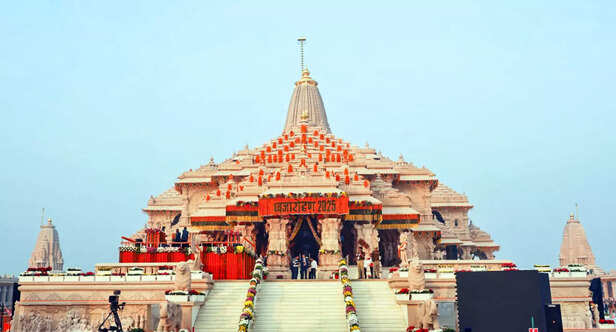
Ram Mandir is Created in the Ancient Nagara Technique
Image credit : ANI
For construction, sandstones that are pink in colour from Mirzapur and the materials from the Bansi-Paharpur region in Rajasthan have ben bought together. Built across an area of 71 acres, the temple costed 1,800 crore rupees for completion.
Before going through Singh Dwar, devotees has to climb 32 steps that has a height of around 16.11 ft. Furthermore, to form the Saptmandir inside the complex, development works of the temples that honour Maharishi Vashishtha, Valmiki, Agastya, Vishwamitra and Nishad Raj and Mata Shabri, are in progress. With the addition of these temples, the place will transform into a perfect spiritual spot dedicated entirely to Lord Ram and his important associates. Reports also point out that steel and iron were not used in the construction. That is, the temple was built entirely of stones.
What to Expect When You Enter Ram Mandir
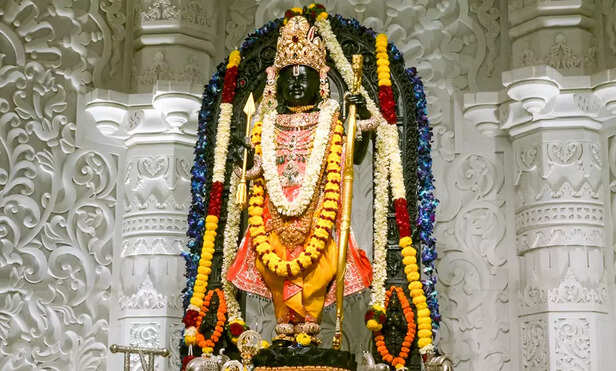
The Beautiful Idol of Ram Lalla Inside Ram Mandir
Image credit : ANI
The Spiritual Marvel on Ram Navami
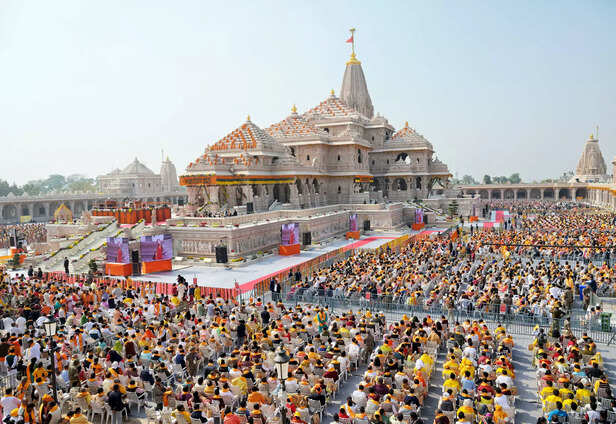
What Happens on Ram Navami at Ram Mandir
Image credit : ANI
A temple with intricate design and deep religious significance, Ram Mandir, has been built to last at least for 1000 years. A pilgrimage from any part of the country or from outside India must include the divine land of Lord Ram’s birth. May all of us receive the blessing of The Ideal Man or Maryada Purushottam.
Explore the latest trends and tips in Health & Fitness, Spiritual, Travel, Life Hacks, Trending, Fashion & Beauty, and Relationships at Times Life!
Frequently Asked Questions (FAQs)
- Who is the main architect of the Ram Mandir in Ayodhya?
The main architect of the Ayodhya Ram Mandir is Chandrakant Sompura. He is a renowned architect from a family that has a long legacy of building Hindu temples. - Who donated 101 kg gold to Ram Mandir?
A diamond merchant named Dilip Kumar V and his family provided one of the biggest individual contribution to Ram Mandir by contributing 101 KGs of gold. - Is Ram Mandir earthquake proof?
The architectural design of Ram Mandis is such that it can withstand earthquakes or strong tremors of magnitude 8 on the Richter scale.