
Rangbhari Ekadasi 2026: Date, Vrat Katha, Rituals & Significance
Deepak Rajeev | Feb 06, 2026, 14:01 IST

Idol of Lord Shiva (Image Credit: AI)
Rangbhari Ekadasi is a significant festival in Varanasi and at numerous temples throughout North India. It commemorates Lord Shiva's first arrival to Varanasi with Parvati Devi. The festival involves devotees smearing colors on Shivlings. The day after Rangbhari Ekadasi sees a unique Holi played with ashes of the dead at Manikarnika Ghat. This tradition reminds people of life's impermanence.
Highlights
- Rangbhari Ekadasi will be celebrated on 27th February 2026.
- The festival commemorates Lord Shiva's first arrival in Varanasi.
- A ceremonial procession with idols of Lord Shiva & Parvati Devi will take place
- The day after Rangbhari Ekadasi coincides with a unique Holi celebration at Manikarnika Ghat.
Rangbhari Ekadasi a religiously significant festival in Varanasi and many other temples throughout North India. According to the Hindu spiritual calendar, the date of this important festival falls on the eleventh day during moon’s waxing phase in the month of Phalgun. The traditional belief is that, this is the day in which Lord Shiva came to Varanasi for the first time, along with Parvati Devi. In this article, we will explore the spiritual significance, vrat kadha, rituals and every other important details related to Rangbhari Ekadasi 2026.
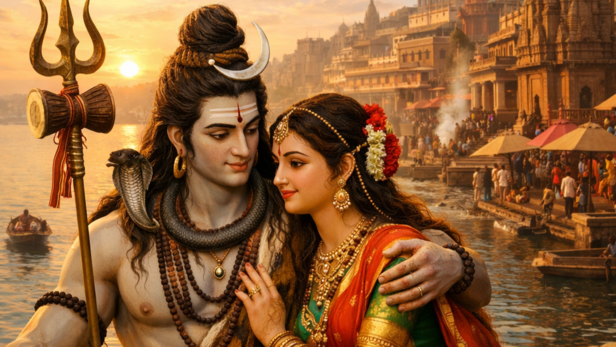
![Lord Shiva With Parvathy Devi at Varanasi (Image Credit: AI)]() This year Rangbhari Ekadasi will happen on 27th February. The district of Varanasi gets filled with festive colours and energy on this day. You will be able to see thousands of people gathering at key temples throughout the place. Devotees will smear powders with different colours, kumkum and abeer on Shivlings. The strong faith is that those individuals who decorate shivling with colours, offer wood apple wood or bel leaves and water over the Shivlings will attain freedom from poverty. In fact, these rituals will invite prosperity to almost every sincere believers at Varanasi.
This year Rangbhari Ekadasi will happen on 27th February. The district of Varanasi gets filled with festive colours and energy on this day. You will be able to see thousands of people gathering at key temples throughout the place. Devotees will smear powders with different colours, kumkum and abeer on Shivlings. The strong faith is that those individuals who decorate shivling with colours, offer wood apple wood or bel leaves and water over the Shivlings will attain freedom from poverty. In fact, these rituals will invite prosperity to almost every sincere believers at Varanasi.
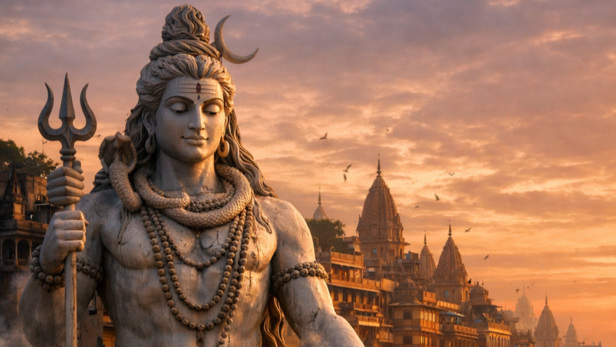
![Lord Shiva at Varanasi (Image Credit: AI)]() The origin of this festival goes back to the time period in which Shiva and Shakti became one. That is, after Mahashivaratri, Parvati, the queen of Himalaya wanted to live somewhere apart from Kailash. Lord Shiva observed all the cities of India from above. He saw that Varanasi was the most advanced city of the time. Therefore, he chose Varanasi as his earthly adobe.
The origin of this festival goes back to the time period in which Shiva and Shakti became one. That is, after Mahashivaratri, Parvati, the queen of Himalaya wanted to live somewhere apart from Kailash. Lord Shiva observed all the cities of India from above. He saw that Varanasi was the most advanced city of the time. Therefore, he chose Varanasi as his earthly adobe.
However, Kashi Devi was the presiding deity of the place at that time. Hence, Lord Shiva had to pay respect to her and take over the city from her hands. So, He spent his first night with Goddess Parvati at Jyeshtheshwar temple complex which lies very near to Kashi Devi’s shrine. After that he went to Kedar Khanda. In years, this day came to be celebrated as Rang Bhari Ekadasi which can be translated as “the eleventh day full of colours.”
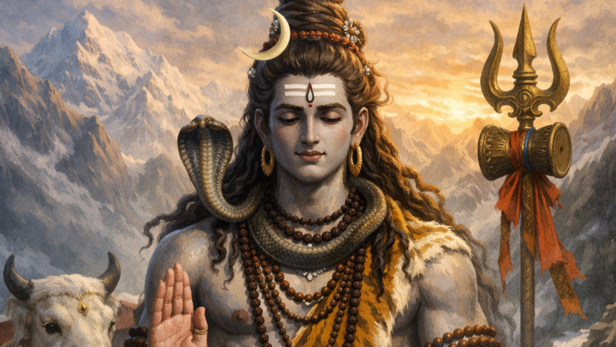
![The First Yogi (Image Credit: AI)]() One of the most important ritual happens early in the evening by 4 pm. At this time, Parvati Devi and Lord Shiva will be brought ceremonially from the place of residence of Shri Kuplati Tripathi who is one of the most senior priests of Varanasi. The procession will end at Kashi Vishwanath Temple which is not very far. This journey symbolises Lord Shiva and Parvati Devi travelling through Varanasi to bless their followers. Devotees will be showering colours and flower petals at each other as well as on shrines and divine images.
One of the most important ritual happens early in the evening by 4 pm. At this time, Parvati Devi and Lord Shiva will be brought ceremonially from the place of residence of Shri Kuplati Tripathi who is one of the most senior priests of Varanasi. The procession will end at Kashi Vishwanath Temple which is not very far. This journey symbolises Lord Shiva and Parvati Devi travelling through Varanasi to bless their followers. Devotees will be showering colours and flower petals at each other as well as on shrines and divine images.
The day that follows Rang Bhari Ekadasi is also very important, according to traditions. On this day, the residents of Varanasi will play Holi at Manikarnika Ghat. A unique aspect of this celebration is that Holi is played not only with sandalwood powder and colours, but also with the ashes of the dead. The belief is that on this day at Manikarnika Ghat, Lord Shiva’s energy will be most prevalent. The ashes of the dead that is used in the festival reminds devotees about the reality of death and also it blurs the duality of life and death.
Explore the latest trends and tips in Health & Fitness, Spiritual, Travel, Life Hacks, Trending, Fashion & Beauty, and Relationships at Times Life!
Frequently Asked Questions (FAQs)
Spiritual Significance of Rangbhari Ekadasi 2026
Lord Shiva With Parvathy Devi at Varanasi (Image Credit: AI)
Vrat Katha of Rangbhari Ekadasi 2026
Lord Shiva at Varanasi (Image Credit: AI)
However, Kashi Devi was the presiding deity of the place at that time. Hence, Lord Shiva had to pay respect to her and take over the city from her hands. So, He spent his first night with Goddess Parvati at Jyeshtheshwar temple complex which lies very near to Kashi Devi’s shrine. After that he went to Kedar Khanda. In years, this day came to be celebrated as Rang Bhari Ekadasi which can be translated as “the eleventh day full of colours.”
Rituals of Rangbhari Ekadasi 2026
The First Yogi (Image Credit: AI)
The day that follows Rang Bhari Ekadasi is also very important, according to traditions. On this day, the residents of Varanasi will play Holi at Manikarnika Ghat. A unique aspect of this celebration is that Holi is played not only with sandalwood powder and colours, but also with the ashes of the dead. The belief is that on this day at Manikarnika Ghat, Lord Shiva’s energy will be most prevalent. The ashes of the dead that is used in the festival reminds devotees about the reality of death and also it blurs the duality of life and death.
Explore the latest trends and tips in Health & Fitness, Spiritual, Travel, Life Hacks, Trending, Fashion & Beauty, and Relationships at Times Life!
Frequently Asked Questions (FAQs)
- What colors are used during Rangbhari Ekadashi?
Rangbhari Ekadashi is characterised by the vibrant use of gulal or colored powder. The gulals used during this festival include red, pink, and abeer. - Which colour flower is not offered to Lord Shiva?
Red flowers, particularly Hibiscus and other bright red blossoms, are generally not offered to Lord Shiva. - Which is the most powerful Ekadashi?
While many Ekadashis hold significance, Nirjala Ekadashi is often considered the most powerful.