
The Most Powerful Bhagavad Gita Shloka for Inner Peace & Moksha
Deepak Rajeev | Jan 19, 2026, 13:54 IST

Which is the Most Powerful Sholka in Bhagavad Gita (Image Credit: AI)
The Bhagavad Gita provides a sacred verse to achieve inner calm. This powerful shloka teaches how to redirect a restless mind towards the Self. Consistent practice of this technique purifies the mind and aligns one with their true nature. This path will ultimately lead to Moksha, a state of liberation.
Highlights
- The Bhagavad Gita offers inner calmness and freedom when its verses are truly understood.
- Krishna advises that whenever mind wanders, one should consciously bring it back to the Self.
- This practice of mindfulness enables individuals to detach from past and future thoughts.
- Engaging with the eternal Self or Atman can guide individuals on their journey towards Moksha.
Bhagawad Gita is a sacred text that can gift us inner calm at point in life. Whether it is stress, anxiety, doubts or even depression, if we truly understand the meaning of Gita verses and sincerely apply them in our lives, a divine energy will constantly accompany us. Of course, each and every Bhagavad Gita shloka is of supreme importance to devotees. However, there is a particular verse that will calm our minds from the very first day of putting it into practice, thereby ultimately leading us into Moksha. In this article, we will understand this verse deeply and also learn how to put it into practice.
![Lord Krishna and Arjuna (Image Credit: AI)]() In chapter 6, Arjuna points out to Lord Krishna the difficult situation that he is in. Amidst the chaos of war, Arjuna is not able to attain control over his “restless, obstinate, strong and turbulent” mind. However, with an understanding smile, Krishna replies:
In chapter 6, Arjuna points out to Lord Krishna the difficult situation that he is in. Amidst the chaos of war, Arjuna is not able to attain control over his “restless, obstinate, strong and turbulent” mind. However, with an understanding smile, Krishna replies:
यतो यतो निश्चरति मनश्चञ्चलमस्थिरम्।
ततस्ततो नियम्यैतदात्मन्येव वशं नयेत्॥
Yato yato niścarati manaś cañcalam asthiram
Tatas tato niyamyaitad ātmanyeva vaśaṁ nayet
![Verse 26 of Chapter 6 Provides a Practical Way for Calmness (Image Credit: AI)]() This supremely practical and profound verse can be translated in this way:
This supremely practical and profound verse can be translated in this way:
“Whenever and wherever the restless and unsteady mind wanders, one should bring it back and continually focus it on Self.”
![Lord Krishna During the Mahabharata War (Image Credit: AI)]() Even though this verse may seem simple when we read it for the first time, once we put it into practice, the results are going to be multifold. The basic nature of human mind is to flow along with thoughts into the future and past. Most of us are either constantly thinking about something that happened in the past or worry about the future. But, true peace blesses our lives when the mind gets freed from this back-and-forth movement.
Even though this verse may seem simple when we read it for the first time, once we put it into practice, the results are going to be multifold. The basic nature of human mind is to flow along with thoughts into the future and past. Most of us are either constantly thinking about something that happened in the past or worry about the future. But, true peace blesses our lives when the mind gets freed from this back-and-forth movement.
Here, Krishna has provided us a key technique to free our minds from this turbulence. The first step is to remain aware all the time. Then, as we observe the mind getting attached to certain thoughts and emotions, consciously bring it back into our own Self and inner truth without reacting in any way. In fact, if you react with craving or aversion towards the thought, the mind will become even more turbulent falling deeper into the pit of stress and doubts. Be equanimous and observe the fact that the mind is wandering. Then, calmly bring it back to the Self. As you keep practising this, you will become skilled in this technique and inner calmness will turn into your constant companion.
According to Bhagavad Gita, the Self or Atman is the spiritual and eternal Soul. As opposed to the temporary and fluctuating nature of human mind, Atman is unchanging. This eternal consciousness is your true being. The body and mind will pass away and will become dust and air. However, the eternal Self will remain forever. Therefore, as you constantly engage in this practice of bringing back your fluctuating thoughts into the ultimate truth of Atman, you will begin to experience that your mind is becoming purer and clearer. In days and months, your sense of ‘I’ will become aligned with your true and holy nature of the ever-present consciousness. This will ultimately lead you into the path of Moksha, connecting with Brahman or the Supreme Self.
Explore the latest trends and tips in Health & Fitness, Spiritual, Travel, Life Hacks, Trending, Fashion & Beauty, and Relationships at Times Life!
Frequently Asked Questions (FAQs)
Most Important Bhagavad Gita Shloka
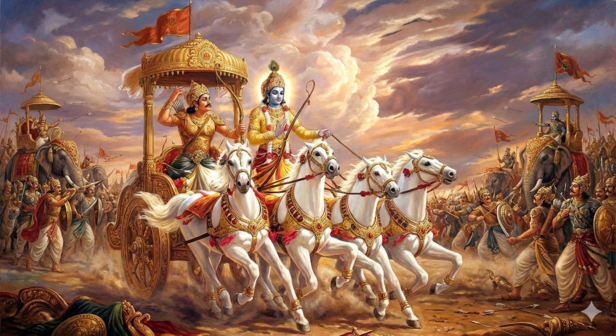
Lord Krishna and Arjuna (Image Credit: AI)
यतो यतो निश्चरति मनश्चञ्चलमस्थिरम्।
ततस्ततो नियम्यैतदात्मन्येव वशं नयेत्॥
Yato yato niścarati manaś cañcalam asthiram
Tatas tato niyamyaitad ātmanyeva vaśaṁ nayet
Meaning of this Powerful Shloka in Bhagavad Gita
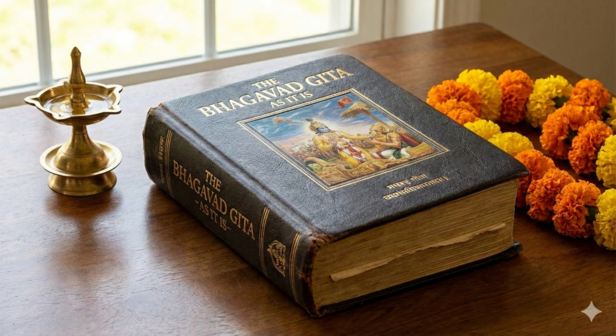
Verse 26 of Chapter 6 Provides a Practical Way for Calmness (Image Credit: AI)
“Whenever and wherever the restless and unsteady mind wanders, one should bring it back and continually focus it on Self.”
Bhagavad Gita’s Technique for Inner Peace
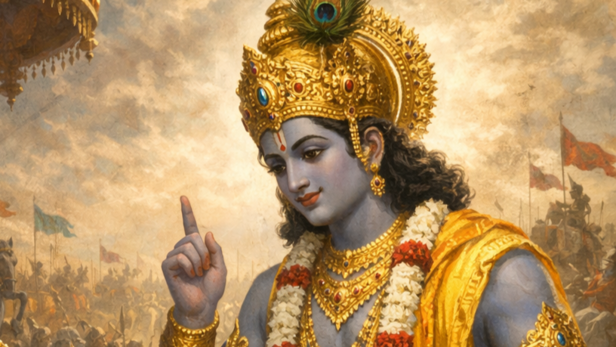
Lord Krishna During the Mahabharata War (Image Credit: AI)
Here, Krishna has provided us a key technique to free our minds from this turbulence. The first step is to remain aware all the time. Then, as we observe the mind getting attached to certain thoughts and emotions, consciously bring it back into our own Self and inner truth without reacting in any way. In fact, if you react with craving or aversion towards the thought, the mind will become even more turbulent falling deeper into the pit of stress and doubts. Be equanimous and observe the fact that the mind is wandering. Then, calmly bring it back to the Self. As you keep practising this, you will become skilled in this technique and inner calmness will turn into your constant companion.
Bhagavad Gita’a Perspective on Self & Moksha
According to Bhagavad Gita, the Self or Atman is the spiritual and eternal Soul. As opposed to the temporary and fluctuating nature of human mind, Atman is unchanging. This eternal consciousness is your true being. The body and mind will pass away and will become dust and air. However, the eternal Self will remain forever. Therefore, as you constantly engage in this practice of bringing back your fluctuating thoughts into the ultimate truth of Atman, you will begin to experience that your mind is becoming purer and clearer. In days and months, your sense of ‘I’ will become aligned with your true and holy nature of the ever-present consciousness. This will ultimately lead you into the path of Moksha, connecting with Brahman or the Supreme Self.
Explore the latest trends and tips in Health & Fitness, Spiritual, Travel, Life Hacks, Trending, Fashion & Beauty, and Relationships at Times Life!
Frequently Asked Questions (FAQs)
- What is the most powerful quote from Geeta?
The verse, "You have the right to perform your prescribed duty, but you are not entitled to the fruits of your actions", can be considered as very powerful. - How can Gita reduce stress?
Lord Krishna's profound words offer solace to a suffering heart. Additionally, by providing practical steps to attain inner peace and by opening the path towards ultimate liberation or Moksha, Bhagavad Gita reduces stress significantly. - What is the miracle mantra of Krishna?
Om Namo Bhagavate Vasudevaya, is believed to be a miraculous mantra of Lord Krishna.