
The Real Reason Shiva and Vishnu Became One as Harihara
Deepak Rajeev | May 06, 2026, 12:54 IST

Harihara (Image Credit: AI)
The form of Harihara reveals the deeper truth that Shiva and Vishnu are not separate but unified expressions of one cosmic reality. Emerging from both mythology and historical need, this divine union resolved sectarian conflicts and symbolized harmony within Hindu thought. Harihara stands as a timeless reminder that apparent differences in the divine are ultimately illusions of human perception.
At the heart of the form known as Harihara lies a powerful and often overlooked reality about ancient Hindu spirituality, which is that devotion was not always harmonious. In early periods, followers of Shiva and Vishnu sometimes engaged in intense theological debates over supremacy, each side believing their chosen deity to be the ultimate source of creation and liberation. These divisions were not merely philosophical but deeply emotional, shaping identities and practices across regions.
According to Puranic traditions, especially narratives connected to the Skanda Purana, these disputes reached a point where divine intervention became necessary, and the resolution was not through victory of one over the other but through a profound revelation, where Shiva and Vishnu merged into a single form to demonstrate that their essence was never separate to begin with. This was not just mythology meant to entertain. It was a spiritual correction aimed at dissolving ego driven divisions among devotees, reminding them that the divine cannot be confined within human categories of superiority.
![Lord Vishnu and Lakshmi Devi (Image Credit: AI)]() The emergence of Harihara marked something much deeper than a symbolic fusion. It represented one of the most powerful philosophical ideas in Hindu thought, which is the unity of all existence under a single ultimate reality known as Brahman. In this vision, Shiva and Vishnu are not rivals but complementary expressions of the same cosmic truth. In many traditions, Vishnu is seen as the preserver of the universe while Shiva represents transformation and dissolution, but Harihara shows that preservation and destruction are not opposing forces but parts of one continuous cycle. This idea aligns closely with non dual philosophies like Advaita Vedanta, where all distinctions dissolve into one unified consciousness. Harihara becomes a visual teaching, a sacred reminder that what appears divided is, at its deepest level, one.
The emergence of Harihara marked something much deeper than a symbolic fusion. It represented one of the most powerful philosophical ideas in Hindu thought, which is the unity of all existence under a single ultimate reality known as Brahman. In this vision, Shiva and Vishnu are not rivals but complementary expressions of the same cosmic truth. In many traditions, Vishnu is seen as the preserver of the universe while Shiva represents transformation and dissolution, but Harihara shows that preservation and destruction are not opposing forces but parts of one continuous cycle. This idea aligns closely with non dual philosophies like Advaita Vedanta, where all distinctions dissolve into one unified consciousness. Harihara becomes a visual teaching, a sacred reminder that what appears divided is, at its deepest level, one.
![Maha Dev (Image Credit: AI)]() The iconography of Harihara is incredibly precise and intentional. One half of the deity carries the attributes of Shiva, including the trident, matted locks, and the third eye, while the other half bears Vishnu’s conch, discus, and royal crown. This is not simply artistic creativity. It is a carefully constructed message. The right half often represents Shiva, associated with asceticism and inward awareness, while the left half represents Vishnu, associated with order and worldly balance. Together, they illustrate that spiritual life requires both detachment and engagement, both stillness and action. Even the earliest sculptures found in ancient cave temples like those at Badami depict this perfect symmetry, reinforcing that this concept was deeply respected and widely understood across centuries. The image itself becomes a meditation, inviting devotees to look beyond external differences and recognise the unity hidden within diversity.
The iconography of Harihara is incredibly precise and intentional. One half of the deity carries the attributes of Shiva, including the trident, matted locks, and the third eye, while the other half bears Vishnu’s conch, discus, and royal crown. This is not simply artistic creativity. It is a carefully constructed message. The right half often represents Shiva, associated with asceticism and inward awareness, while the left half represents Vishnu, associated with order and worldly balance. Together, they illustrate that spiritual life requires both detachment and engagement, both stillness and action. Even the earliest sculptures found in ancient cave temples like those at Badami depict this perfect symmetry, reinforcing that this concept was deeply respected and widely understood across centuries. The image itself becomes a meditation, inviting devotees to look beyond external differences and recognise the unity hidden within diversity.
The Real Historical Reason Behind Harihara’s Rise
What makes the story even more fascinating is that Harihara was not just born from mythology but also from real social and religious evolution. Historical evidence shows that the worship of Harihara gained prominence during a time when sectarian tensions between Shaivism and Vaishnavism began to soften. Rather than allowing division to continue, spiritual leaders and traditions introduced composite deities like Harihara as a bridge, a way to unify communities without forcing them to abandon their beliefs. This was a remarkably sophisticated solution. Instead of choosing one truth over another, it embraced both, showing that unity does not require uniformity. It was theology serving social harmony, something that remains deeply relevant even today.
The deepest meaning of Harihara goes far beyond its visual form or historical context. It reveals a truth that is both simple and profound, which is that the divine is not divided, only human perception is. By merging Shiva and Vishnu into one being, Hindu tradition communicates that creation, preservation, and destruction are not separate acts carried out by competing forces, but interconnected movements of a single cosmic intelligence. This understanding dissolves not only religious conflict but also the inner conflicts within individuals who struggle to reconcile opposites in their own lives. Harihara ultimately stands as a reminder that unity is not something to be created but something to be recognized. What appears as two has always been one, and what seems different is often just another expression of the same eternal truth.
Explore the latest trends and tips in Health & Fitness, Spiritual, Travel, Life Hacks, Trending, Fashion & Beauty, and Relationships at Times Life!
According to Puranic traditions, especially narratives connected to the Skanda Purana, these disputes reached a point where divine intervention became necessary, and the resolution was not through victory of one over the other but through a profound revelation, where Shiva and Vishnu merged into a single form to demonstrate that their essence was never separate to begin with. This was not just mythology meant to entertain. It was a spiritual correction aimed at dissolving ego driven divisions among devotees, reminding them that the divine cannot be confined within human categories of superiority.
Harihara Is Not Just a Form, It Is a Philosophy
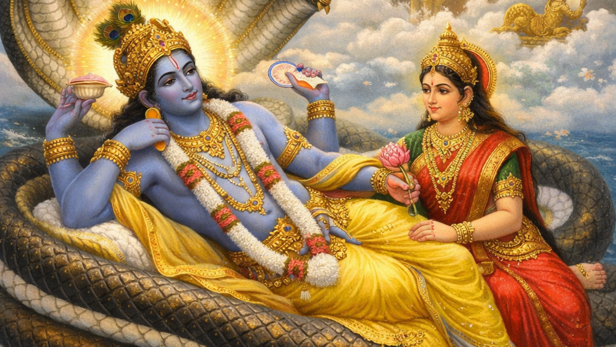
Lord Vishnu and Lakshmi Devi (Image Credit: AI)
The Symbolism Hidden in the Half and Half Form
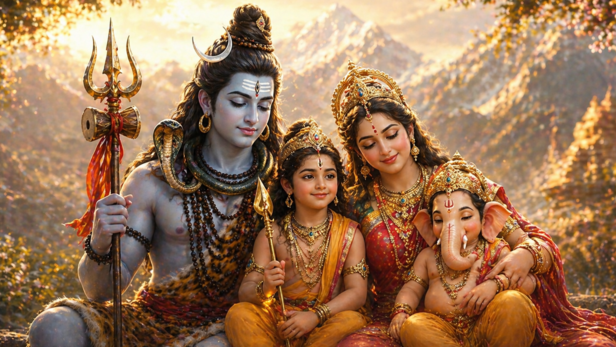
Maha Dev (Image Credit: AI)
The Real Historical Reason Behind Harihara’s Rise
What makes the story even more fascinating is that Harihara was not just born from mythology but also from real social and religious evolution. Historical evidence shows that the worship of Harihara gained prominence during a time when sectarian tensions between Shaivism and Vaishnavism began to soften. Rather than allowing division to continue, spiritual leaders and traditions introduced composite deities like Harihara as a bridge, a way to unify communities without forcing them to abandon their beliefs. This was a remarkably sophisticated solution. Instead of choosing one truth over another, it embraced both, showing that unity does not require uniformity. It was theology serving social harmony, something that remains deeply relevant even today.
What Harihara Truly Reveals About the Divine
The deepest meaning of Harihara goes far beyond its visual form or historical context. It reveals a truth that is both simple and profound, which is that the divine is not divided, only human perception is. By merging Shiva and Vishnu into one being, Hindu tradition communicates that creation, preservation, and destruction are not separate acts carried out by competing forces, but interconnected movements of a single cosmic intelligence. This understanding dissolves not only religious conflict but also the inner conflicts within individuals who struggle to reconcile opposites in their own lives. Harihara ultimately stands as a reminder that unity is not something to be created but something to be recognized. What appears as two has always been one, and what seems different is often just another expression of the same eternal truth.
Explore the latest trends and tips in Health & Fitness, Spiritual, Travel, Life Hacks, Trending, Fashion & Beauty, and Relationships at Times Life!